Advertisement

South East Crowds Use Colanders and Glasses to Watch Rare Partial Solar Eclipse

target=

By The UK Pulse Editorial Team··2 min read·How we work
A large crowd is spread across a beach and grassy coastal area near Goring-by-Sea in West Sussex. Long lines of parked cars stretch along a road beside the shoreline while people gather to watch the eclipse.

On 12 August 2026, hundreds of people gathered at beaches, parks and viewpoints across Kent, Surrey and Sussex to watch a partial solar eclipse, with the Moon obscuring roughly 90% of the Sun's disc over southern England. Onlookers used protective glasses and improvised household items to view the spectacle safely, attending organised parties, picnics, workshops and talks held to mark the rare event.

Large numbers assembled along the coast near Goring-by-Sea, while other crowds climbed the South Downs and queued in cars near Beachy Head to get an unobstructed view of the sky.
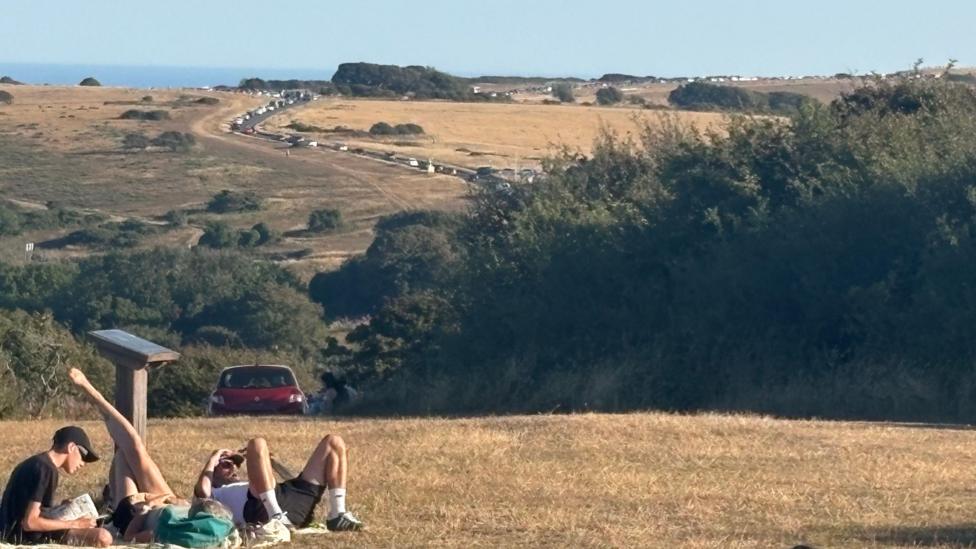
Several people sit and lie on dry grass on high ground near Beachy Head in East Sussex. A long queue of cars stretches along a road beyond them, with the sea visible in the distance.
Image caption, Sky watchers waited high up on the South Downs as cars queued near Beachy Head

Near Goring-by-Sea, queues formed as people sought eclipse glasses to watch the Moon's progress across the Sun.
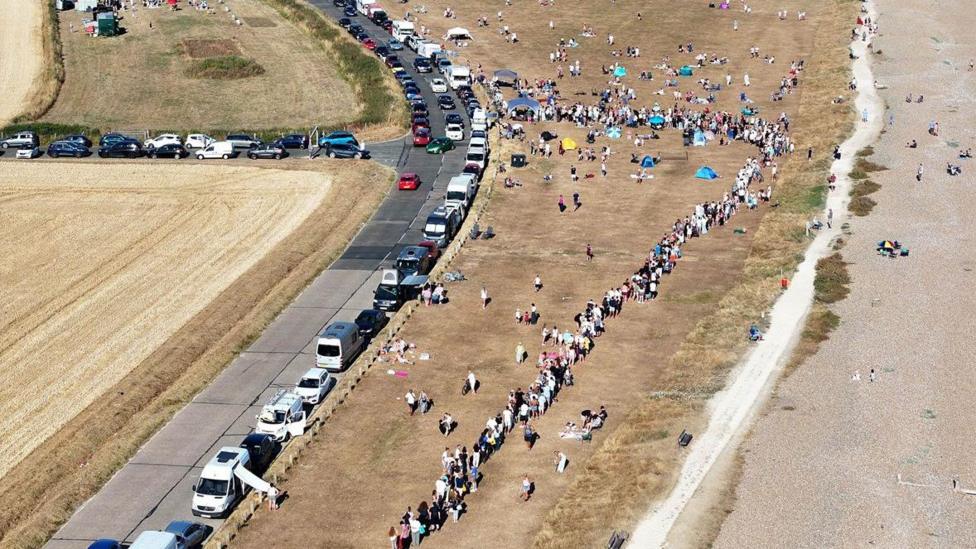
A large crowd gathers on a grassy coastal area near Goring-by-Sea in West Sussex. Long lines of parked cars stretch along a road beside the shoreline and a queue of people forms near viewing points.
Image caption, Crowds queued for eclipse glasses as people gathered near Goring-by-Sea to watch the event

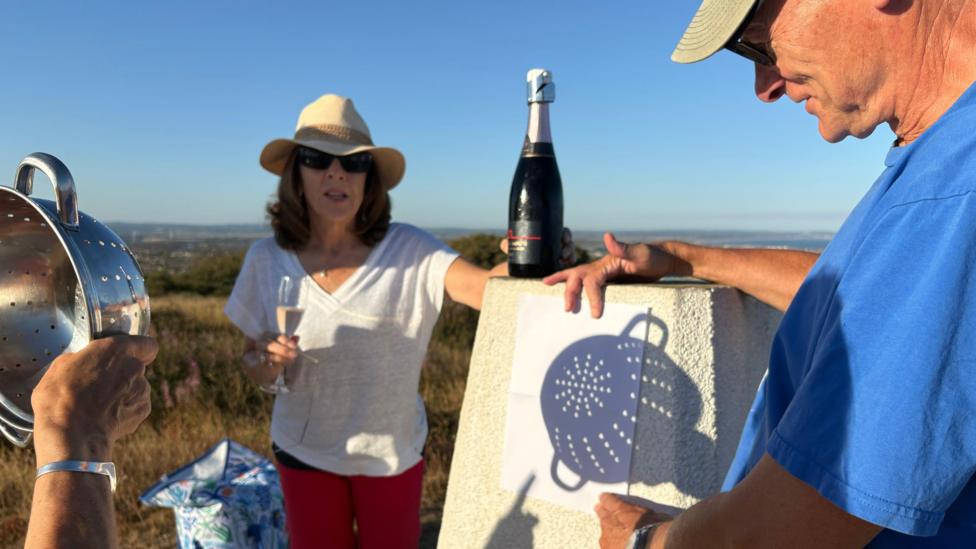
Elsewhere on the South Downs, Glenda Whiles and David Hearn were among those who turned to an unconventional viewing method, using a kitchen colander to project the eclipse safely.

Advertisement

Glenda Whiles stands on the South Downs holding a drink while David Hearn holds a sheet of paper showing the shadow of a colander. Another person holds the colander in the foreground. Rolling countryside and distant views can be seen behind them.
Image caption, Glenda Whiles and David Hearn used a colander to help view the eclipse from the South Downs

The colander technique was far from unique, as ordinary household objects were pressed into service by eclipse watchers wanting a safe way to observe the event without staring directly at the Sun.
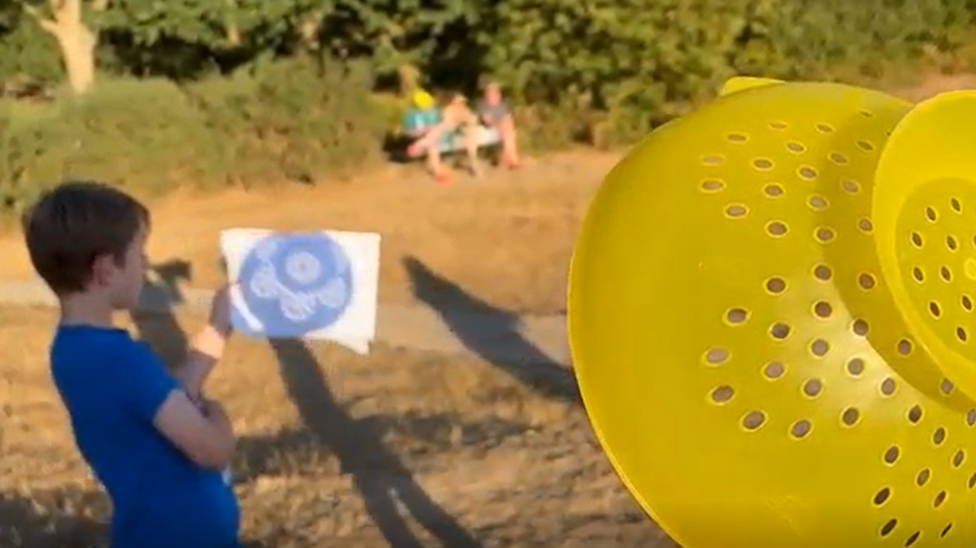
A bright yellow colander is held in the foreground while a child holds a piece of white card showing projected circles of sunlight. Other people are visible on dry grass in the background on Tunbridge Wells Common.
Image caption, Household items found a new purpose as people watched the moon pass the sun

In Great Bookham, Surrey, residents adopted the same approach, holding up colanders to cast pinhole-style projections of the eclipse onto the ground or nearby surfaces.
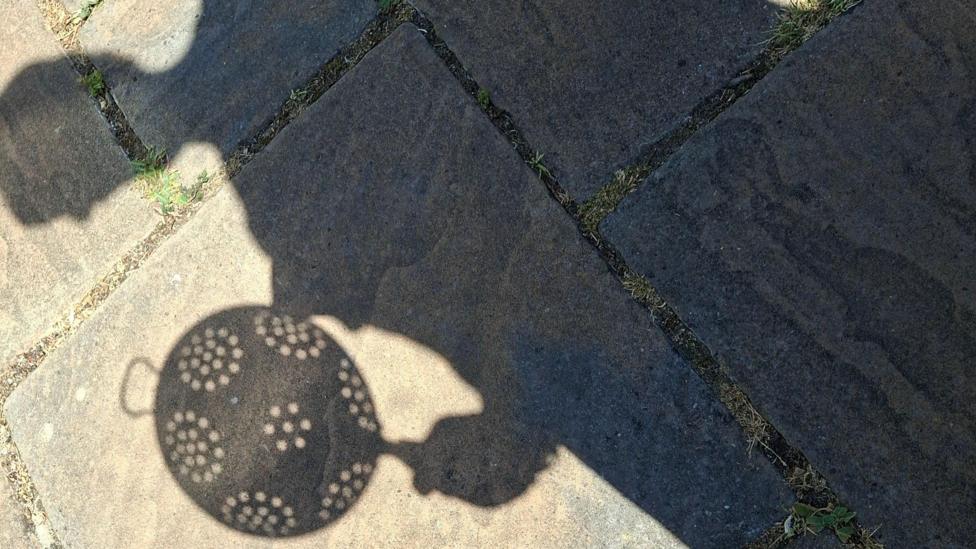
The shadow of a person holding a colander falls across paving stones in bright sunshine in Great Bookham, Surrey. The outline of the colander and its holes can be seen clearly on the ground.
Image caption, People in Great Bookham, Surrey, improvised with colanders to watch the event

Meanwhile, on Tunbridge Wells Common, many attendees opted for solar viewing glasses as they gathered to watch the phenomenon unfold overhead.
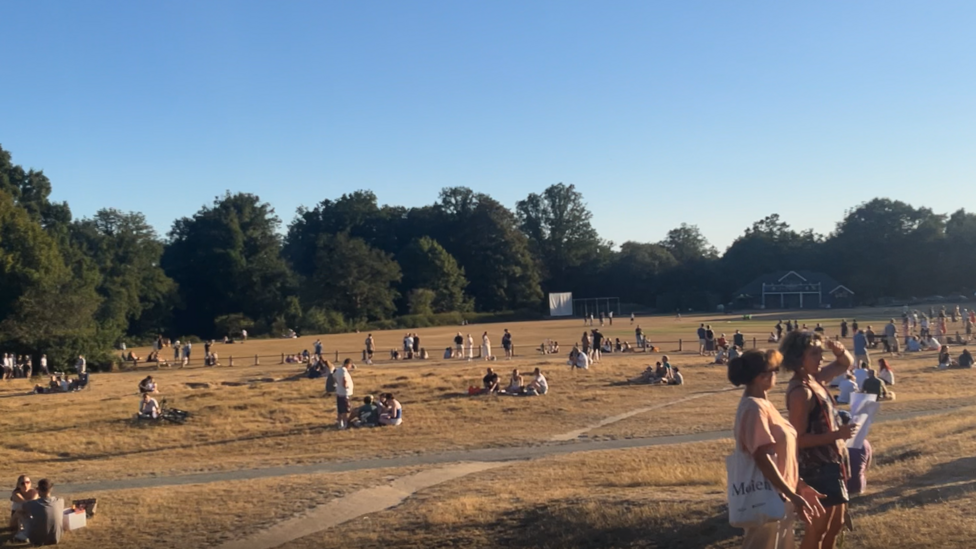
A large open area of dry grass on Tunbridge Wells Common with small groups of people spread across the landscape. Trees line the edge of the common and several people hold viewing cards while watching the eclipse.
Image caption, People gathered on Tunbridge Wells Common many wearing solar glasses

Was this actually a total eclipse somewhere?

Yes — although the South East saw only a partial eclipse, the event was in fact a total solar eclipse along a narrow path that swept across Greenland, Iceland, northern Spain and part of Portugal, according to

Advertisement

Related News