

Across Wales on 12 August 2026, people paused their evenings to watch the deepest partial solar eclipse the country has seen in almost thirty years, with the spectacle coinciding with a provisional record for the hottest August day ever recorded in Wales.
Communities from Pembrokeshire to Flintshire gathered outdoors as the Moon passed in front of the Sun, with coverage exceeding 90% of the solar disk in several locations. The event unfolded against a backdrop of extreme heat, with the Met Office provisionally recording a temperature of 35.3°C (96F) at Gogerddan, Aberystwyth — the warmest August day on record for the country.
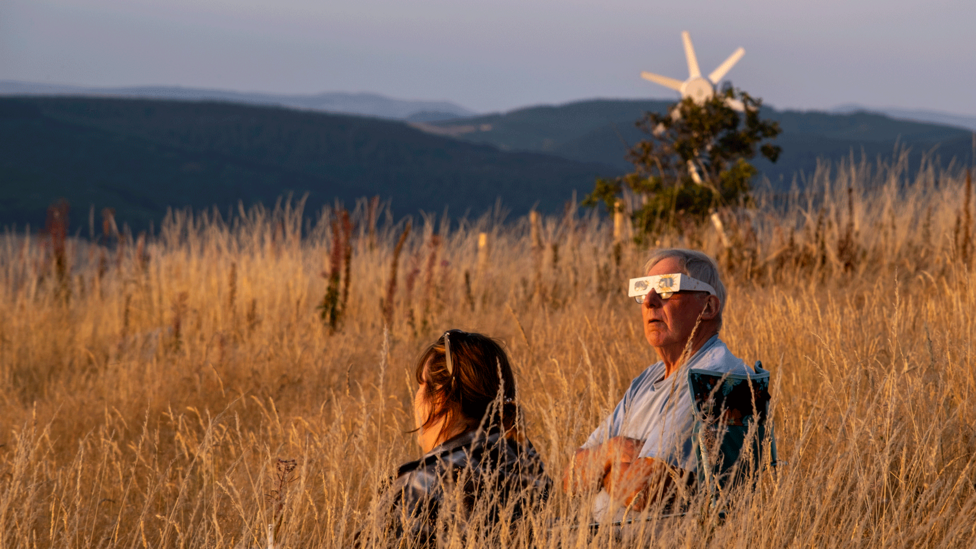
When exactly did the eclipse occur?
According to timeanddate.com, the eclipse was visible across Wales from roughly 6:13pm to 8:07pm BST, with Cardiff experiencing about 93% coverage and Swansea approximately 93.6%. Aberystwyth University stated the eclipse began at 6:10pm, reached its peak at 7:12pm, and concluded around 8:00pm, according to the university's announcement.
The most complete view within Wales was expected along the southwestern coast and west Pembrokeshire, where obscuration reached between 94% and 96%, as reported by a regional broadcaster's coverage. The same report noted this was the deepest partial eclipse visible from Wales since 1999, with the next event of similar magnitude not expected until 2081.
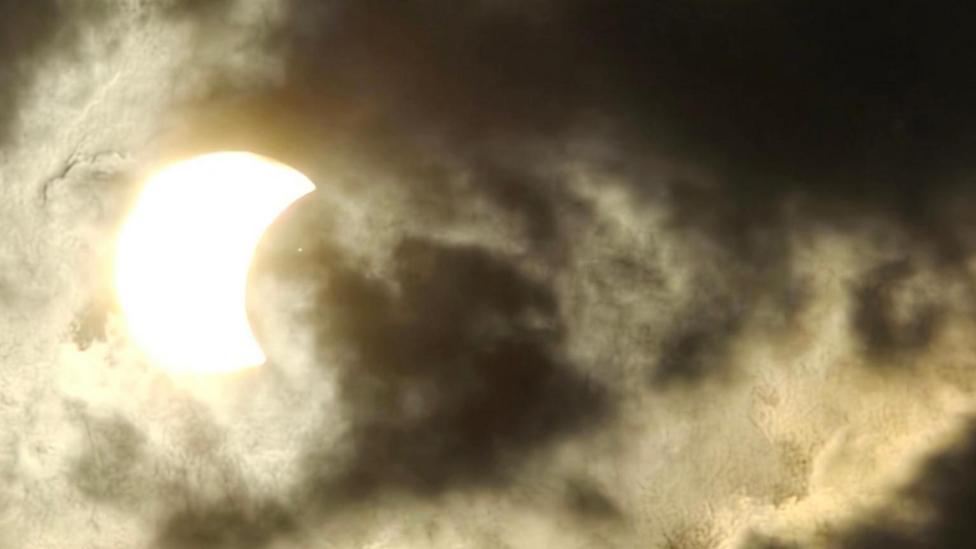
How were people watching safely?
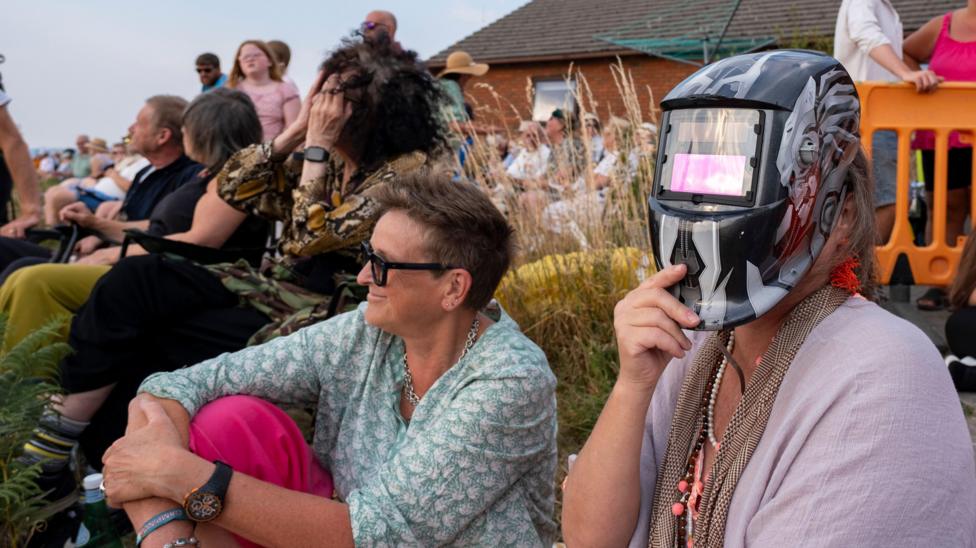
Given the danger of looking directly at the Sun, viewers turned to a range of improvised and specialist equipment. At the Spaceguard Centre observatory in Knighton, Powys, one spectator was seen holding a welder's mask to observe the phenomenon safely.
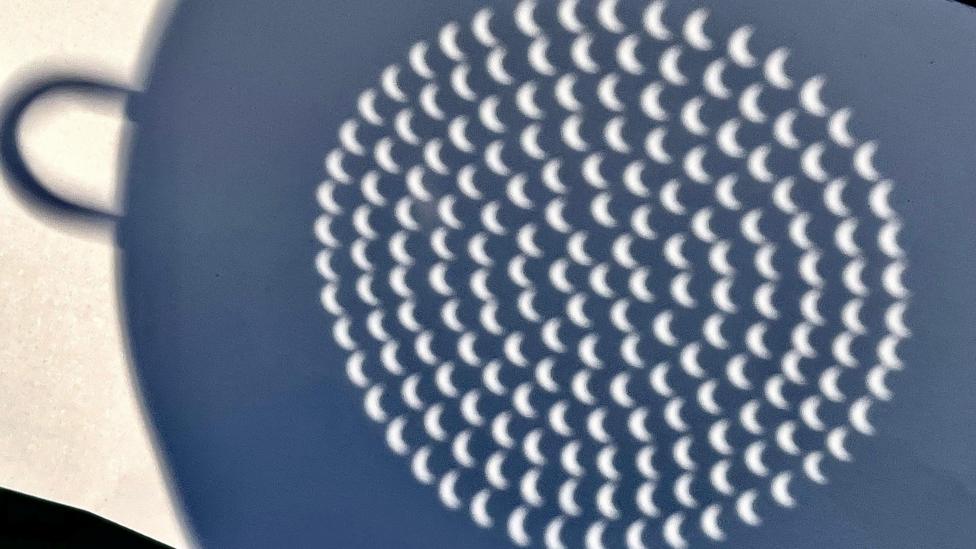
Kitchen colanders also found an unusual second life as viewing aids, with holes in the utensils projecting dozens of tiny crescent images of the partially eclipsed Sun. One such photograph was taken at St Nicholas, Pembrokeshire. The Royal Observatory Greenwich had recommended using eclipse glasses, pinhole projectors, or colanders to project the Sun's image rather than viewing it directly, according to the observatory's guidance. The UK Health Security Agency issued similar advice, recommending pinhole viewers, colanders, or other projection methods as safe alternatives to direct viewing, according to its official safety blog.
Where did people gather to watch?
Crowds assembled at elevated vantage points across the country to get the clearest possible view as the Sun approached the horizon during the eclipse. On Garth Mountain near Cardiff, groups gathered to take in the sight together.

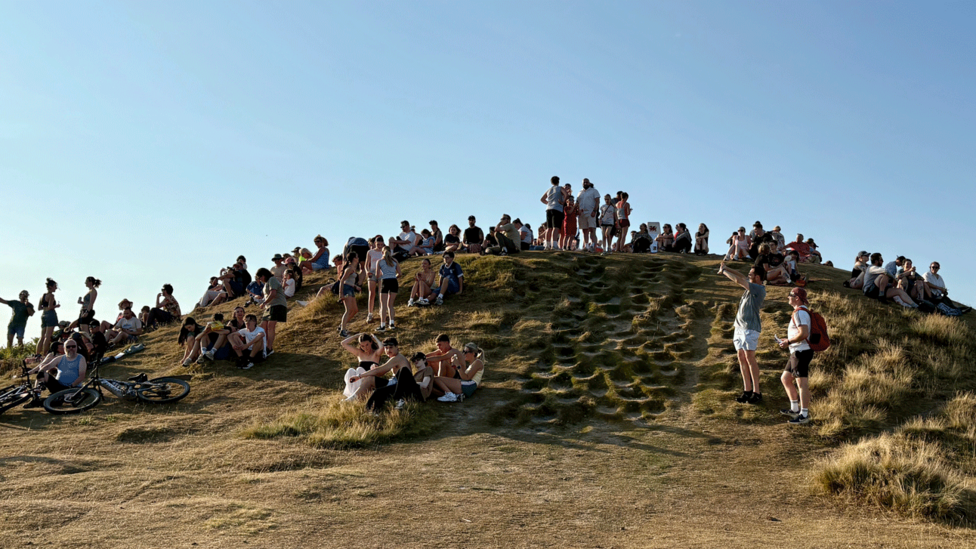
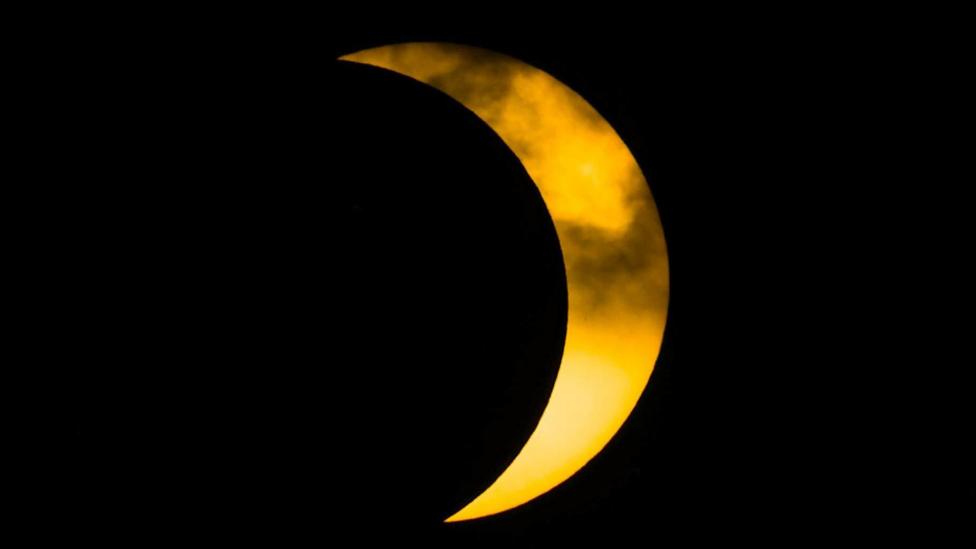
The Royal Observatory Greenwich had advised that the best viewing conditions would come from a high point with an unobstructed western horizon, since the eclipse occurred late in the evening as the Sun was setting, according to a Welsh news outlet's report. Striking images emerged from locations including Llandegla in Denbighshire and Greenfield in Flintshire, where local weather watchers captured the Sun's crescent shape as the Moon crossed in front of it.
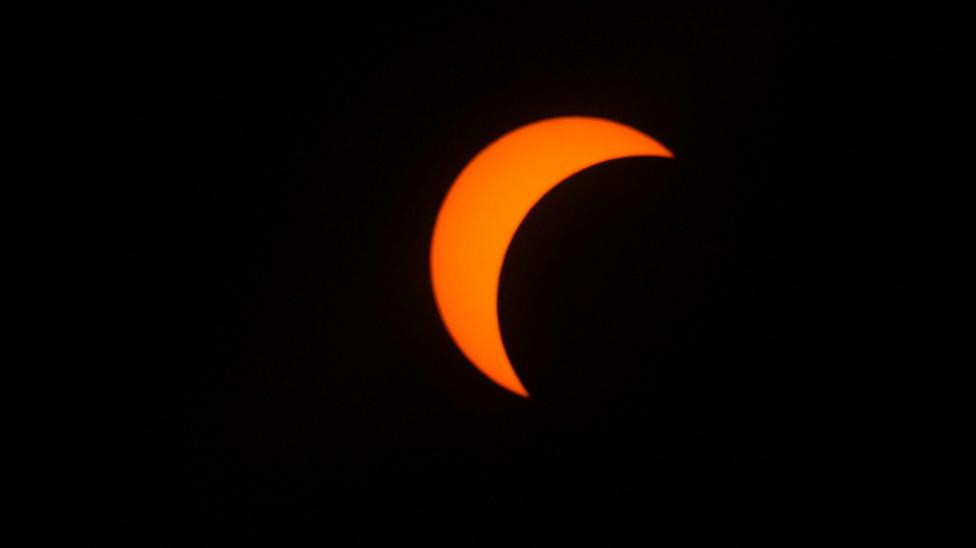
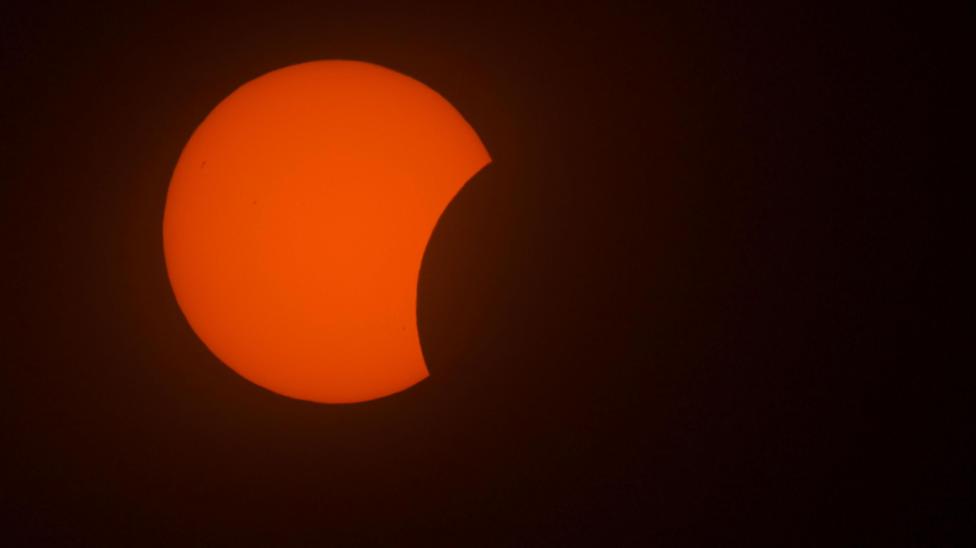
Not every location enjoyed clear skies. In Llangynog, Powys, cloud cover obscured much of the view despite the record heat elsewhere in Wales, while in Ebbw Vale, Blaenau Gwent, patchy cloud briefly provided welcome shade for viewers timing their glances at just the right moment.
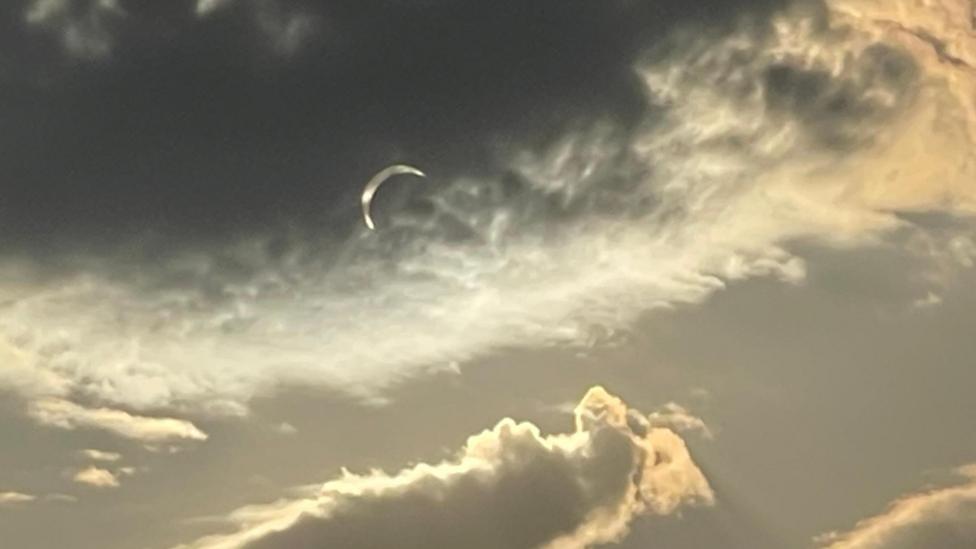
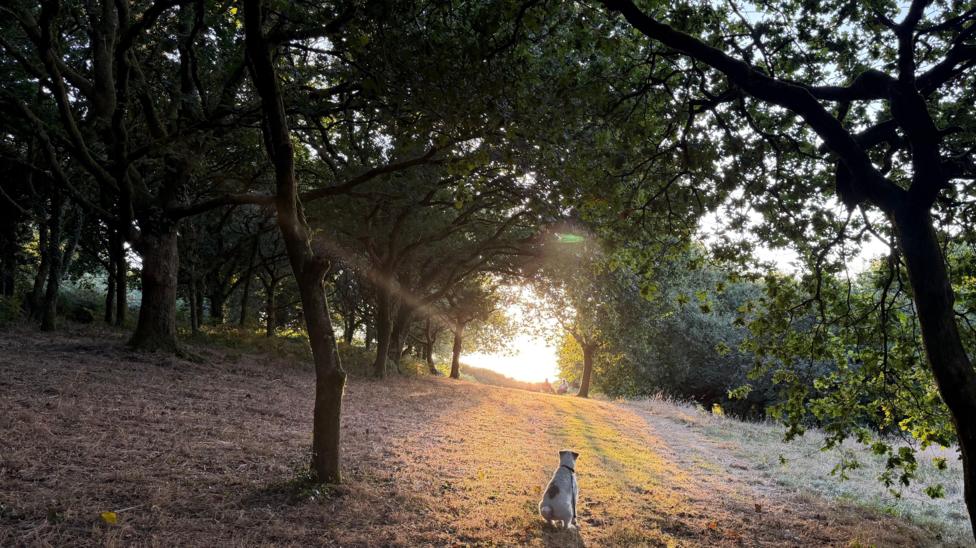
In Wrexham, where more than 90% of the Sun was covered by the Moon, observers captured the eclipse's progress, a pattern mirrored across much of the UK. Even wildlife seemed to take notice: in Three Crosses, Swansea, a photograph shared shortly before 8pm BST appeared to show a dog pausing to look skyward during the eclipse.
How does this compare with eclipses elsewhere?
The 12 August event was only partially visible across parts of Europe, with full totality experienced in Iceland, Greenland and Spain, according to the same Welsh news report. This mirrors coverage from earlier in the summer, when reports ahead of the eclipse noted that northern Spain would see full totality amid crowds of roughly half a million visitors, while the UK and Wales would experience only a partial view.
Similar scenes to those in Wales played out elsewhere in Britain. Earlier coverage described crowds across South West England and the Channel Islands as a steady stream of families and visitors turned out specifically to witness the event, while watchers in the East Midlands saw up to 90% coverage depending on their location, also the deepest seen in that region since 1999.
What happens next?
With the partial eclipse ending just after 8pm BST on 12 August 2026, according to timeanddate.com, attention turned to related events staged around the occasion. A Museum Lates: Solar Eclipse event was scheduled to take place at National Museum Cardiff on the same evening, according to details published by the museum. Wales is not expected to see another eclipse of comparable magnitude until 2081.
Key Facts
- Wales provisionally recorded its hottest August day on record at 35.3°C (96F) in Gogerddan, Aberystwyth, on 12 August 2026.
- The eclipse was visible across Wales from roughly 6:13pm to 8:07pm BST, peaking around 7:12pm.
- Coverage reached up to 94–96% in west Pembrokeshire, the highest in Wales, and over 90% in most other UK locations.
- It was the deepest partial eclipse visible from Wales since 1999, with the next similar event not due until 2081.
- Iceland, Greenland and Spain experienced full totality, while the UK saw only a partial eclipse.


