Thousands of people gathered across Devon, Cornwall, the Channel Islands and parts of Wales on 12 August 2026 to watch a partial solar eclipse that darkened skies over much of the UK. At its peak, around 19:15 BST, the Moon covered between 94% and 96% of the Sun over Devon, Cornwall, Jersey and Guernsey, while most of the rest of the country saw coverage above 90%.
The eclipse unfolded gradually, beginning at roughly 18:20 BST and concluding by around 20:10 BST, giving the spectacle a total duration of about one hour and 50 minutes. Western Pembrokeshire in Wales also experienced the eclipse at its deepest, while the remainder of Wales, Northern Ireland, parts of the West Midlands, other areas of the South West including Bristol, and Scotland's westernmost regions recorded coverage of between 92% and 94%.
How much of the Sun was hidden, and where was it most visible?
Coverage varied slightly by region but remained above 90% almost everywhere in the UK, making this one of the most dramatic partial eclipses seen in decades. According to earlier coverage of the event, the West Country was expected to see its biggest eclipse since 1999, with Cornwall and the Isles of Scilly forecast to enjoy the clearest views in the country. Separate reporting had also flagged the UK's deepest partial eclipse since 1999, noting that while Britain experienced only a partial obscuration, observers in northern Spain witnessed a full total eclipse amid crowds estimated at half a million people.
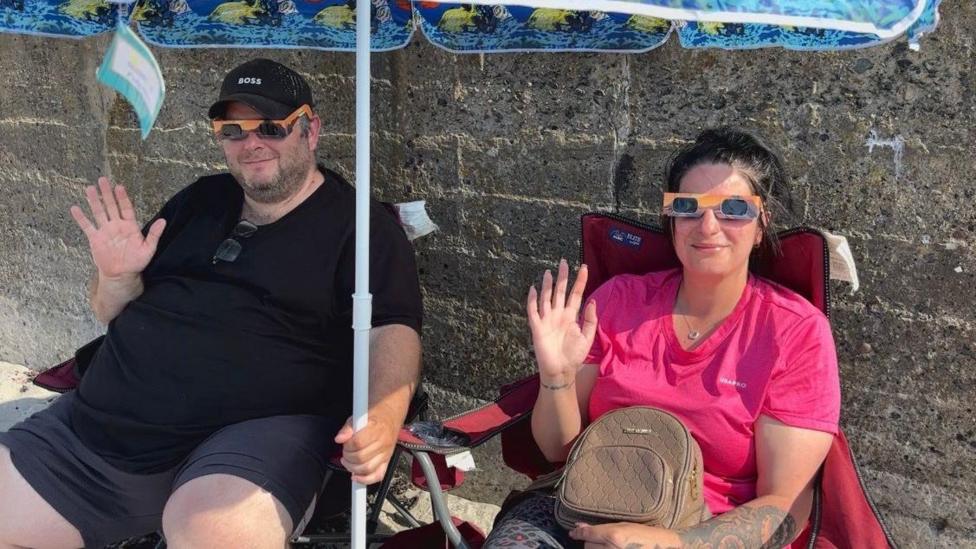
What did spectators see and how did they react?
Alan Smith, chief astronomer at the Norman Lockyer Observatory in Sidmouth, Devon, explained the mechanics of the event to onlookers who gathered at the site.
What we're seeing is the dark side of the Moon, which isn't illuminated by the Sun, gradually crossing the solar disk.
After a few minutes, you begin to see that it is progressing slowly.
For a moon moving at 2000 miles an hour, it doesn't look like it is shifting quickly.
We get two solar eclipses every year, but a good eclipse in any one place - you could be waiting a long time, 100 years or more.
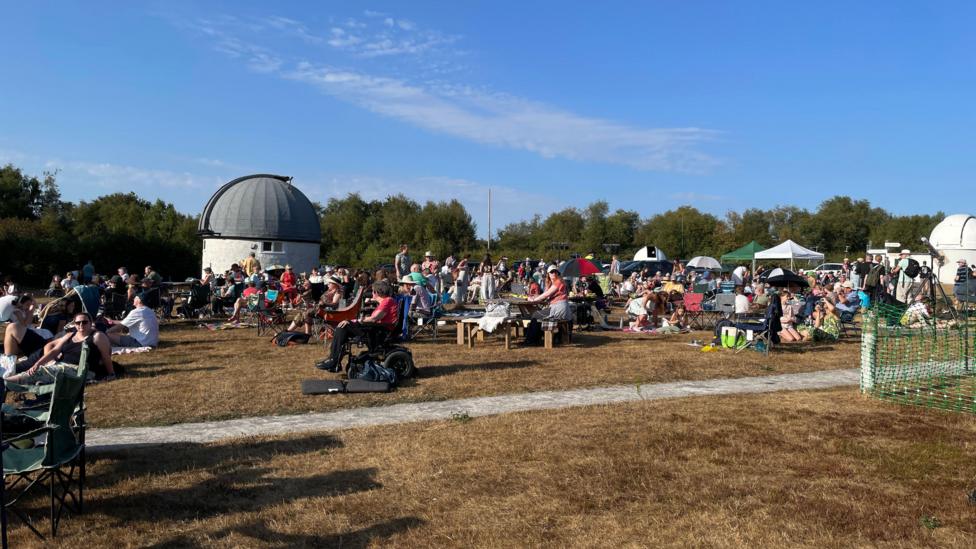
At Churchtown Farm nature reserve in Saltash, Cornwall, a reporter covering the South West described a communal atmosphere, noting that many attendees had come without eclipse glasses but were sharing equipment with fellow spectators.
It's a lovely community event.
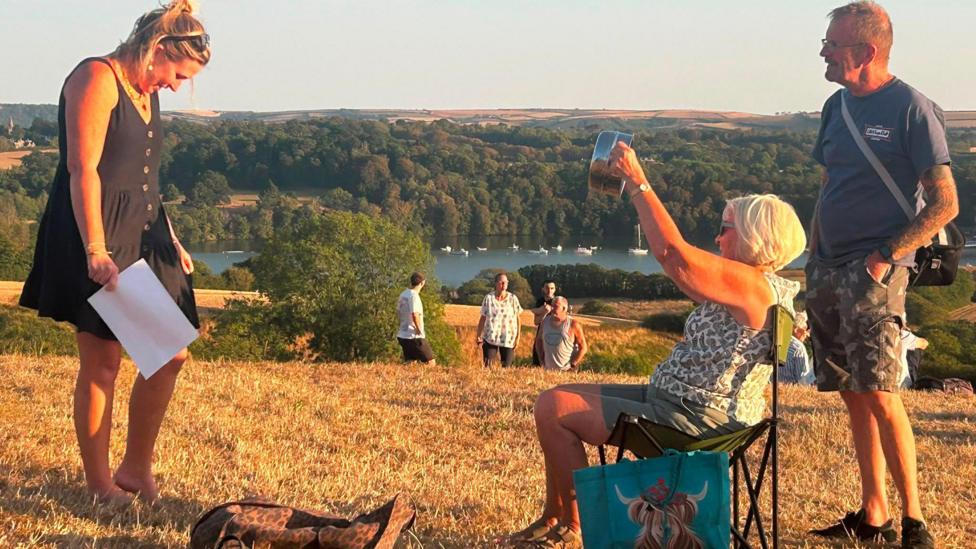
In the Channel Islands, a reporter covering Guernsey who watched from Cobo Bay called the event