A population of the Short-Necked Oil Beetle has been discovered in Pembrokeshire, marking the species' return to Wales after six decades without a confirmed sighting. According to BBC News, the larvae were found at Castlemartin Range following three years of intensive surveying by conservation experts.
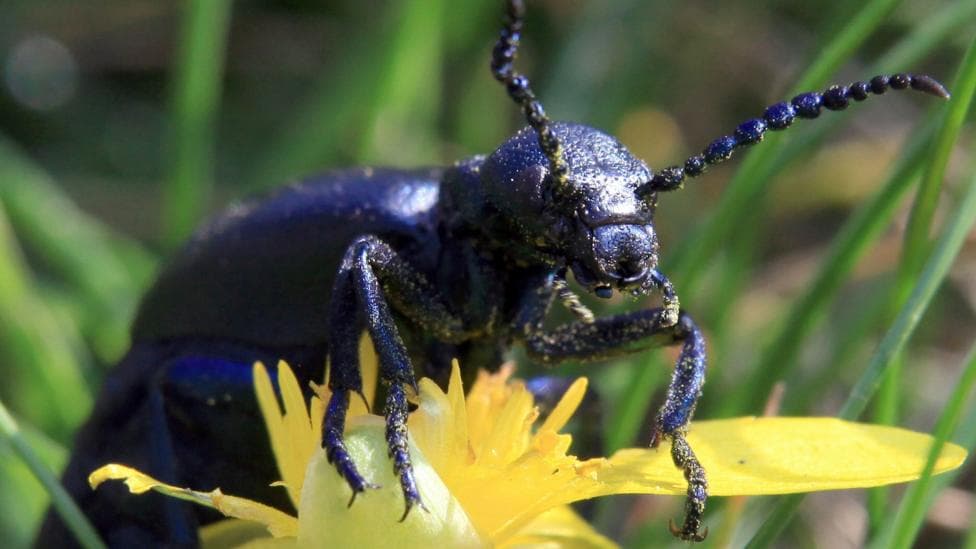
The species, named for the adult beetles' compact physique and their capacity to discharge an oily yellow-orange substance from their knee joints when threatened, had vanished from Wales entirely. The beetles were absent from the entire UK for nearly 60 years after 1948, driven to the edge of extinction by the destruction of their natural habitats.
Anne Hobbs of the Bumblebee Conservation Trust described the discovery as "very exciting," noting that the evidence indicated the beetles were actively breeding in Wales once more. Experts hailed the find as an encouraging development for the species' long-term survival prospects.
What makes this beetle special?
The Short-Necked Oil Beetle holds the status of nationally rare within Great Britain and appears on the IUCN Red List as vulnerable. Its survival depends entirely on a relationship with solitary bees and requires specific environmental conditions: thick vegetation for shelter and abundant flowering plants are both critical to its persistence.
The beetle's lifecycle is intimately tied to its bee hosts. Immature larvae, known as triungulins, climb onto flowers and attach themselves to visiting solitary bees, which then carry them back to their nests, where the larvae feed on collected pollen. Adults typically measure up to 24 millimetres in length and live for approximately one year.
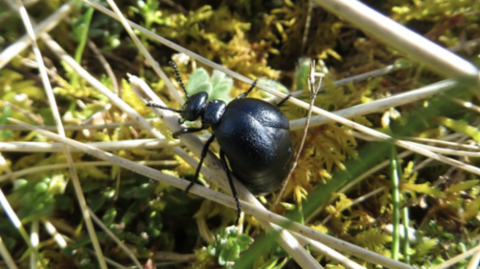
The beetles emerge from March to June and favour flower-rich coastal grassland and sand dune habitats, remaining most active during warm, sunny weather. Natural Resources Wales (NRW) notes that these specific conditions exist at only a handful of suitable sites across the UK.
How was the discovery made?
The breakthrough came after a difficult period for the conservation effort. In the previous year, surveyors at Castlemartin had located only dead adult beetles, prompting serious concerns about the species' continued presence at the site. However, this year's survey yielded larvae on a small section of the reserve, suggesting that a larger batch of immature beetles had successfully hatched and developed.
The number and distribution pattern of the larvae discovered supported the conclusion that conservationists had found offspring from a substantial cohort of juveniles. The 2026 survey found larvae after surveys in both 2022 and 2025 had found only dead adults; the larvae's distribution and timing suggested a larger batch had hatched.
Where else has the beetle been found?
The Short-Necked Oil Beetle's rediscovery in the UK began in Devon in 2006, followed by a sighting on the Isle of Coll in Scotland in 2009. Since those initial finds, populations have been documented on the Scottish islands of Tiree, Islay, Barra and Uist. Castlemartin Range in Pembrokeshire remains the only location in Wales where the species currently survives and is being regularly monitored by conservation teams.
What is the broader conservation context?
The recovery initiative forms part of Wales's "flagship species recovery programme," according to NRW, which aims to protect the Short-Necked Oil Beetle alongside other species that depend on similar habitats. The broader Natur am Byth! project, which runs from June 2023 to August 2027, covers 67 of Wales's most threatened species.
Hobbs characterised the Short-Necked Oil Beetle as an "amazing creature" and emphasised that effective conservation requires addressing the needs of multiple species simultaneously. She expressed gratitude to partners and volunteers for their perseverance through two years without any larval discoveries, acknowledging the commitment required to sustain such long-term monitoring efforts.
What happens next for the species?
NRW has stated that ongoing management of the Castlemartin site remains essential to secure the beetle's survival. Natur am Byth! surveys and volunteering events take place year-round to support conservation objectives. Hobbs indicated that this would represent the project's final dedicated survey for the beetle, though broader habitat management and monitoring will continue.
The rediscovery of breeding populations offers renewed hope for a species that came perilously close to vanishing entirely from British shores. Sustained habitat protection and continued scientific oversight at Castlemartin will be vital to ensuring the Short-Necked Oil Beetle's persistence in Wales and across the UK for generations to come.