

A cyclist rode roughly three and a half hours to reach a watch party at Brough Observatory in East Yorkshire, so he could view Wednesday's partial solar eclipse through certified viewing glasses. Kian Lodge made the trip on 12 August 2026 after finding online prices for eclipse glasses "absolutely extortionate" and delivery times too slow to be practical. Health officials had urged the public to view the event safely, using certified eclipse glasses or handheld solar viewers rather than looking directly at the Sun.
Lodge chose Brough because the site hosts the largest astronomy observatory in the area and offered a reliable way to obtain glasses in person.
It just has all the facilities that you could think of.
I didn't think it would be like this. I didn't think that as many people would have turned up.
He was not the only one taken aback by the turnout, and he did not make the journey without a companion of sorts: a light-up toy moon he had picked up at a charity shop.
I put some fresh batteries in it and I popped it in my bag and it came with me all this way!
Lodge called the ride to Brough some of the happiest miles of his life and described witnessing the eclipse as a once-in-a-lifetime opportunity.
How deep was the eclipse, and where else was it visible?
Up to 95% of the Sun was obscured by the Moon over parts of the UK on the evening of 12 August 2026, making it the most striking eclipse witnessed in the country in almost three decades. According to the Royal Observatory Greenwich, the UK and Ireland saw between roughly 90% and 96% of the Sun covered, and it recommended eclipse glasses or a solar telescope for anyone watching. A regional guide from Sky at Night Magazine put Cardiff's coverage at 93.2%, marginally deeper than Belfast's 93.1%.

Although the UK experienced only a partial eclipse, NASA confirms the event was a total solar eclipse along a narrow path elsewhere on the globe, with a partial view also visible across much of Europe, the northern United States, most of Canada and northwestern Africa. A separate eclipse map from a wire service graphic shows the path of totality crossing Spain, Iceland and Greenland, placing the UK, Ireland, France and Italy outside that path and limited to a partial view. NASA's city-by-city data lists Lisbon reaching a maximum of 95% coverage at 7:36 p.m. local time, illustrating how deep the partial eclipse ran in parts of the Iberian Peninsula.
Crowds elsewhere in Yorkshire also turned out to watch the same event using telescopes, glasses and improvised viewers, as earlier coverage of Yorkshire's eclipse-watching crowds described it as the most striking eclipse visible from the UK since 1999. Further south, residents across the South East and West England resorted to colanders and cereal boxes alongside protective glasses, according to a report on eclipse-watching in the South East and West England, where the Moon covered up to 96% of the Sun. Meanwhile, some enthusiasts left the country entirely in search of totality, with coverage of Cambridge astronomers travelling abroad noting that stargazers headed to Spain and the Faroe Islands while the East of England braced for its own deepest partial eclipse since 1999.
Why did eclipse glasses become so hard to find?
Demand for certified eclipse glasses outstripped supply in the days before the event, with most high street retailers selling out and shoppers left queuing for stock. This shortage was not confined to the UK; according to a report on the eclipse glasses shortage, the shortfall spread from London and Scotland to Liverpool and on into mainland Europe as retailers, opticians and post offices reported running out of stock. The Royal College of Ophthalmologists warned that looking directly at the eclipse without proper protection risked damaging the retinas.
What did organisers at Brough say about the turnout?
Steve O'Dwyer of Brough Astronomy described the numbers who showed up as far beyond what organisers had anticipated.
It's a fantastic turnout. [I] could've never imagined... that it was going to be like this.
It's been fantastic. Everybody has had an opportunity to see something.
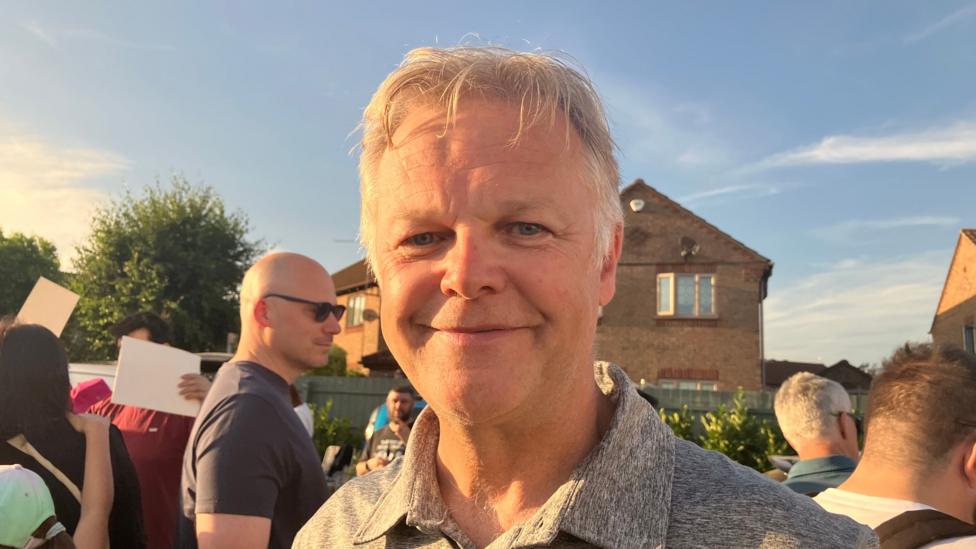
Brian Davies, also of the astronomy club, said the crowds were enormous and considerably larger than expected.
What else is worth watching in the night sky this month?
The eclipse coincided with the peak of the Perseid meteor shower, one of the most anticipated astronomical displays of the year. The Perseids remain active from mid-July through 23 August, though the best viewing window falls between midnight and dawn on 12 and 13 August. Davies cautioned that catching the meteors requires a genuinely dark location and patience, noting that few would be visible from a town such as Brough.


