On Wednesday 12 August 2026, people across Scotland witnessed the most striking partial solar eclipse visible from the country in almost three decades, with up to 95% of the Sun disappearing behind the Moon. Heavy cloud cover across much of the country obscured parts of the event, but breaks in the clouds allowed thousands of skygazers to catch glimpses of the spectacle, which unfolded over roughly two hours from just after 18:00 BST, with the Sun setting at around 21:00. Astronomers had urged viewers throughout the day never to look directly at the Sun without proper protection.
The event formed part of a wider phenomenon affecting the whole of the UK that day. According to earlier reporting on the rare 2026 sky event, coverage reached up to 96% in some parts of the country, while separate coverage of the West Country's viewing prospects noted that Cornwall and the Isles of Scilly were expected to have some of the clearest views in England. Wales and the Channel Islands also experienced a deep partial eclipse, as detailed in coverage of the eclipse's effect on England, Wales and the Channel Islands, while astronomy groups in the South West organised public events, as outlined in reporting on safe viewing options in the South West and Channel Islands. A separate report on crowds across South West England and the Channel Islands described a steady stream of families, tourists and visitors who travelled specifically to witness the eclipse throughout the day.
Where were the best places to watch the solar eclipse in Scotland?
Experts had recommended seeking an elevated spot with a clear, unobstructed view towards the west. Astronomer Royal for Scotland Professor Catherine Heymans explained the advantage Scotland held over other parts of the UK.
"People in England are worried about having to find a clear view of the western horizon," said Astronomer Royal for Scotland Prof Catherine Heymans. "But that is less of a problem for us in Scotland because the Sun sets later."
Because the Sun sat higher in the Scottish sky during the eclipse window, viewers north of the border were expected to have an easier time tracking the event than those further south. The Sun was expected to set at roughly 21:00, well after the eclipse had run its course.
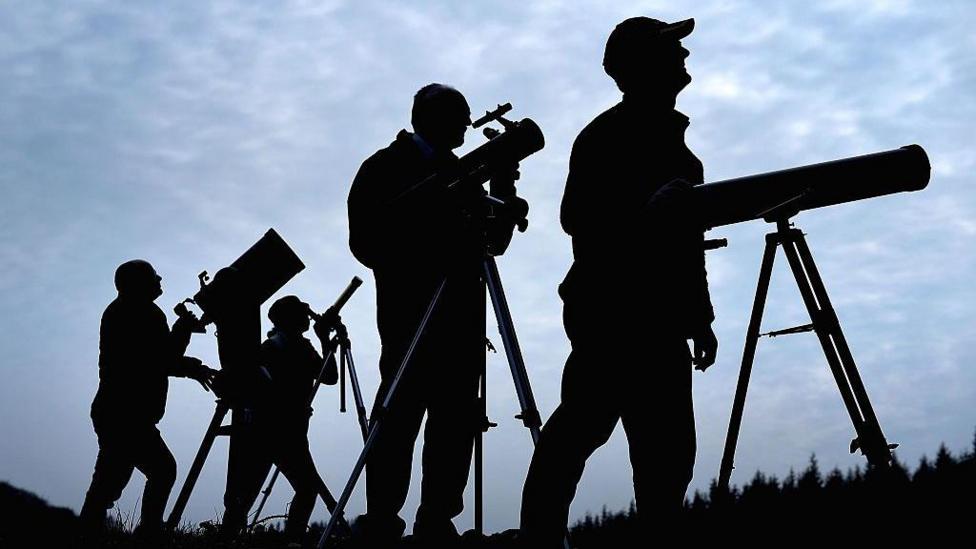
Heymans had indicated that the Moon would begin crossing in front of the Sun between around 18:01 and 18:10 BST, with the eclipse reaching its peak about an hour later and concluding just before 20:00. More precise timings gathered from astronomical data sources give a slightly different picture. According to timeanddate.com's Glasgow eclipse data, the partial phase in Glasgow began at 18:08, peaked at 19:06, and ended at 20:00, with the city seeing 91.36% obscuration according to the same source's Scotland-wide eclipse figures, which put the nationwide start and end times at 17:59 BST and 20:02 BST respectively. Separately, The National's coverage of the eclipse in Scotland reported the UK-wide event running from approximately 18:17 to 20:06. A children's guide from a national broadcaster additionally listed the Glasgow event as running from 18:08 to 20:00, peaking at 19:06 BST with 91.4% coverage, according to that broadcaster's youth-focused eclipse explainer.
"It is so slow moving. So if you go out and the Sun is not there you have time to walk down the street to a park or climb up a hill," she added. "The most important thing is to watch the Met Office cloud cover forecast and plan accordingly from there."
A Met Office spokesperson had offered a note of caution for those in the west of the country ahead of the event.
"Weather fronts grazing the west of Scotland may hamper ideal views. So although viewers in the south and east of Scotland will see less of the Sun covered by the Moon, they may get better views because of clearer skies."
Adding further nuance, a Scottish newspaper's analysis of viewing conditions had suggested the west of Scotland and the Western Isles could see among the highest percentages of Sun coverage, even as southern and eastern parts of the country might benefit from clearer weather. Royal Museums Greenwich had also advised that an unobstructed view specifically to the west-northwest would be needed to catch the full event, according to the museum's guide to viewing the 12 August 2026 eclipse.
How did viewing conditions actually unfold across Scotland?
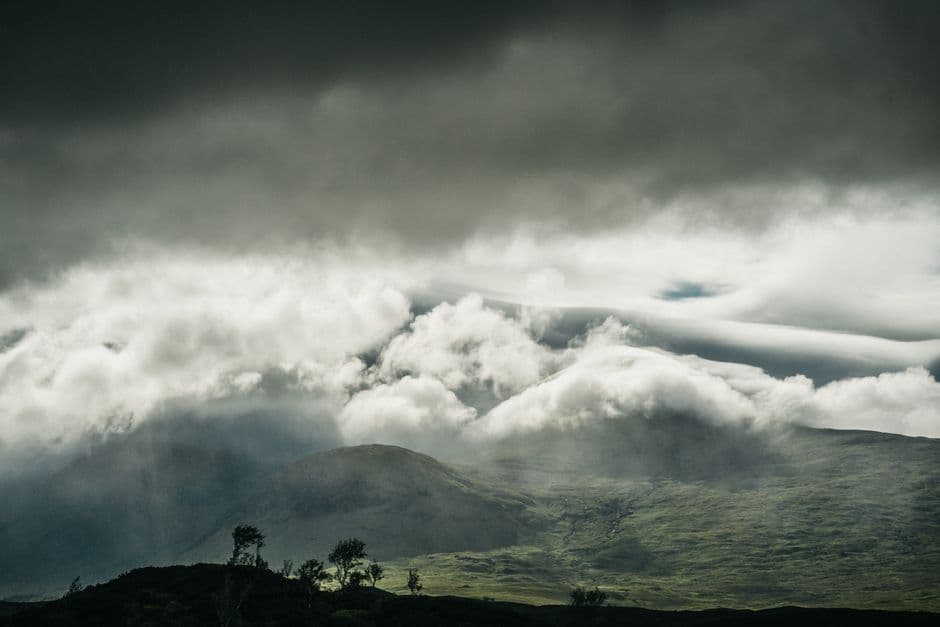
Cloud cover ended up shaping the experience for many watchers. At the beginning of the eclipse, heavy cloud across much of Scotland left visibility poor, though as the event progressed, breaks in the cloud in some areas offered glimpses of the phenomenon. According to a national broadcaster's weather team, cloud was expected to affect Scotland and Northern Ireland most, with some outbreaks of rain in western Scotland during the eclipse window, a forecast that broadly matched what unfolded on the day, according to the broadcaster's weather report. Met Office meteorologist Tom Morgan had said before the event that Scotland, Northern Ireland and western parts of England had a "slightly lower" chance of seeing the eclipse because of cloud, according to The National's coverage of the eclipse in Scotland.
Whitelee Windfarm at Eaglesham in East Renfrewshire hosted one of the biggest eclipse gatherings in Scotland. Around 50 to 60 people gathered there to watch, with cloud cover obscuring the view for most of the time before conditions cleared briefly around 19:00, revealing a sliver of the Sun behind the Moon and prompting gasps from the crowd. At Ayr Beach, dozens of onlookers were left largely disappointed, though the atmosphere temporarily turned darker, cooler and eerily quiet during the eclipse, with only occasional breaks in the cloud giving brief glimpses of the Sun and Moon.
"The cloud just wasn't on our side," one member of the public at Ayr Beach said.
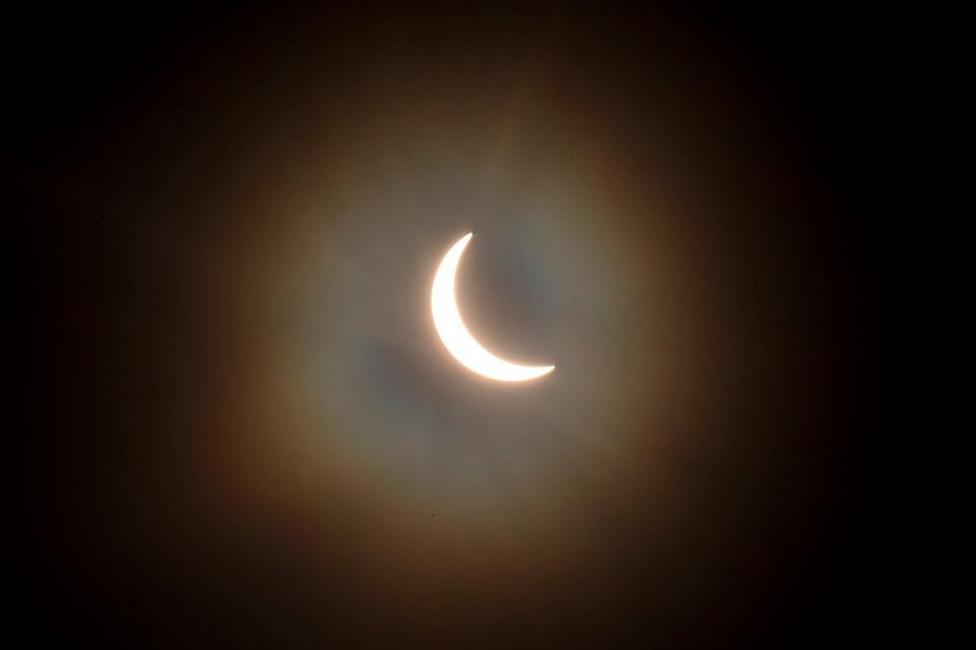
Edinburgh saw some of the largest crowds as the east of the country offered more promising conditions. Hundreds of people gathered on Calton Hill, with one visitor describing the viewpoint as busier than it usually is on Hogmanay. Neil Martin, president of the Astronomical Society of Edinburgh, described the vista as "pretty incredible", adding: "You never get bored of this view." Observers there described the Moon moving across from the right, eating into the Sun and leaving a crescent at the top; a large cloud momentarily covered the Sun entirely, but when it cleared ahead of the point of maximum eclipse a cheer erupted from the crowd, with the light growing muted and subdued and the noise from the crowd softening as people took in the spectacle.
Among those on Calton Hill were Sandy and Nick Burgoyne, who had been due to fly home to the United States on the Wednesday morning after a week in Edinburgh but delayed their flight to catch the eclipse. They said the view, with the eclipse taking place directly above the Edinburgh skyline, was much better than one they had seen in New York in April 2024 and well worth delaying their journey home for.
Further north, some of the clearer views came where cloud cover was lower, including in Aberdeenshire, Dundee and the Highlands. Visibility varied from spot to spot even within the same region: in Balmedie, Aberdeenshire, cloud was present but a good view was still possible, while a clear view was reported from Aberdeen's Bieldside despite cloud cover elsewhere. Dundee also recorded a good view, and the early stages of the eclipse were visible from Dornoch in the Highlands despite cloud in the area. In Orkney, the view was, as in much of Scotland, at least partially obscured by cloud.
Even where cloud blocked a direct view of the Sun and Moon, some observers reported that conditions briefly grew a little darker than they otherwise would have been as the Moon blocked the Sun's light.
What community events took place across Scotland?
A number of free and ticketed gatherings were held to mark the occasion, many hosted by local astronomy groups:
At Beirhope Farm in Hownam, Scottish Borders, an event beginning at 17:30 featured a talk from a resident astronomy expert introducing the farm's new telescope. In East Lothian, the Dirleton Solar Walk handed out certified eclipse glasses as part of what organisers described as a relaxed evening. On Calton Hill in Edinburgh, members of the Astronomical Society of Edinburgh were on hand at the Playfair Observatory to explain the eclipse to visitors.
A family-friendly gathering at Red Burn Farm in Blantyre, South Lanarkshire, started at 18:00 with eclipse glasses provided, while the Whitelee Windfarm Visitor Centre in Eaglesham, East Renfrewshire, offered space-themed arts and crafts alongside an adult workshop on solar eclipses and the night sky. In Dumfries and Galloway, the Dark Space Planetarium team brought a solar telescope to Kirkcudbright harbour where conditions allowed.
Further west, members of the Kintyre and Gigha Night Sky Group were at Westport Beach Car Park in Campbeltown, Argyll and Bute, to answer questions and distribute eclipse glasses, while a separate gathering on Gigha met at the village hall at 17:30 before walking to a viewing spot. In Dundee, the Mills Observatory opened at Broughty Castle for public viewing, with eclipse glasses available for purchase.
In Aberdeenshire, booking was required to join the team at Glen Tanar Visitor Centre near Aboyne, while both solar telescopes and eclipse glasses were on offer at the Tomintoul Skyhide Stargazing Pavilion near Ballindalloch. In Moray, SIGMA Moray's Astronomy Club taught families safe viewing techniques at Masstowie Primary School in Elgin, with glasses provided.
Near Inverness, visitors to the Jim Savage-Lowden Observatory on Culloden Moor were encouraged to stay on afterwards for the Perseids meteor shower. In Orkney, astronomers assisted visitors at the Midhowe Broch Car Park on Rousay, and on the Isle of Rum, solar telescopes were set up at the island's bunkhouse campsite from 18:00.
How do I watch the eclipse safely?
Looking directly at the Sun without proper protection is dangerous, and experts stress the importance of following recognised safety guidance throughout the event.
Eclipse glasses, distributed at many of the events above or available to purchase online, can shield the eyes from harmful solar rays. Legitimate glasses should carry the safety certification ISO 12312-2 or ISO 12312-2:2015, according to the Royal Observatory Greenwich. Ordinary sunglasses do not offer sufficient protection.
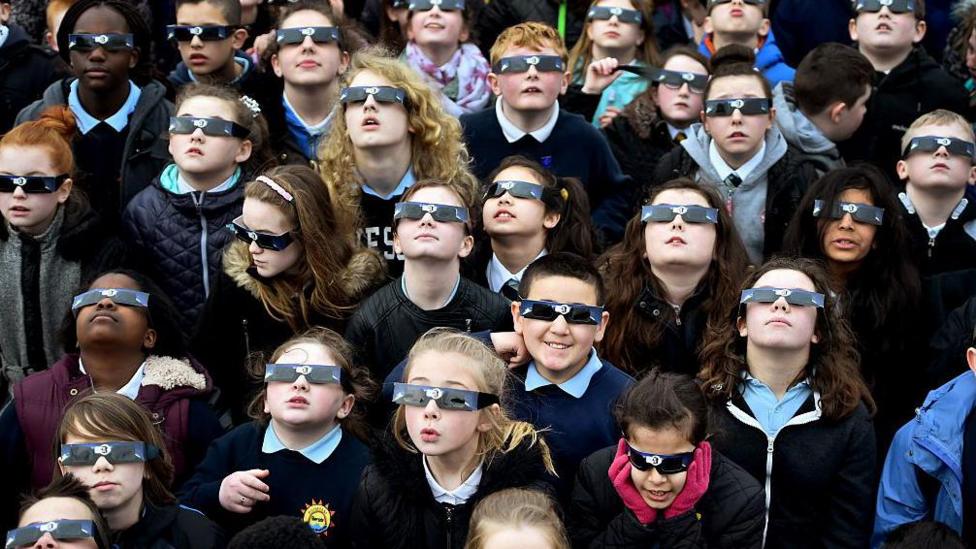
"Even if you don't feel like it is painful to look at the Sun, it is still really damaging to the retina," Heymans said. "It is a two-hour extravaganza as the Moon slowly covers the Sun and then moves away again so it is not just one glimpse, and it is really dangerous to keep looking."
She also warned against the temptation to glance at the Sun through clouds, noting that even a partially obscured Sun can cause harm. Historical evidence backs this caution: following the total eclipse of 1999, the Royal College of Ophthalmologists documented around 70 cases of people reporting vision problems afterwards, with roughly 40% of those affected having looked at the Sun for less than a minute.
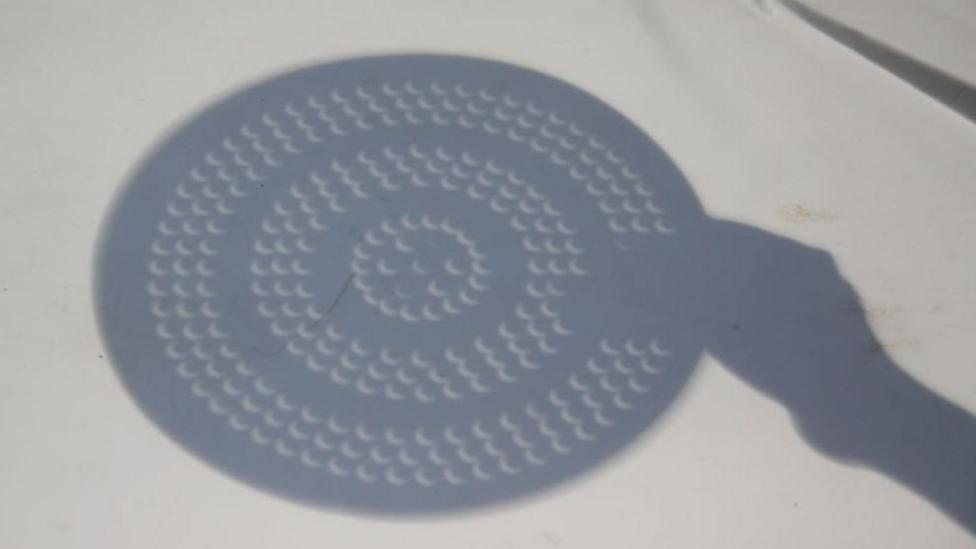
For those without certified glasses, alternative methods exist. A solar telescope or a simple pinhole projector can allow indirect viewing.
"The next best thing is a colander," Heymans said - or any household object with small holes.
The small gaps in a colander project an indirect image of the Sun onto a nearby surface such as a wall or the ground.
"Normally the sunlight shines through the holes but during the eclipse, chunks will be eaten out of the Sun, and at the peak, it will just be the arc in the shadow of the colander," she explained.
Caution is also needed when photographing the event, since a phone camera can sustain the same kind of damage as unprotected eyes if pointed at the Sun. Cameras can be shielded using eclipse glasses held over the lens. The UK Health Security Agency has similarly advised that the only two safe approaches are using specialist eclipse viewers or relying on indirect viewing methods, according to a national newspaper's guide to watching the eclipse safely.
What did the eclipse look like in Scotland?
While parts of Spain and Portugal experienced a total solar eclipse on the same day, Scotland fell just short of totality. The UK sat outside the narrow path of totality entirely, with Spain, Greenland and Iceland among the places on the total-eclipse track, according to travel advice on the 2026 eclipse. Heymans had described the near-miss as frustrating given how rare a total eclipse is.
"Solar eclipses happen every couple of years but a total eclipse is very rare and we are a stone's throw away from it," Heymans said. "Over the course of two hours, the Moon will be biting chunks out of the Sun as it moves across in front of it, blocking the light out."
Even at its most dramatic point, the Sun was not fully covered from anywhere in the UK. Royal Museums Greenwich had estimated that people in the UK and Ireland would see around 90% to 96% of the Sun covered by the Moon, according to the museum's guide to the event, though Heymans's figures had put the Scottish maximum at up to 95%. Timeanddate's city-level data showed the eclipse was strongest in Scotland's major population centres at roughly 88% to 92% obscuration, with Glasgow reaching 91.36%, Edinburgh 90.68% and Aberdeen 89.56%, according to timeanddate.com's Scotland-wide eclipse figures, which also list the end of the partial eclipse in Scotland as 20:02 BST.
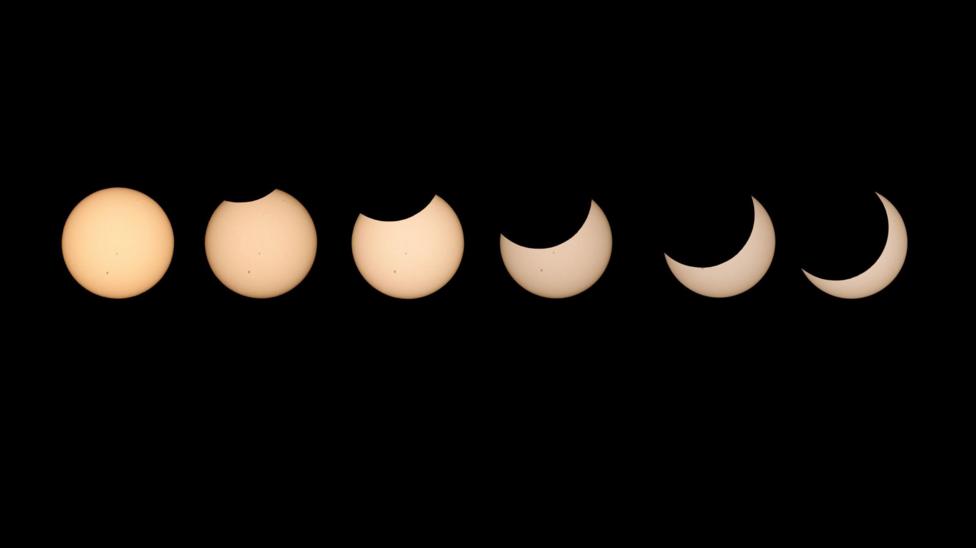
"It will be darker and it will feel a little eerie but we're not going to have the sky go completely dark," she said.
At the eclipse's peak, weather permitting, only a slim arc of the Sun remained visible.
"It's going to be agonisingly, frustratingly close but if anyone wants to see a full total eclipse, they will have to leave the UK," Heymans added.
What happens next?
The eclipse itself was a one-off event confined to the evening of 12 August 2026, with no repeat expected on this scale for years. Smaller partial eclipses will occur over the coming years, but the next total solar eclipse visible from Scotland is not expected until 23 September 2090, a timeline confirmed both by Heymans and by a BBC News report on the 2026 eclipse. A national broadcaster's eclipse guide had advised viewers to head outside by around 17:30 to allow time to set up equipment or find a suitable vantage point before the partial phase began, according to that broadcaster's viewing guide. City-specific timings for locations across Scotland had already been published by astronomical data services ahead of the event, according to timeanddate.com's Scotland-wide timing data.
- Up to 95% of the Sun was obscured in Scotland during the partial eclipse on 12 August 2026, with cloud cover leaving views mixed across the country.
- The event ran for roughly two hours, with slightly varying start and end times reported between 17:59 and 18:17 BST, and conclusion between 20:00 and 20:06 BST, depending on the source.
- Glasgow's peak coverage reached approximately 91.36% to 91.4% obscuration, Edinburgh reached around 90.68% and Aberdeen around 89.56%, according to timeanddate.com.
- Crowds gathered at sites including Calton Hill in Edinburgh, Whitelee Windfarm in East Renfrewshire and Ayr Beach, with clearer skies generally reported further north and east.
- The next total solar eclipse visible from Scotland is not expected until 23 September 2090.