

A doctor working alone at a devastated health centre on Indonesia's Flores island has issued an urgent plea for help, describing hundreds of injured people arriving with no rest in sight, days after a magnitude 7.7 earthquake struck the region on 16 August 2026. Official death tolls have varied between reports, with some figures citing at least 53 fatalities and others as high as 68, while roughly 5,000 people were displaced by the quake, which struck at a depth of just 15km early Saturday morning.
In Dampek village, one of the hardest-hit areas, the sole physician at the Dampek Health Centre described being unable to keep pace with the scale of casualties as the facility itself lay in ruins.
I am the only doctor here with hundreds of victims. I truly cannot cope.
I have not had any rest since yesterday because casualties keep arriving around the clock.
That single account, from Dr Melinda, reflects a wider crisis unfolding across Flores, where broken supply chains, collapsed infrastructure and continuing aftershocks are compounding fears among tens of thousands of displaced residents.
How severe is the damage across Flores?
Early assessments from Indonesia's National Disaster Management Agency found more than 1,000 houses damaged, alongside dozens of health facilities, schools and government buildings, though officials cautioned the true scale of destruction was still being determined. A provincial emergency decree detailed the toll more precisely, recording 914 houses as heavily damaged, 126 moderately damaged and 317 lightly damaged, according to Xinhua. The same decree listed 93 educational facilities, 36 health facilities and 38 government offices as damaged.
The disaster agency also reported that the initial earthquake, followed by 341 aftershocks, had left 51 people dead and 113 injured, a figure that sits alongside other tolls cited in the immediate aftermath. Displacement figures have continued to climb as well: by Monday morning, the number of people unable to return to their homes had reached 12,800, according to BNPB spokesman Berton Suar Pelita Panjaitan, as reported by Le Monde. Regional breakdowns showed 3,356 people sheltering in Sikka, 2,078 in Manggarai and 500 in Nagekeo, per the same Xinhua report.
This disaster marks Indonesia's deadliest earthquake since 2022, when hundreds died in West Java. The country sits at the junction of three major tectonic plates, making it especially prone to seismic activity. Our earlier coverage of the initial quake reported that the tremor first killed at least one person and triggered a tsunami warning that was later lifted, before the toll climbed further, as detailed in our follow-up report on the rising death toll, which put the figure at 47 as rescue teams combed through rubble.
What is happening with medical care on the ground?
Search-and-rescue teams and volunteer medics have continued pushing into communities cut off since Saturday, navigating roads blocked by landslides and scattered boulders. Dr Alhamzah, who works at the Lalang Health Centre in East Manggarai, said regional hospital teams were finally reaching places like Dampek by Monday, treating severely injured patients with whatever limited resources were on hand.
If a patient's condition is critical, we will refer them to the hospital in Ruteng instead, which is about four hours away.
Yet Ruteng's own hospital has been left struggling. Rista Mari, a public relations officer at Ruteng Regional General Hospital, said promised assistance had yet to materialise.
We heard that medical assistance would be provided, but nothing has arrived yet. We hope that assistance will arrive soon.
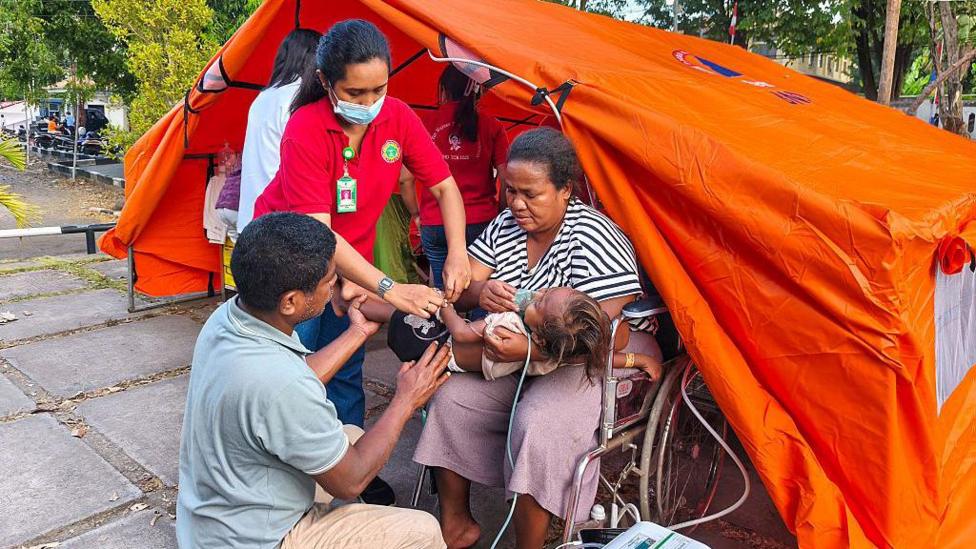
The hospital's operating room, delivery room, pharmacy and laboratory were all knocked out of service after its roof collapsed, forcing staff to work out of tents. Dr Alhamzah has since turned to social media to appeal for medical volunteers and donated supplies, warning that medicine stocks at disaster sites are running low.

People learned that doctors had arrived today, so many residents who had been sheltering in the hills came down. As a result, we urgently need more medicines, as well as additional medical volunteers.
In Ngada Regency, resident Charles Abar said health facilities and equipment had suffered severe damage, and that as of Sunday night no medical assistance had reached the area. He argued the government's response had been too slow.
I think facilities like emergency tents need to be provided immediately, but I also see that district and regional governments are struggling due to budget constraints, limited supplies, and so on.
He added that entire villages remained cut off from aid, forcing displaced residents to move to higher ground as hundreds of aftershocks continued to shake the island.
The community is still traumatised.
How are survivors coping with the aftermath?
In Labuan Bajo, the westernmost town on Flores and gateway to Komodo National Park, many residents have chosen to sleep outdoors rather than risk being caught indoors during another tremor. Farmer Anastasia Imad described the fear that gripped her household after the initial shock.
The shaking was very scary. My house almost collapsed. We were worried that the aftershocks would collapse the house while we were sleeping.
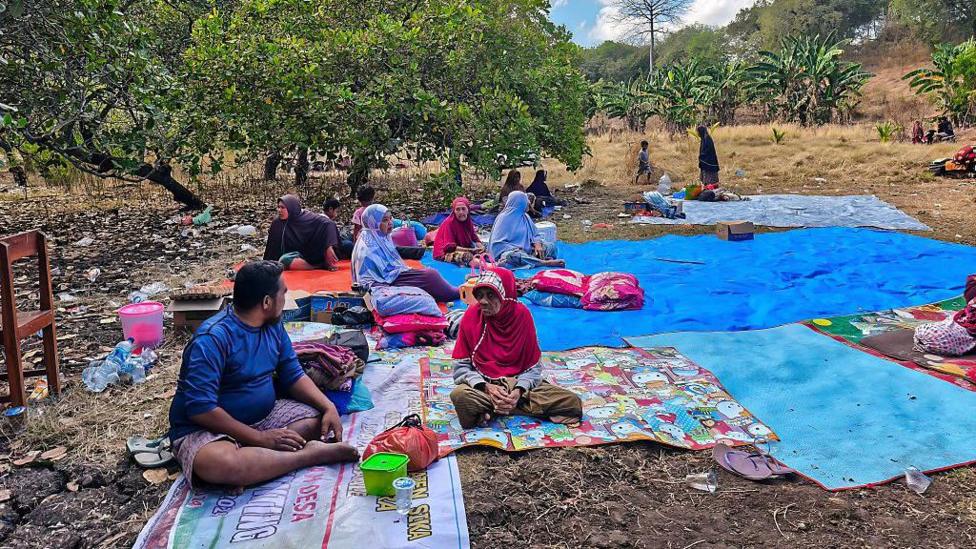
Herry Kabut, editor-in-chief of local outlet Floresa Media, said residents had largely been left to organise their own evacuation efforts amid blackouts, landslides and blocked roads.
So far, many basic necessities such as [basic foodstuffs] and clean water are in great demand. People have no idea where to evacuate. There's been no government advice. Many have fled to the hills and are starving.
On Sunday night, rescuers finally broke through to Nitung Village on Palue Island, just north of the Flores mainland, after it had been isolated for nearly two full days. The team reached the village only after a two-hour overland journey from the coast, according to Sikka Deputy Police Chief Commissioner Marselus Yugo Amboro, who led the mission.
Our challenge was the road, which was still prone to landslides. It was a life-threatening route.
Yugo said hundreds of homes in Nitung Village had been severely damaged, with residents sheltering in makeshift shelters after electricity and communication lines were cut entirely.
They haven't received aid yet because Nitung Village was isolated for nearly two days after the quake. This is likely the village in Sikka Regency that suffered the worst damage from the earthquake.
What historical and scientific context explains the impact?
The United States Geological Survey placed the quake's depth at roughly 10km, with its epicentre located off Flores's northern coast near Ende, according to the New York Times, which reported that Indonesian officials described it as one of the largest tremors to hit the area in more than 30 years. Al Jazeera reported that more than 230 aftershocks struck within the first 24 hours alone, the strongest measuring magnitude 6.2, according to its report on the disaster.
Flores's earthquake follows a string of major regional tremors in recent months. In June 2026, a magnitude 7.8 earthquake struck Mindanao in the southern Philippines, killing at least 32 people initially, a toll that later rose to 37 amid hundreds of aftershocks that continued to shake the region, according to our earlier coverage of that disaster, which also noted widespread power outages and landslides similar to those now hampering relief efforts on Flores.
What happens next?
East Nusa Tenggara provincial authorities have declared a 14-day emergency response period running from 15 to 28 August 2026, according to Xinhua's report on the disaster decree. Indonesia's Air Force has begun airlifting emergency aid to Flores, having already delivered around 13 tons of supplies, with helicopter drops planned for communities that remain cut off by road, according to Le Monde's reporting on the relief operation.
Rescue officials have not reported any missing persons at this stage, suggesting the operation is shifting from search-and-rescue toward sustained shelter and supply distribution for the thousands still displaced. With the emergency period set to run until 28 August, authorities face mounting pressure to accelerate deliveries of medicine, food and clean water to isolated villages before conditions on the ground worsen further.
Key Facts
- A magnitude 7.7 earthquake struck Flores island on 16 August 2026 at a depth of around 10-15km, with reported death tolls ranging from 51 to 68 across different sources.
- Roughly 5,000 to 12,800 people have been displaced, according to differing figures from the source article and BNPB spokesman Berton Suar Pelita Panjaitan.
- Damage assessments found 914 houses heavily damaged, 126 moderately damaged and 317 lightly damaged, plus harm to 93 schools, 36 health facilities and 38 government offices.
- A 14-day emergency response period is in effect from 15 to 28 August 2026, with air and helicopter aid deliveries underway.
- The disaster follows a magnitude 7.8 earthquake in the southern Philippines in June 2026 that killed at least 37 people.


