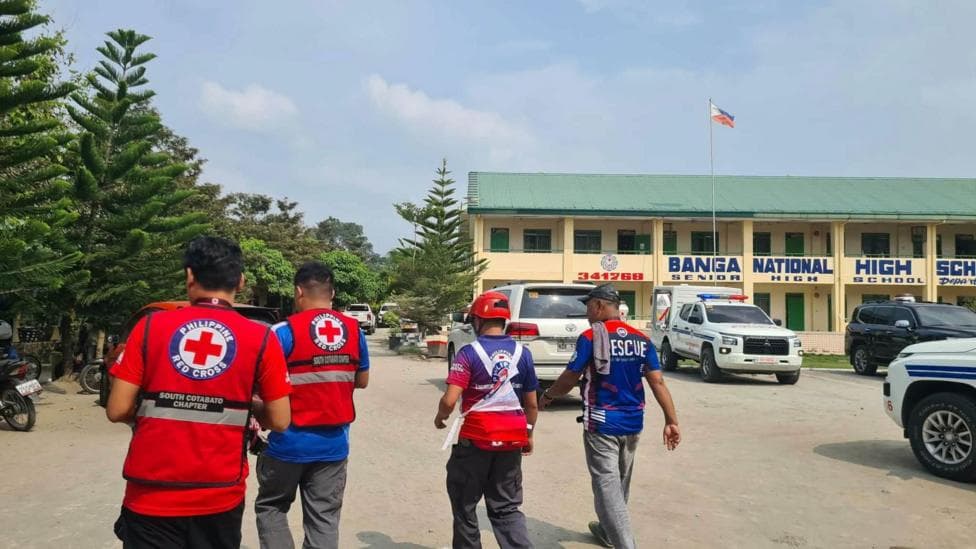
Aftershocks Continue to Rattle Southern Philippines
Hundreds of aftershocks have struck southern Philippines following a magnitude 7.8 earthquake that resulted in dozens of fatalities and hundreds of injuries.
The extent of the destruction on Mindanao island is becoming increasingly evident as emergency teams reach affected coastal cities and towns. Authorities warn that the death toll, currently at 37 dead and 487 injured, may rise further.
Numerous buildings have collapsed, and roads are either fractured or obstructed by landslides. Significant portions of the island remain without electricity or telephone service.
Earthquake Triggers Tsunami Warnings and Displacement
The earthquake, which occurred on Monday morning, prompted tsunami warnings in Indonesia, south of Mindanao, and along Japan's Pacific coast, displacing tens of thousands of residents.
"We hope the death toll does not increase further, but we are expecting it to move. Our priority today is search and rescue," Bernardo Alejandro, assistant secretary of the agency overseeing disaster response, told DZMM radio.
He added that approximately 2,000 homes and 6,000 public schools have been damaged according to preliminary estimates.
Geological Context and Historical Background
The Philippines frequently experiences earthquakes and volcanic eruptions due to its location on the Pacific Ring of Fire, an area known for heightened seismic activity.
Monday's earthquake was caused by movement along the Cotabato Trench, located off the southern tip of the country.
This trench, known for generating significant earthquakes, was the source of a magnitude 7.9 quake in 1976 that triggered a tsunami killing around 5,000 people.

Impact on Mindanao Communities
The quake caused panic in normally quiet areas of Mindanao. Mobile phone footage and CCTV cameras captured scenes of buildings collapsing and children screaming as the ground shook.
"Everyone felt dizzy, like we were being vigorously rocked on a hammock for more than two minutes. And the shaking was getting stronger by the second," said public school teacher Cesar Sundo in Lebak town.
"Our students were shouting and crying while and we needed to calm them down. And it was thousands of students."
Sundo noted that most students, who were under 10 years old, remained on school grounds until advised to go home.
"We were literally saved by our flag ceremony," he explained, referring to being outside when the quake struck.
Safety of Students During the Earthquake
Science minister and experienced seismologist Renato Solidum stated that many students survived because they were attending the morning assembly, which takes place every Monday.
"They were lucky to be outside. They were able to stay put and sit down," Solidum told DZMM in a separate interview.
"These areas have experienced strong earthquakes before. This is one of the strongest."
Damage to Infrastructure and Business
A viral video showed a branch of the popular fast-food chain Jollibee in General Santos City collapsing as bystanders watched in shock.
The company issued a statement on Monday night confirming that all its staff in the earthquake-affected areas are safe.
Government Response and Ongoing Challenges
President Ferdinand Marcos Jr. announced that he had mobilized the entire government apparatus to respond to the disaster.
His transportation and health secretaries have traveled from Manila to Mindanao to oversee relief efforts. Health Secretary Teodoro Herbosa reported that aftershocks, some strong, continued while medical personnel treated the injured.
Access to certain towns remains difficult. For example, Jose Abad Santos in Davao Occidental on Mindanao's east side faces challenges.
Mayor Jason John Joyce told DZMM that landslides have buried the town's only highway, leaving only half accessible by road.
"Relief goods have to be flown in to far-flung barangays (villages)," he added.