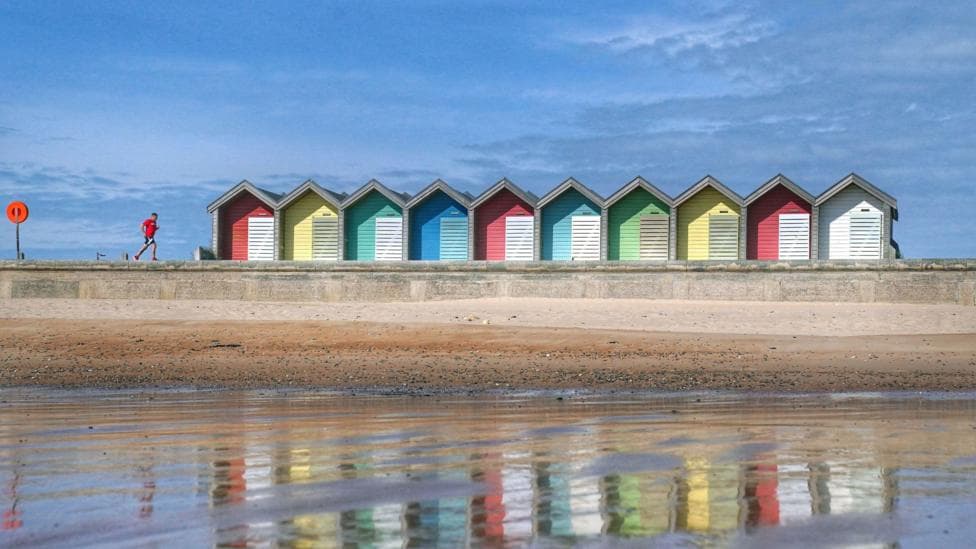
Authorities have restricted access to sections of Blyth South Beach in Northumberland following the discovery of creosote in the water and sand, a hazardous substance left behind by an industrial operation that ceased decades ago.
In August 2026, members of the public reported "oil-like pollution" and a fuel smell at the beach. The Environment Agency, Northumberland County Council, and the Port of Blyth launched an investigation, and laboratory analysis confirmed the contaminant as creosote. The substance is believed to originate from an abandoned timber treatment facility that operated on adjacent land until approximately 1980.
The pollution incident was formally logged on the Environment Agency's water-quality website at approximately 17:10 BST on 11 August 2026. An Environment Agency investigation determined that the creosote is contained within a localised area near the Hole in the Wall, where it seeps into the sand through contaminated groundwater.
Where is the beach closed?
Access restrictions remain in place on the land between Blyth West Pier and the Dave Stephens Centre. However, bathing was permitted to resume on 14 August on the beach south of the Dave Stephens Centre, where initial water samples indicated the bathing-water site remained unaffected.
What is the health risk?
Northumberland County Council stated that the public health risk is low, but the council, Environment Agency, and Port of Blyth have issued precautionary guidance. Members of the public are advised to avoid contact with the affected area, and dog owners are specifically urged to keep their pets away from both the contaminated water and sand, as the substance poses particular risks to animals.
What is the investigation status?
The Port of Blyth has appointed specialist consultants, and a site investigation plan is being developed to address the ongoing contamination. According to reporting from a regional news outlet, the Environment Agency has begun regular water testing along Blyth South Beach, with the first sample collected in early October 2026.
The three organisations are collaborating to respond to the pollution, though the duration of the clean-up effort remains uncertain. Officials have described the remediation work as a "significant" undertaking that will require sustained effort.
What happens next?
The restrictions will remain under review as further evidence emerges. According to local reporting, the ongoing water testing is intended to inform future decisions about public health advice and access restrictions. No timeline has been set for the removal of current precautions.
This incident reflects a broader pattern of beach contamination across the UK. Earlier in 2026, authorities warned the public against entering the sea at Portobello Beach due to high bacteria levels, while bathing and paddling were banned at Saltcoats following a sewage pipe burst. Similar warnings have been issued at other locations including Kinghorn Beach and Wirral beaches, highlighting ongoing challenges with coastal water quality management.