

Rail services on one of the South East's busiest routes have been cancelled this weekend after a Southern train carrying around 150 people derailed near Lewes, East Sussex. Two passengers were seriously injured and 18 others were hurt when three of the train's eight carriages left the tracks on 13 August 2026. British Transport Police have since confirmed that none of the injuries are life-threatening.
The train involved was the 14:24 BST Southern service from London Victoria to Eastbourne. According to a report from the Telegraph, three of the eight carriages came off the rails on a stretch of track just outside Lewes station.
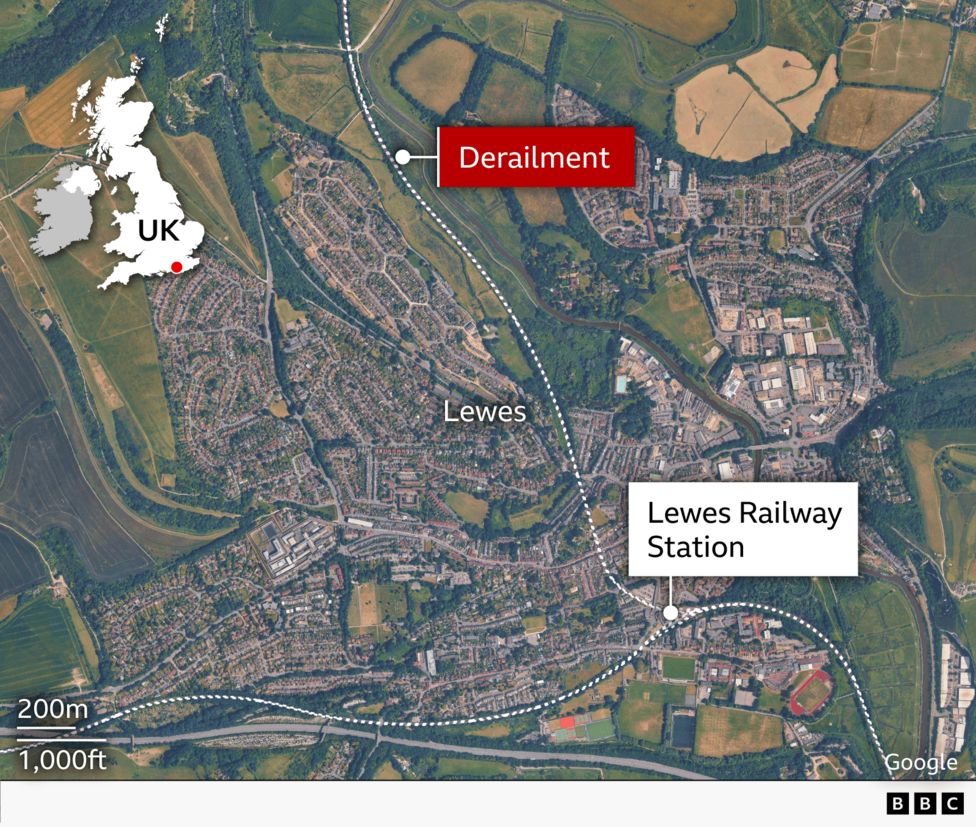
What caused the derailment?
The exact cause has not been officially confirmed. Investigators from the Rail Accident Investigation Branch (RAIB) are examining the infrastructure, reviewing CCTV footage, and analysing signalling and train data at the site. A team was deployed to begin gathering evidence on 13 August, according to a post from RAIB.
Rail Magazine industry editor Richard Wilcock said it was difficult to determine the cause without speculating, though photographs of the scene appeared to show what he described as a buckled track. Some reports have suggested a track defect may have played a role, though this has not been officially verified, according to a report from ' regional service.
The derailment happened on what was reported to be the hottest day of the year, and some accounts have raised the possibility that heat may have been a factor, according to the Telegraph. The BBC's transport correspondent Katy Austin said that while heat can affect railway infrastructure, it could not yet be established whether hot conditions contributed to this incident.
How are passengers describing what happened?
Passengers on board the train have spoken about the panic and fear they experienced as the carriages left the tracks. Several people were trapped inside before being evacuated.
Rachel Heath described the train as bumping up and down before jostling side to side.
I just remember looking around and seeing so much panic and fear in so many people's eyes.
She said the carriage felt as though it was almost lifted into the air before crashing down onto its side, adding that she thought she was going to die.
Just a very, very harrowing experience.
Tracy McGregor compared the derailment to a metal tube carving through the earth, picking up dirt from the surrounding field as it went.
When it did stop, there was this almighty cloud of mud and earth and everyone had mud on their faces.
Passengers were evacuated onto the track after the derailment.
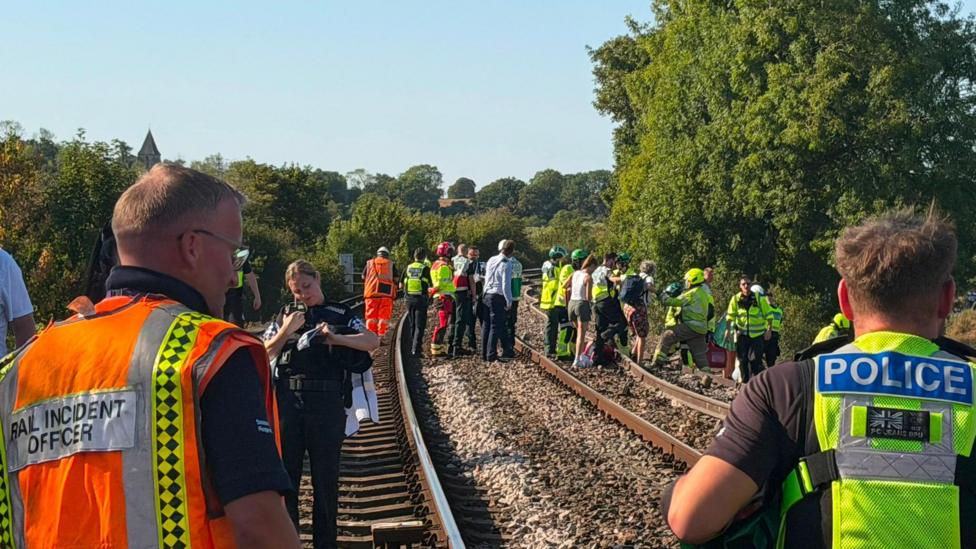

What has happened at the scene since?
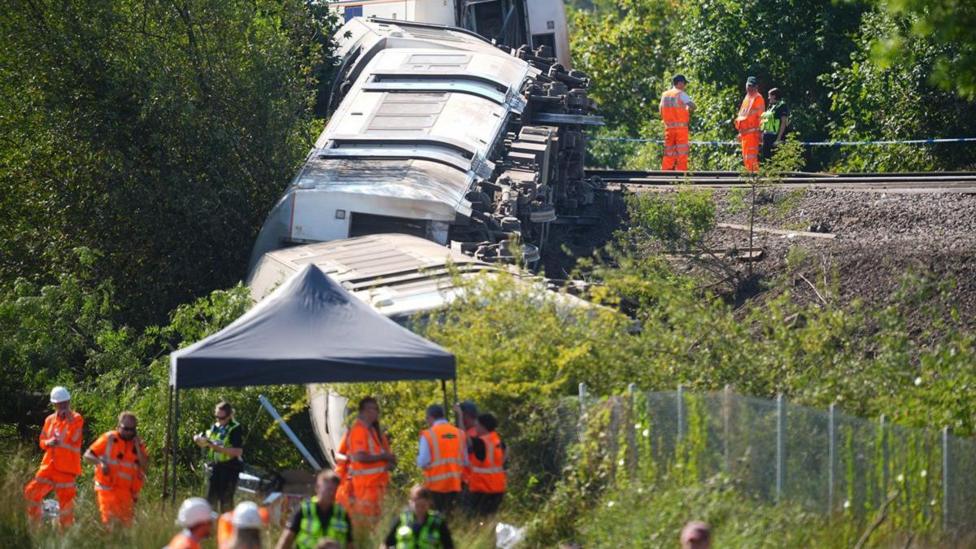
Photographs from the site have shown flattened trees and a section of track strewn across the embankment, illustrating the force with which the train left the rails. Preparations were under way on 14 August 2026 to bring in a crane to remove the derailed carriages.
Investigators, alongside emergency responders and Network Rail staff, have been operating from a command centre established in a nearby field. East Sussex Fire & Rescue Service confirmed it was still working at the scene alongside other emergency partners as of 11:30 BST on 14 August 2026, according to a statement from the fire service.
Teams have been working from a temporary base near the site.
Lewes District Council's deputy leader, Christine Robinson, praised the emergency response, particularly that of East Sussex Fire & Rescue Service.
There is no question that without their swift and coordinated actions, the number of casualties would have been significantly higher.
The nearby Lamport Community Hub opened its doors to offer a safe space, medical treatment and shelter from the hot weather, with temperatures reaching the 30s at the time.
How widely has this affected rail travel?
Southern Rail has cancelled all trains between London Victoria and Eastbourne this weekend, with the line between Haywards Heath and Lewes closed indefinitely in both directions. Cooksbridge and Plumpton stations will not be served at all over the weekend, with rail replacement buses put on instead. National Rail has said the Lewes to Haywards Heath line will remain closed until further notice while investigations, detailed assessments and repairs are carried out, according to National Rail's service disruption notice. Network Rail had earlier said major disruption was expected to last until 22:00 BST on 13 August, according to a live coverage update.
The disruption comes at an inconvenient time for the region, with Eastbourne expecting a large influx of visitors this weekend for its popular Airbourne air show. Southern has advised travellers heading to Eastbourne to route via Brighton along the coast instead, and has urged commuters planning to travel on Monday to check its website for updates on Sunday evening.
This is the second serious derailment to disrupt rail travel in England within a matter of days. A Southern train derailed near Lewes shortly before 16:00 BST on 13 August, shutting several routes as emergency crews responded, an incident that followed a separate third rail fault and an earlier derailment at Selhurst, according to our earlier coverage of the Lewes derailment. The following day, a Greater Anglia train came off the tracks near Wickford, Essex, with around 45 passengers on board but no injuries reported, according to our report on the Wickford incident. Network Rail has since said the summer heatwave has placed exceptional challenges on the rail network following the two derailments in close succession, as detailed in our coverage of the network-wide strain.
What have officials said about rail safety?
John Whitehouse, chief executive of Great Thameslink Railway (GTR), which operates Southern, sought to reassure passengers about the rarity of such incidents.
Accidents of this nature are incredibly rare, and the railway is incredibly safe.
Asked about speed restrictions during hot weather, Whitehouse told BBC Sussex that a robust inspection regime is in place during periods of high temperature, and that speed reductions are implemented where necessary.
It wasn't in this case, but obviously that will need to be picked up by the RAIB.
What happens next?
The RAIB has said it will carry out a full investigation and is expected to make a formal announcement in the week commencing 17 August 2026, according to a summary of the incident. British Transport Police have appealed for any passengers who were on board and have not yet spoken to officers to come forward. Disruption on the Lewes to Haywards Heath line is expected to continue until further notice while repairs and infrastructure assessments proceed, according to National Rail.
Key Facts
- Three of eight carriages derailed on the Southern service from London Victoria to Eastbourne near Lewes on 13 August 2026.
- Around 150 passengers were on board; two suffered serious but not life-threatening injuries, and 18 others were treated and later discharged from hospital.
- The Lewes to Haywards Heath line remains closed indefinitely as investigators and engineers work at the site.
- A separate Greater Anglia derailment near Wickford, Essex, occurred the following day with no reported injuries.
- RAIB is expected to issue a formal update on its investigation in the week beginning 17 August 2026.


