

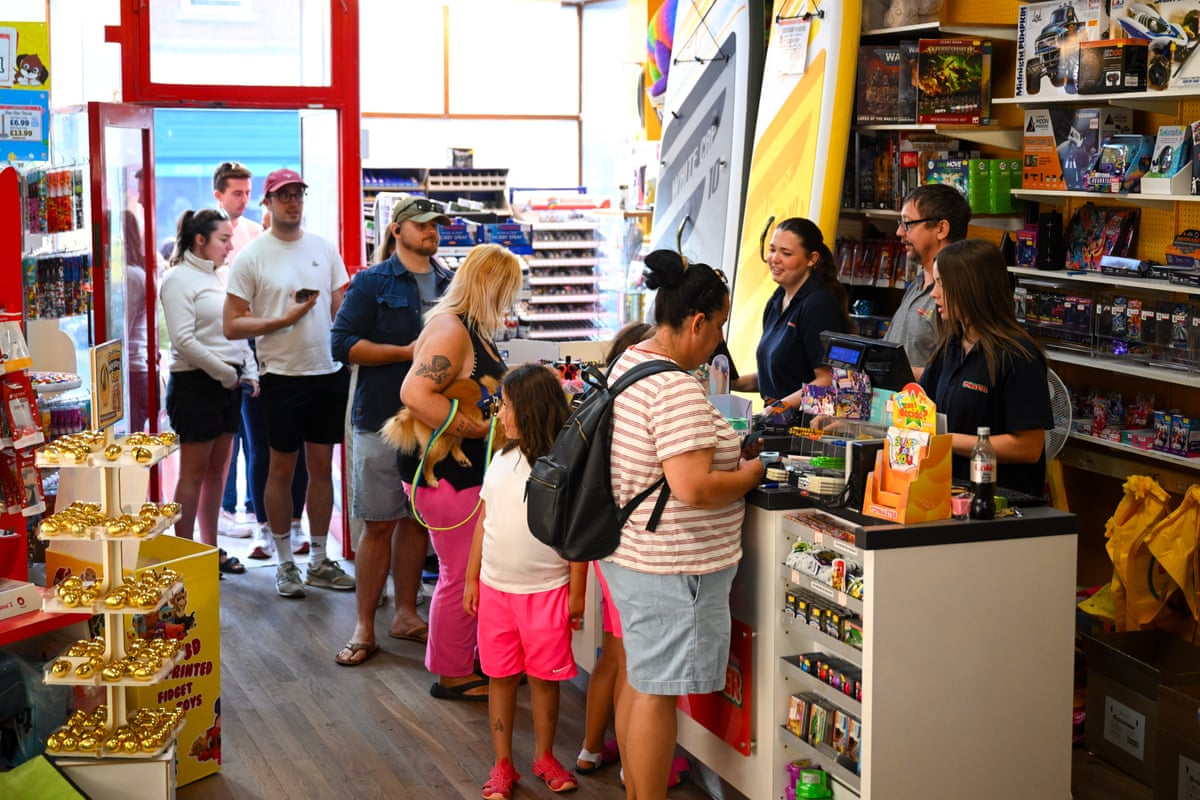
Shoppers across the UK queued outside corner shops and scrambled through secretive online networks on Wednesday 12 August 2026 to secure the last pairs of eclipse glasses ahead of a near-total solar eclipse visible across western Europe. Prices for the protective eyewear doubled in some locations as supplies ran low, with some sellers charging as much as £20 a pair outside London Underground stations.
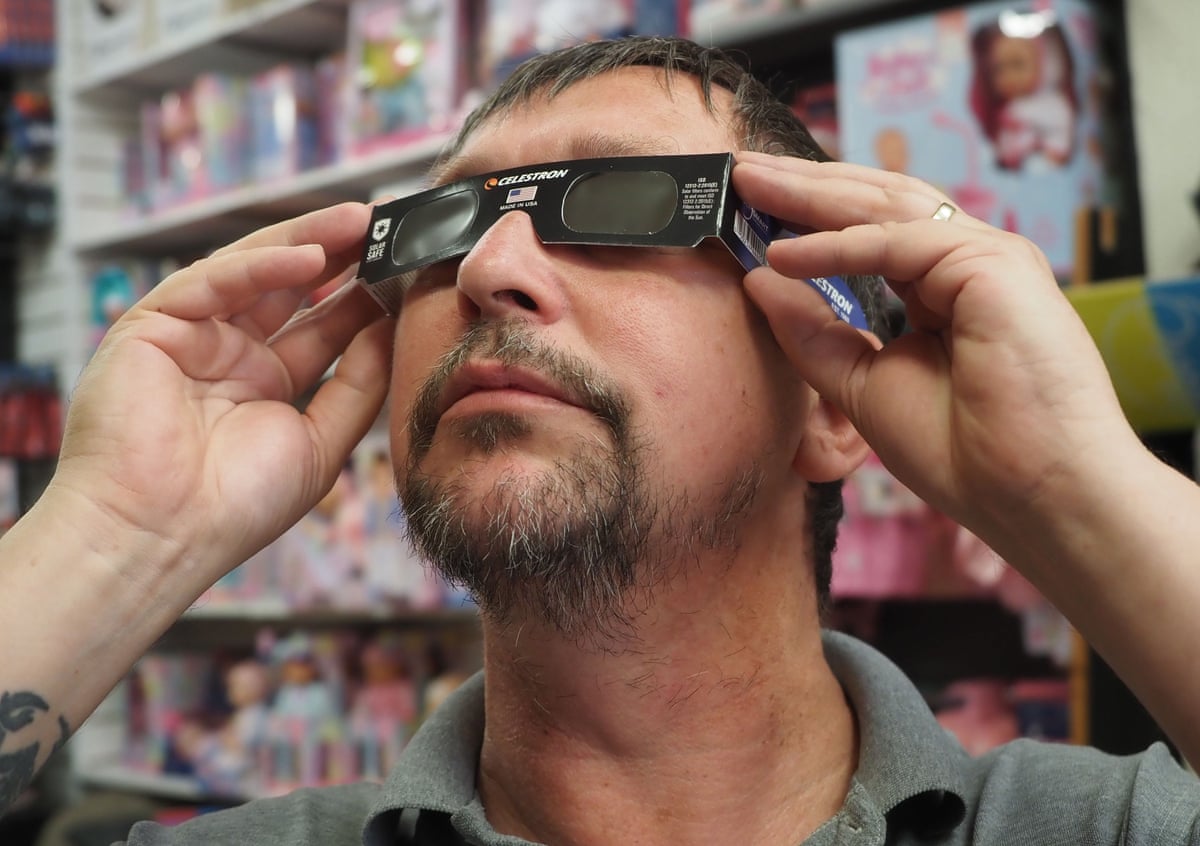
The rush was driven by a rare celestial event: a near-total solar eclipse witnessed by tens of millions of people across western Europe, the first of its kind in more than 25 years. Viewing the sun during the eclipse without glasses that filter visible, ultraviolet and infrared light carries a serious risk of retinal damage.
Why did eclipse glasses become so hard to find?
Demand for certified glasses far outstripped supply in the days before the eclipse, pushing prices up and prompting informal trading networks to spring up online. A secretive WhatsApp group buzzed with notifications throughout the day, alerting members whenever a new batch, or "drop", of glasses became available at a particular shop.
Rather than trading in anything illicit, the group's members were chasing one of the most sought-after items of the week: certified eclipse eyewear. Glasses that had cost around £5 in the weeks leading up to the eclipse were being resold for double that price by corner shops that had managed to secure last-minute stock.
How did retailers and opportunistic sellers respond to the shortage?
Enterprising individuals set up makeshift stalls to cash in on the scarcity. Outside Whitechapel Underground station, one stall was selling glasses for £10 a pair, while a Reddit user advertised plans to sell pairs for £20 outside Camden Town station until stock ran out.
The scramble caused tempers to fray in several locations. One corner shop owner posted an appeal to a pop-up WhatsApp group asking customers to behave more reasonably towards staff.
We are hearing very bad things about customers and how they are treating the employees and the stores, threatening with bad reviews. Do not drive across the country and then blame the store if they don't have them.
Ali Raza, owner of the AM2PM convenience store in Whitechapel, said he had been forced to turn customers away throughout the day because of overwhelming demand.
On Sunday we had people coming from Surrey, Southend-on-Sea. Yesterday night a lady came from Southampton, and loads of people have come from Birmingham as well. We're too busy.
Raza added that he had already sold 6,000 pairs by Wednesday.
At 2.30am we had a delivery from Spain and by 9.30am we sold out [of] everything.

The Royal Greenwich Observatory reported selling more than 15,000 pairs of glasses over the preceding month before running out entirely. Exmoor national park also exhausted its stock, with a spokesperson explaining the difficulty of restocking in time.
We got to a point where we couldn't get any more from our supplier in time and we don't need them again, not until 2081.
Branches of Sunglass Hut were forced to put up signs informing customers that they did not stock eclipse glasses, after being overwhelmed with enquiries.
Why is eye protection essential during an eclipse?
Looking directly at the eclipse without proper eye protection can cause permanent damage to the eyes. Although staring at a partially obscured sun is not medically more dangerous than looking at the sun under normal conditions, the risk increases because the reduced brightness makes it far easier, and more tempting, to look directly at it for longer.
Panayiotis Maghsoudlou, a clinical lecturer in ophthalmology at the University of Bristol, explained why the body's usual defences fail during an eclipse.
Under normal conditions the eye's protective responses do the work: painful glare, reflex aversion within a second or so, blepharospasm, tearing, and a constricted pupil. Almost nobody can hold fixation on the full disc long enough to reach the photochemical damage threshold.
During an eclipse, the sky darkens, your pupils widen, and the glare drops enough that staring feels comfortable, so people gaze at the exposed sliver of sun for minutes with a wide-open pupil and no warning discomfort. That's why eye injuries cluster around eclipses even though the sun itself is unchanged.
Maghsoudlou also warned that damage may not be immediately apparent, since the retina lacks pain receptors.
The retina does not contain pain receptors. Symptoms generally appear later, as blurred or reduced central vision, a blind spot, distortion of straight lines and altered colour perception.
What happened after the last major eclipse in 1999?
Medical services in the UK saw a spike in eye-related complaints after the 1999 eclipse, with roughly half of the resulting cases reported within two days of the event. Moorfields Eye hospital received 1,600 calls to its dedicated eclipse helpline and treated 220 patients in its emergency department, while Birmingham Eye hospital logged around 300 calls and treated 64 people at specially arranged eclipse clinics.
A man permanently blinded in part after watching that 1999 eclipse without adequate protection has spoken publicly ahead of this year's event, urging people to rely only on certified eyewear, according to our earlier coverage of his warning. Concerns have also been raised this year about counterfeit glasses circulating in the run-up to the eclipse, which experts say could be dangerous if used to view the sun directly.
Kyla Black, Boots Opticians' director of optical practice, urged shoppers to check for proper certification before using any eyewear to view the eclipse.
It isn't worth taking the risk with your eyesight. There are several safe ways to enjoy the eclipse such as wearing certified eclipse glasses that meet the international ISO 12312-2 safety standard.
How does this eclipse compare with past and future events?
This is mainland Europe's first total solar eclipse since 1999, according to Space.com, and NASA has confirmed it is the only total solar eclipse of 2026. The path of totality runs through Greenland, Iceland, northern Russia, the Atlantic Ocean, Spain and a small part of Portugal, with totality lasting up to two minutes and 18 seconds at the centre of the path, according to National Geographic. Roughly 980 million people worldwide are able to see at least part of the eclipse, with about 15 million located within the path of totality, according to Al Jazeera's eclipse tracker.
Shoppers without glasses were not entirely without options. In the days before the eclipse, experts had set out several safe household methods for viewing the event without certified eyewear, including pinhole projectors, colanders and simple box viewers, as detailed in our earlier report on alternative viewing methods. Elsewhere, some astronomers chose to avoid the UK's partial view altogether; a group from Cambridge travelled to Spain and the Faroe Islands to witness totality directly, as covered in our report on their journey.
What happens next?
In London, the partial eclipse was set to begin at 6:17pm, peak at 7:13pm and end at 8:06pm local time, according to NASA's eclipse tracking page, which also confirmed London would see 91% partial coverage. The European Space Agency broadcast live footage of the event from the Javalambre Observatory between 19:30 and 20:45 CEST, featuring telescope feeds, drone footage and expert commentary, according to ScienceDaily. Millions across the continent, including in Spain, Iceland and the UK, ultimately watched the eclipse unfold, as detailed in our coverage of the eclipse itself.
Key Facts
- Eclipse glasses that cost around £5 in the weeks before the event were resold for up to £20 by opportunistic sellers on 12 August 2026.
- The Royal Greenwich Observatory sold more than 15,000 pairs of glasses in the preceding month before selling out.
- After the 1999 eclipse, Moorfields Eye hospital received 1,600 helpline calls and treated 220 patients; Birmingham Eye hospital logged around 300 calls and treated 64 people.
- NASA listed London's partial eclipse as running from 6:17pm to 8:06pm local time, peaking at 7:13pm, with 91% coverage.
- An estimated 980 million people worldwide could see part of the eclipse, with about 15 million within the path of totality.


