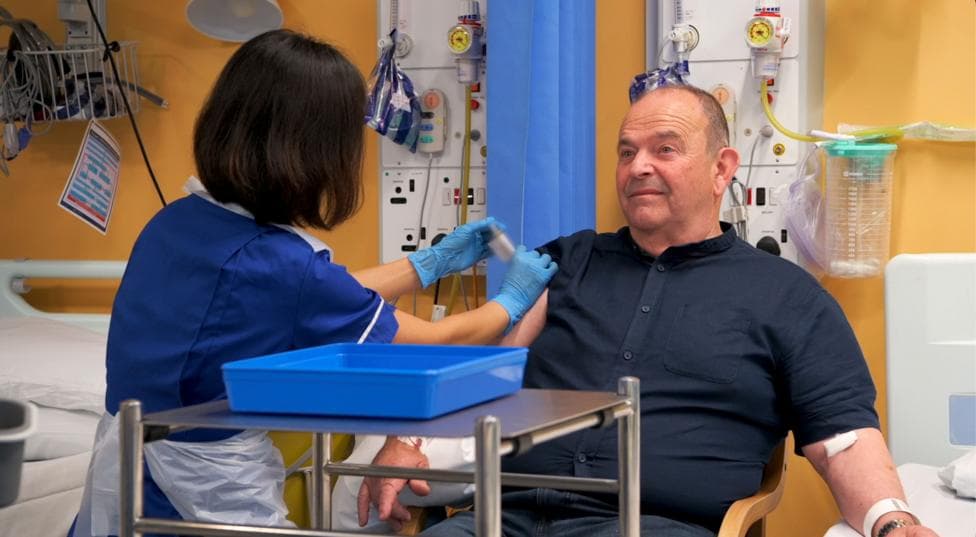
Peter Smith, from Taunton, has warned people to protect their eyes properly when viewing this week's solar eclipse after suffering permanent damage to both retinas while watching the 1999 eclipse without correct protection. Smith wore a borrowed welder's mask 27 years ago believing it would shield his eyes, but by the following morning he was experiencing flashing lights and headaches, and doctors later confirmed the damage was irreversible. He is now calling on the public to use certified eye protection to watch Wednesday's astronomical event safely.
Smith explained that any harm caused by unsafe viewing cannot be undone, unlike more visible injuries.
Make sure its got the right protection and filters to stop any damage because any damage you get, it'll never heal. It's not like cutting your hand.
He said the effects of that 1999 exposure have never fully gone away.
Even now there is a residual impact. When I'm tired sometimes a flashing dot might come back, and it's not nice when it does.
If you're going to go and watch it, make sure that everything you've got is correct.
Why does even a partial eclipse pose a risk?
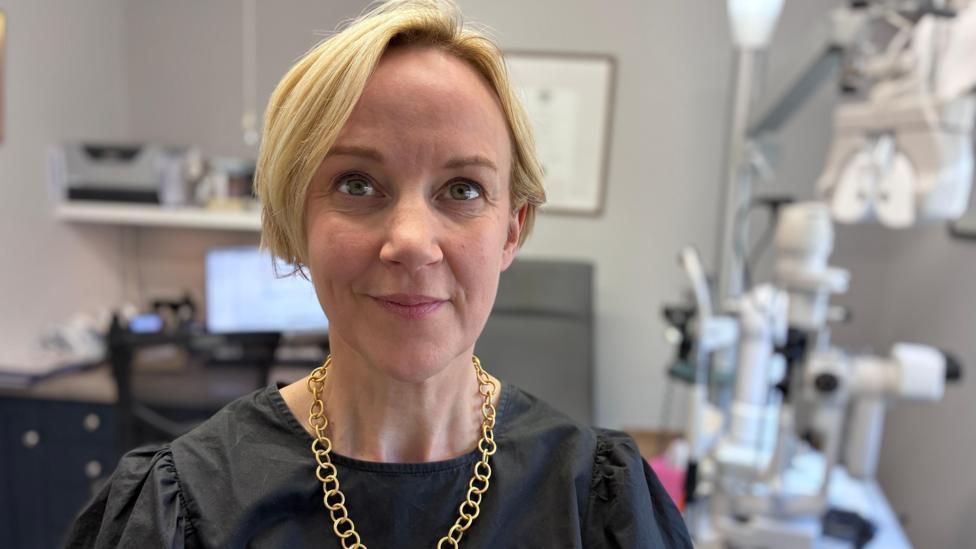
Because the sun remains partially visible throughout a partial eclipse, there is still enough light to burn the retina if viewed without adequate protection. Sarah Farrant, an optometrist from Taunton, said the partial eclipse seen in the UK still carries real danger despite the sun appearing dimmer.
The partial eclipse in the UK really means that people will want to look at the sun, but there's still enough to cause damage even when the sun is at its dimmest here in the UK.
If they're not safe when they are viewing the sun, you can end up with what we call a 'solar burn' at the back of the eye and that can have a lifelong lasting impact on the central part of your vision.
This danger is echoed by international health authorities. According to UK Health Security Agency guidance, reduced brightness during an eclipse can override the natural reflex to look away, meaning the retina can be damaged without any pain being felt at the time. Similarly, NASA has reiterated that it is never safe to look directly at the sun during a partial or annular eclipse without proper filters, warning that cameras, binoculars and telescopes can even burn through standard eclipse filters.
What are the symptoms of solar retinopathy?
Symptoms of eye damage from unsafe solar viewing can take time to appear and vary in severity. Medical guidance cited in coverage from NBC News notes that a blind spot, wavy lines, floaters, blurry vision and light sensitivity can all emerge within roughly 24 hours of unsafe exposure, closely matching the delayed symptoms Smith experienced after 1999. A statement from the Freiburg University Eye Center adds that such retinal damage is often painless, may not become apparent for hours or even a day, and currently has no proven treatment capable of restoring already damaged retinal cells.
How can people watch the eclipse safely?
The safest way to view the eclipse directly is with eclipse glasses certified to the ISO 12312-2 safety standard, while indirect projection methods offer an alternative for those without them. Looking at the sun with the naked eye, ordinary sunglasses, or unfiltered cameras, binoculars or telescopes can cause serious harm. A simple kitchen colander can be used for indirect viewing: held above the ground with your back to the sun, its holes project a grid of crescent-shaped images onto the ground below.
Where can people watch the eclipse in the South West?
Astronomy groups across the South West and Channel Islands are running free and ticketed events to help people observe what is expected to be the deepest partial solar eclipse since 1999, according to earlier coverage of viewing events across the region. Separate reporting has suggested Cornwall and the Isles of Scilly could offer some of the best views in the country, with up to 95% of the sun expected to be covered, as detailed in coverage of the West Country's eclipse preparations.
What happened during the 1999 eclipse?
The 1999 eclipse, which Smith watched without adequate protection, is documented in a peer-reviewed report referenced by a hospital-based study of eye assessments carried out after the event, giving historical context to the type of injury he sustained. Separate long-standing guidance from the American Academy of Ophthalmology and NASA has warned for years that direct viewing during a partial eclipse can permanently damage the retina, since the retina itself has no pain receptors to warn of harm as it occurs.
What happens next?
Attention now turns to ensuring the public follows safety guidance ahead of Wednesday's eclipse. Germany's Federal Office for Radiation Protection has issued a 2026 safety notice stating that even a partial eclipse requires certified eye protection and that ordinary sunglasses are insufficient, according to the agency's official notice. UK and international outlets continue to reiterate the same core message in the run-up to the event: only ISO 12312-2 certified glasses or indirect viewing methods such as pinhole or colander projection should be used to watch the sun safely.
Key Facts
- Peter Smith, from Taunton, suffered permanent retinal damage after watching the 1999 solar eclipse using a welder's mask.
- Optometrist Sarah Farrant warns that even a partial eclipse carries enough solar intensity to cause a lasting 'solar burn' at the back of the eye.
- UK Health Security Agency guidance notes that eclipse-related retinal damage can occur painlessly, without any warning sensation.
- Symptoms such as blind spots, wavy lines and blurred vision can take up to 24 hours to appear after unsafe viewing, according to medical reporting.
- Safe viewing requires ISO 12312-2 certified glasses or indirect methods such as pinhole or colander projection.