

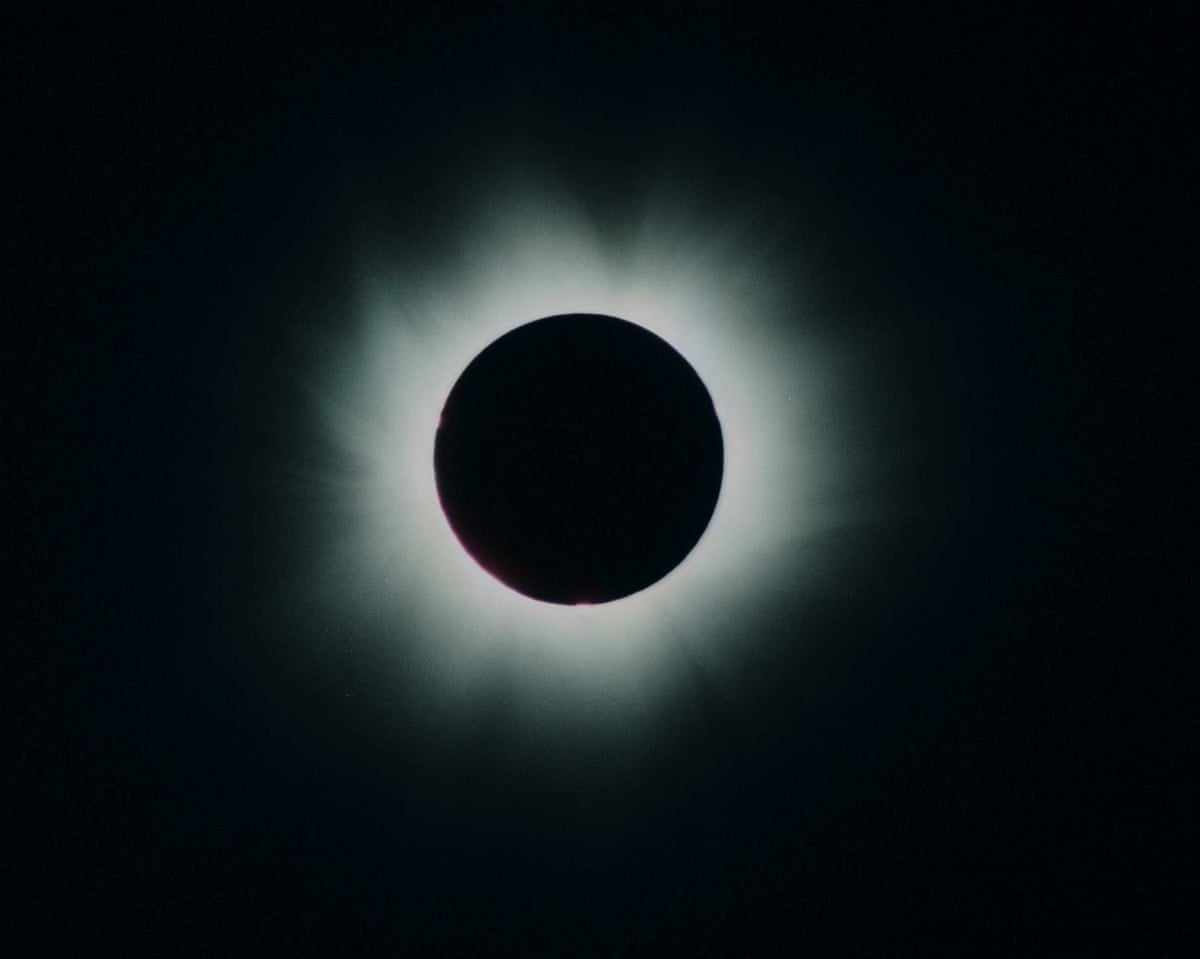
On 12 August 2026, millions of people across Europe gathered in fields, on beaches and along cliff paths to witness a total solar eclipse that swept through Iceland, Spain and a small corner of Portugal, while a deep partial eclipse darkened skies over the United Kingdom and much of western Europe. It was the first total solar eclipse visible from mainland Europe since 1999, and crowds converged on coastal towns from Cornwall to Mallorca hoping for clear skies. Conditions varied sharply by region, with forecasters warning of low cloud in parts of Iceland even as much of Spain expected a largely unobstructed view.
According to an international news agency's mapping analysis, this was the first total solar eclipse to be seen from mainland western Europe since 1999, with the point of maximum totality occurring over the North Atlantic to the west of Iceland.
Where could the eclipse be seen?
The path of totality formed a band roughly 200km wide running from A Coruña in north-western Spain to the Mediterranean island of Mallorca, while also crossing Greenland, Iceland and a sliver of Portugal. Officials had estimated that as many as six million people might travel into this corridor to catch a glimpse of full totality. Beyond that narrow band, tens of millions more across western Europe experienced a substantial partial eclipse, with the moon blotting out much of the sun's disc in countries including the UK, France, Belgium, Switzerland and northern Italy.
NASA's published city-by-city timings put totality in Reykjavík at 5.48pm local time, while in León, Spain, it was expected at 8.28pm local time, according to the US space agency. Separately, astronomical data site timeanddate.com recorded the very first partial phase beginning at 15:34:15 UTC, with the point of greatest eclipse worldwide occurring at 17:46:06 UTC.
How did people prepare in the UK?
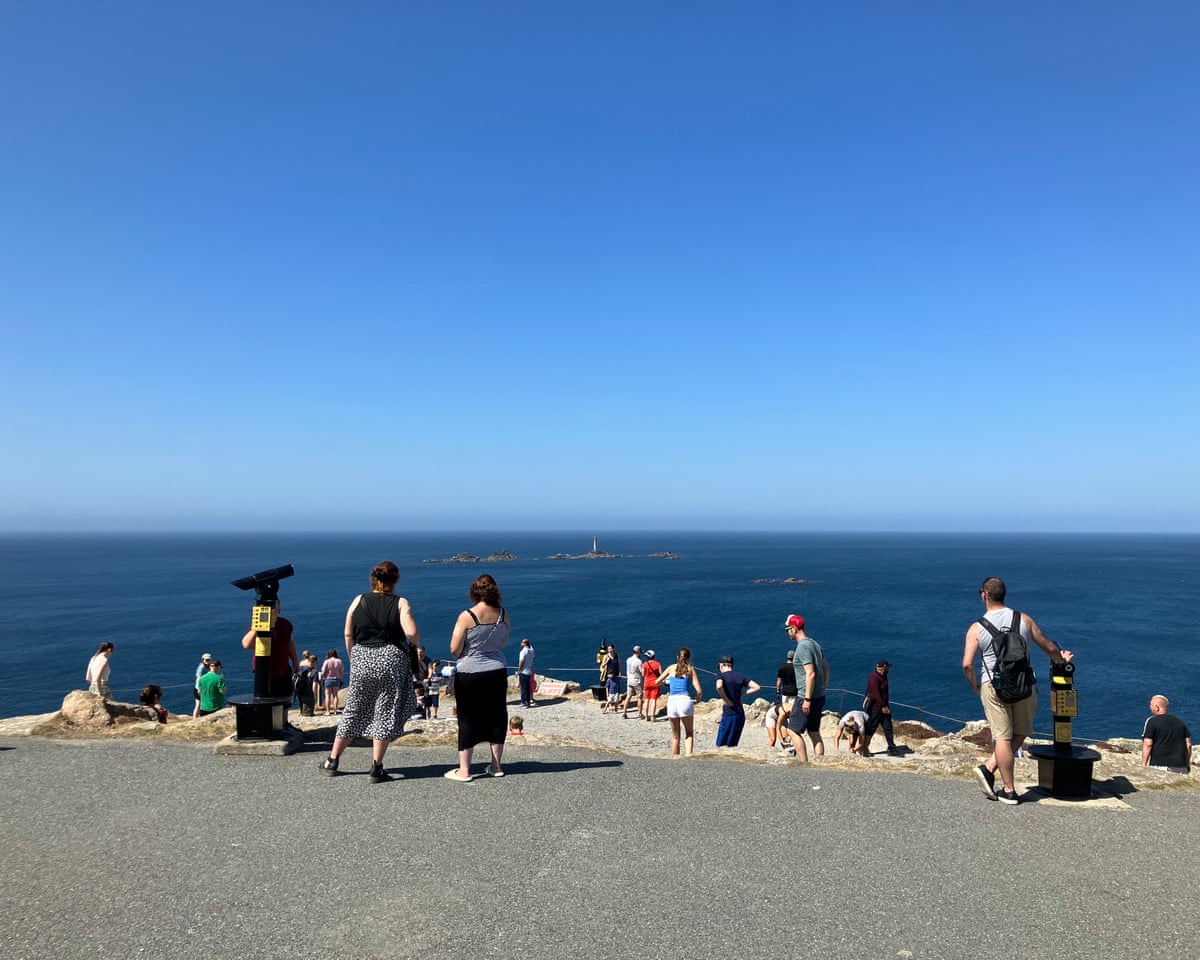
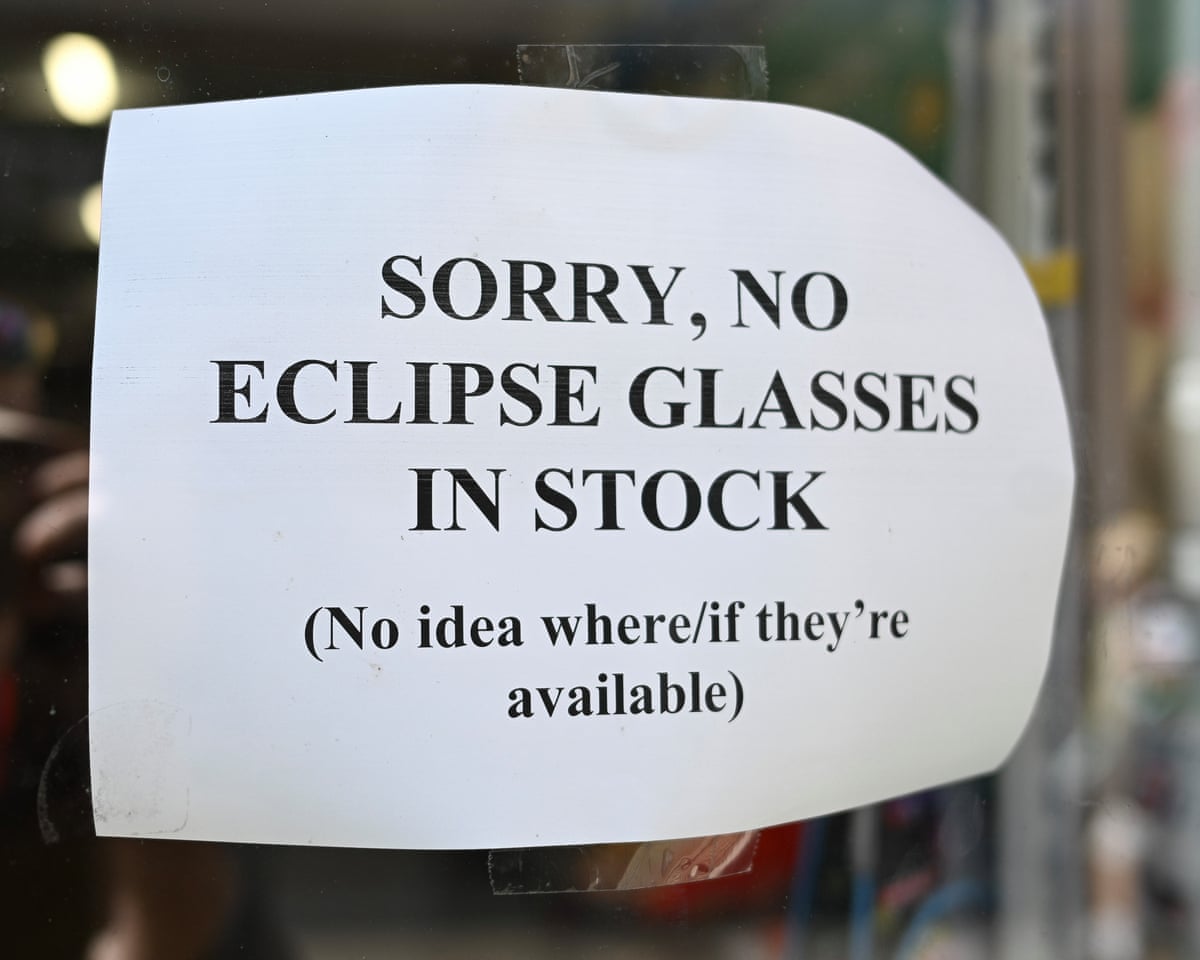
In west and north Cornwall, roads and car parks filled early as residents and holidaymakers positioned themselves for what was expected to be around 95% coverage — roughly five percentage points deeper than in London, according to the Royal Observatory, Greenwich. Eclipse glasses were scarce well before the event: shops in Penzance posted notices saying stock had run out, and in St Ives dozens of people queued outside a phone repair shop after it announced a fresh delivery had arrived.
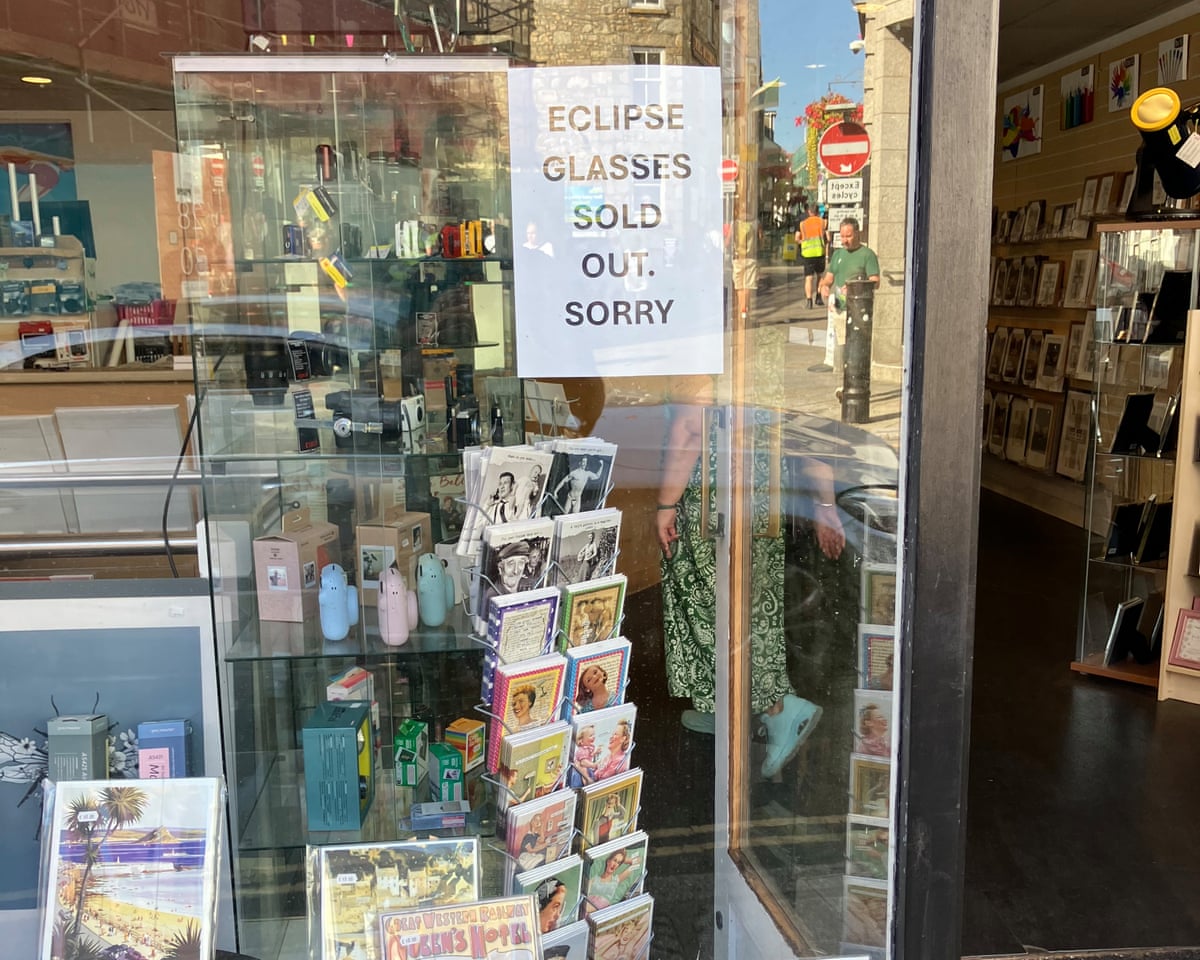
The shortage in the South West was part of a wider pattern. As earlier reporting on the certified eclipse glasses shortage detailed, sell-outs had already spread from London and Scotland to Liverpool and into mainland Europe in the days before the eclipse, with retailers, opticians and even post offices running dry. Community astronomy groups across the South West and the Channel Islands had responded by organising free and ticketed viewing events to help residents watch safely, as outlined in a guide to safe viewing locations in the region.
Safety warnings accompanied the excitement. The Falmouth coastguard urged people not to crowd too close to cliff edges as light levels dropped, while the RNLI cautioned anyone planning to watch from kayaks, surfboards or the sea itself that visibility would worsen and temperatures would dip during the eclipse.
In London, the partial eclipse was set to begin at 6.17pm, reach its deepest point at 7.13pm and conclude at 8.06pm. Forecasts for the wider UK had already suggested this would be the deepest partial eclipse witnessed nationally since 1999, with coverage reaching up to 96% in parts of England and Wales, according to earlier coverage of the UK's deepest partial eclipse since 1999, which also noted that Spain would see full totality amid crowds estimated at half a million visitors. A separate regional guide had highlighted viewing spots and timings across North West England ahead of the event, as detailed in a UK-wide guide to eclipse viewing locations and times.
How did farmers and officials respond amid the eclipse?
The eclipse fell against a backdrop of severe drought across much of England, where dying crops and warnings of the worst harvest on record have raised fears of higher food prices. Only 34 on-farm reservoirs have been completed in the past five years, according to the Country Land and Business Association (CLA).
“Today’s emergency COBRA meeting has to mark a reset. For years, farmers have been watching crops die in the ground because there’s not enough water. Yet every winter, rain pours down across fields. Farmers should be able to capture more of that when it’s plentiful and store it for the dry months ahead,” said Gavin Lane, president of the CLA, which represents land and business owners.
“Instead, planning rules make reservoirs slow and costly to build, while rigid restrictions on taking water to fill them can leave farmers short when they need it the most. Farmers are now spending £45,000 on average before they even put a spade in the ground. Many simply can’t afford to take the risk.”
Lane said the government must reform the planning system governing reservoir construction, an issue he argued ministers had left unaddressed for years.
How was Spain experiencing the eclipse?
In Madrid, the same shortage of eclipse glasses seen in the UK was evident. A local library had exhausted its free supply of council-issued glasses two days beforehand, and an inquiry at a nearby optician was met with a curt “agotadas” — all gone — before the question had even been finished. Safety recalls had also been issued covering six models of eclipse glasses that had been on sale in the city.
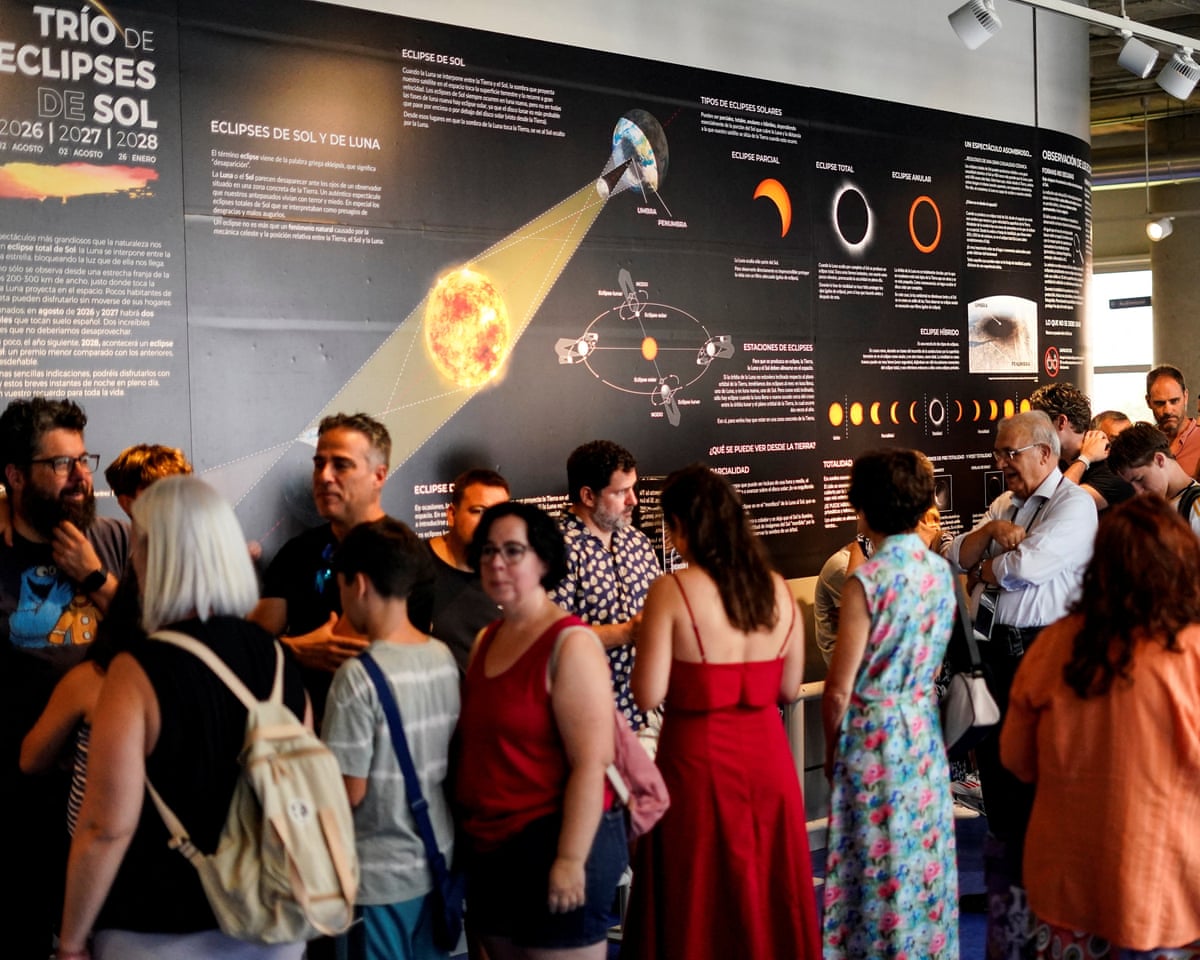

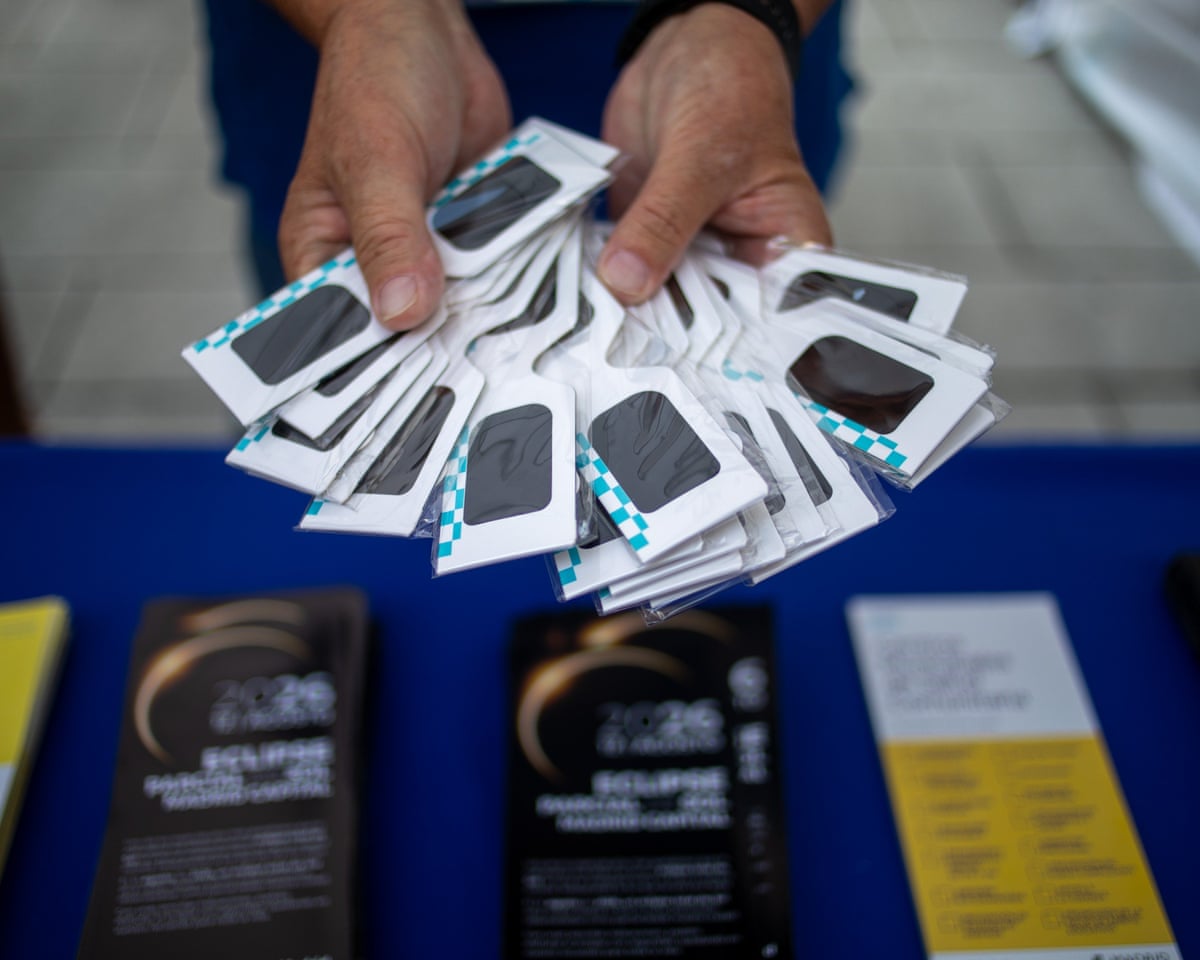
Some families resorted to buying glasses online and travelling to the mountains north of Madrid to watch, with younger members reportedly growing impatient through a long, hot wait for the event to begin.
Anticipation had been building nationally in the hours beforehand. “It’s going to be spectacular,” said César González, an astronomer and science communicator at the Madrid Planetarium.
“A total solar eclipse is one of the best spectacles in nature.”
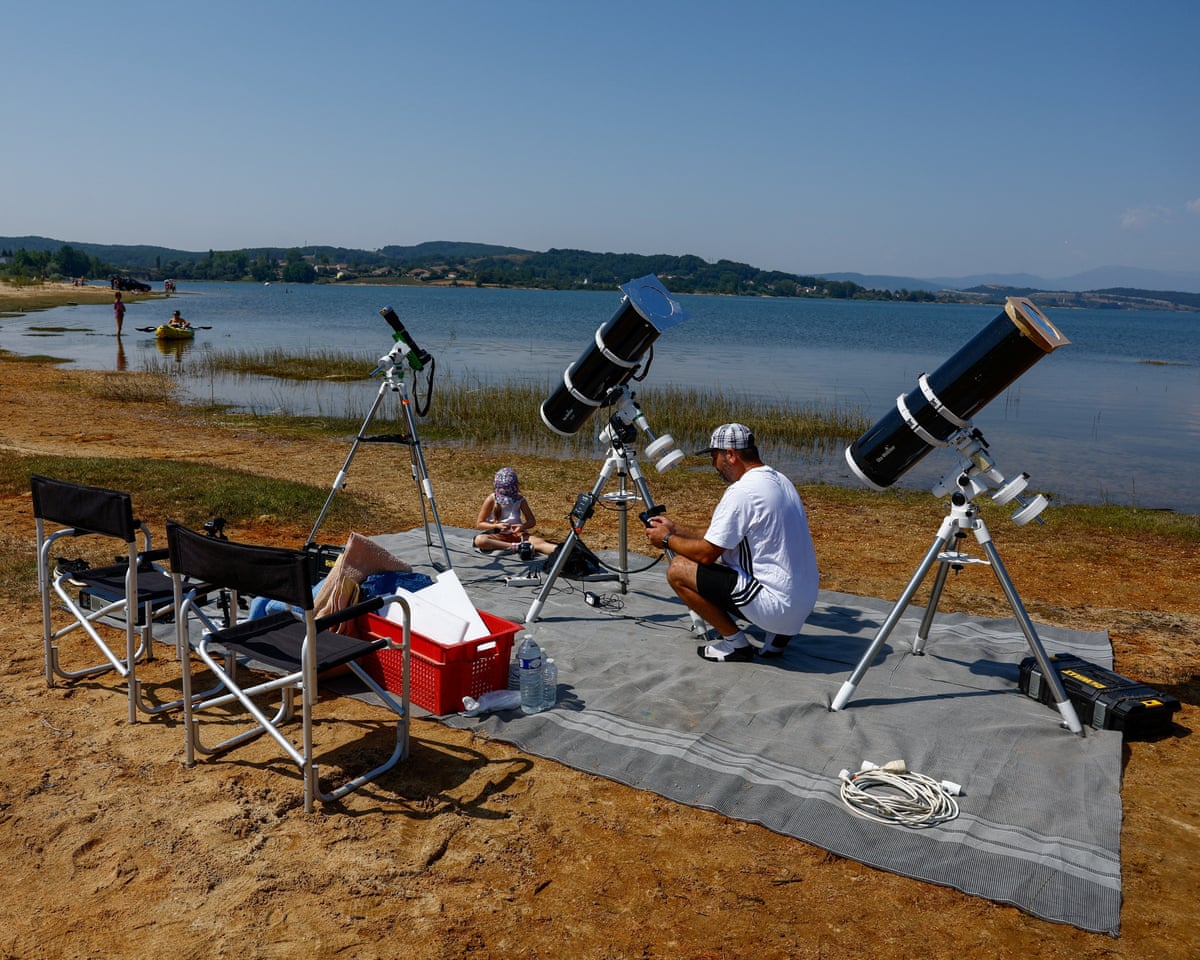
What was happening in Iceland?
Iceland experienced its first total solar eclipse in 72 years, with people travelling by air, land and sea to reach viewing points, although forecasters warned that low cloud could obscure much of the country's view. The eclipse there was due to begin at about 4.45pm local time (5.45pm UK time) and end around 6.50pm (7.50pm UK time).
Totality was only visible in western Iceland, with the longest duration — two minutes and 13 seconds — expected at Látrabjarg in the Westfjords. A road in the area was closed overnight because of heavy traffic, and overnight stays were banned at the site, which sits within a nature reserve.
Record numbers of cruise ships gathered in waters around Iceland in hopes of catching the spectacle from the sea. Meanwhile, Icelandic artist Björk hosted a one-day festival timed to coincide with the eclipse in Hafnarfjörður, near Reykjavík, with the eclipse itself scheduled between DJ sets by Arca and Björk at 5.48pm. Separately, the supermarket chain Bónus told store managers they could close for 15 minutes so staff could step outside to watch.
How were other parts of Europe watching?
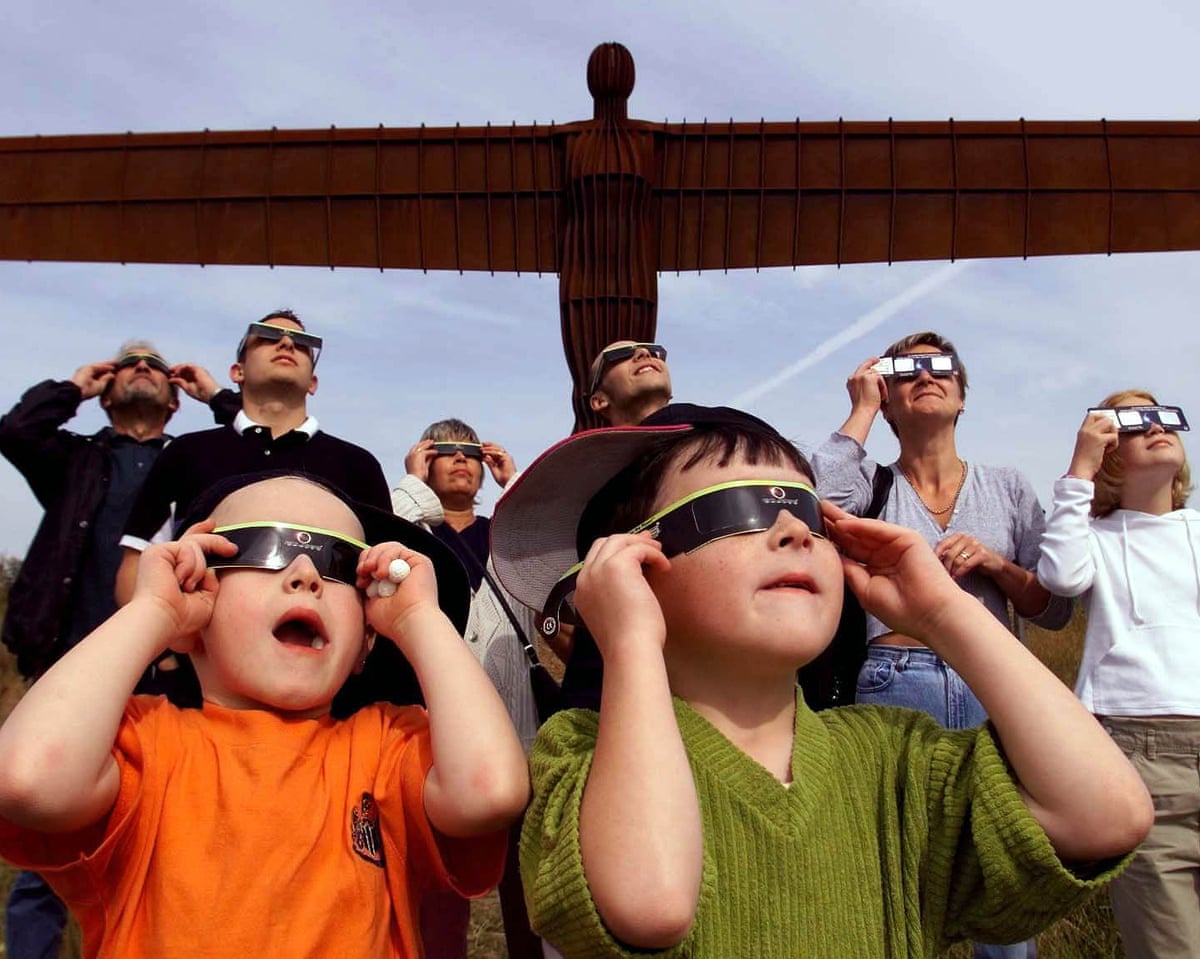
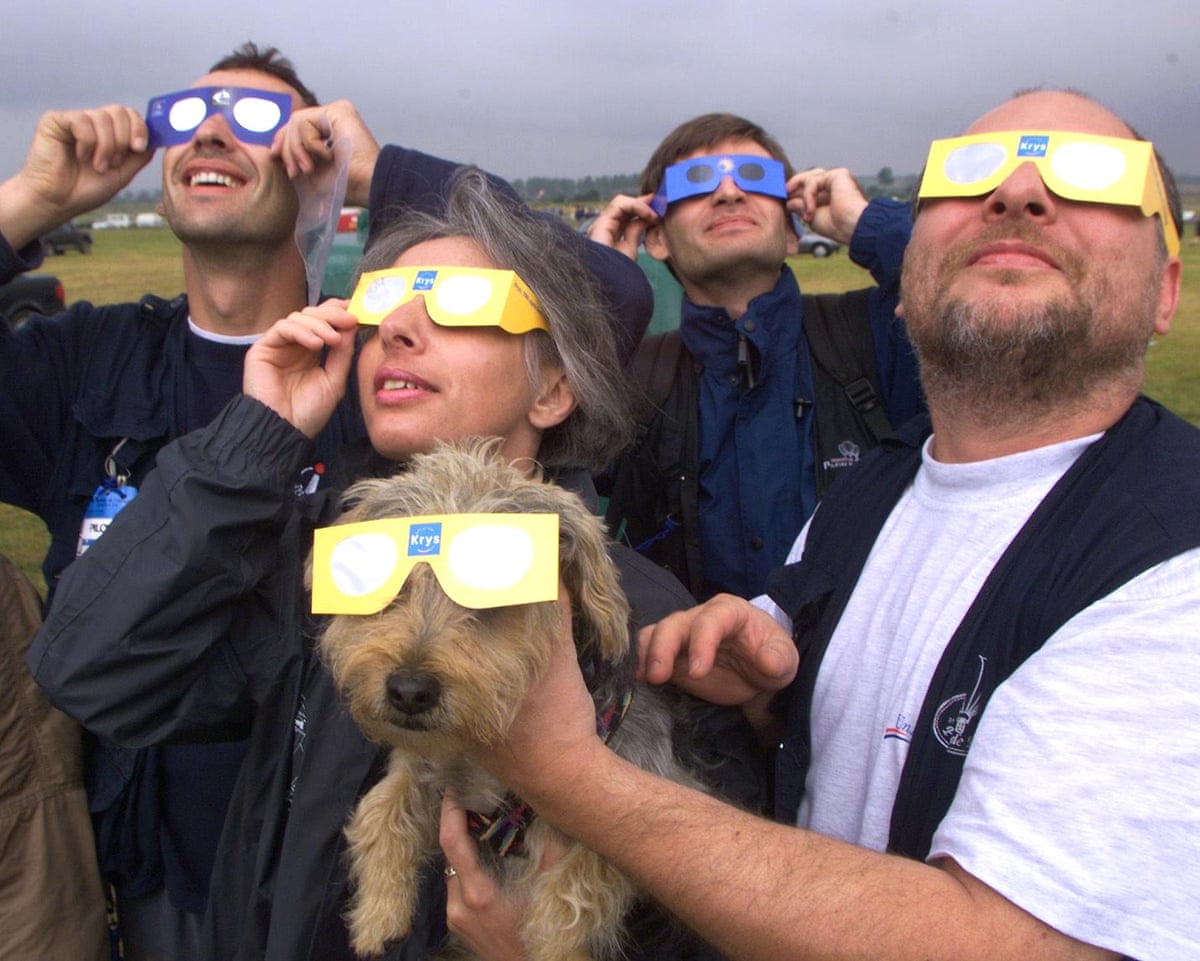
Beyond the path of totality, partial eclipse viewing events drew crowds across the continent, from public landmarks in the UK to open fields in France and beyond, as skywatchers of all ages made use of clear patches of sky where they could find them.
What happened during the 1999 eclipse?
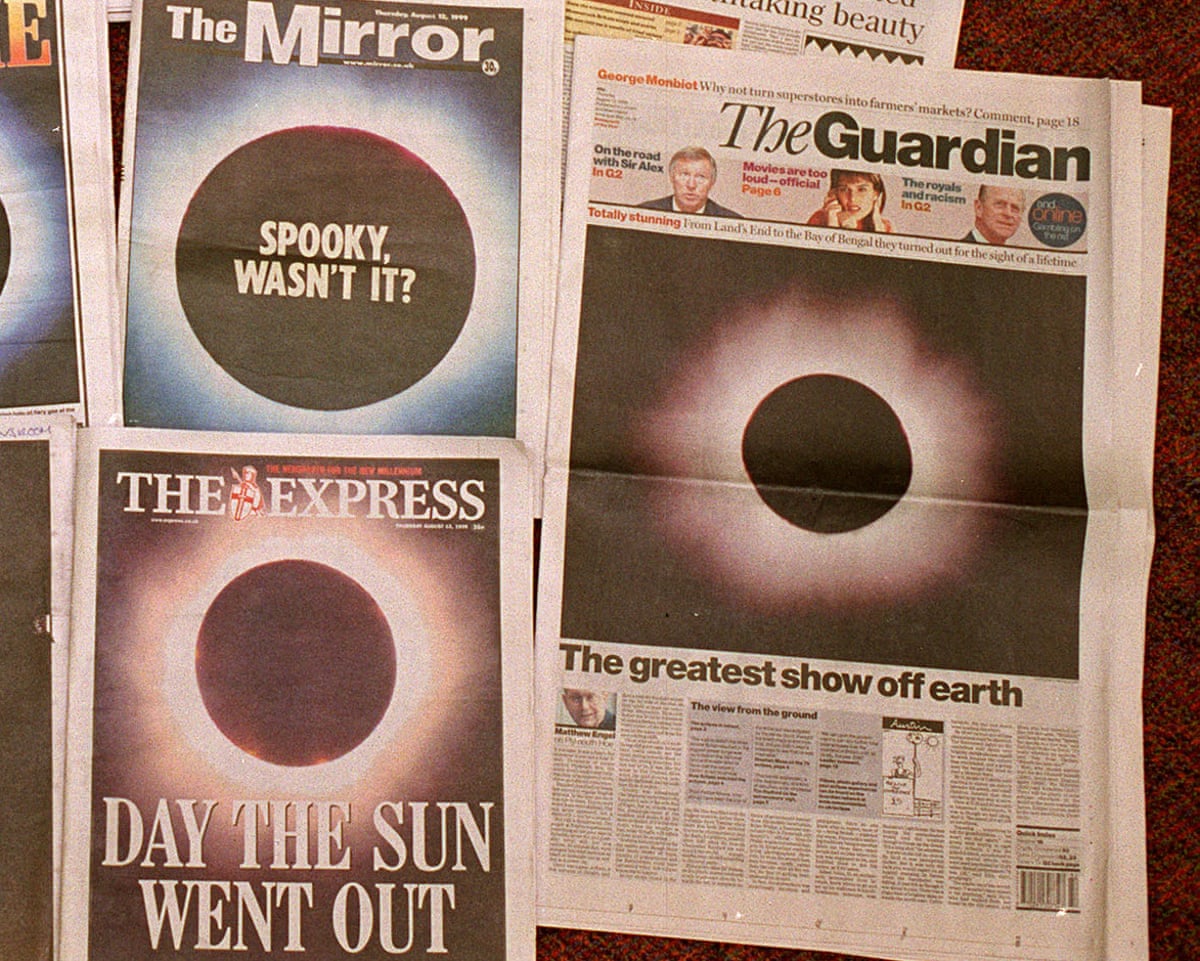
The last major eclipse to sweep across the UK occurred in 1999, when this publication's own reporting at the time described the scale of public disruption it caused.
“Britain was brought to a standstill for almost an hour yesterday as millions of people left their homes, offices and factories to watch the last eclipse of the millennium. The rush to watch the skies in the West Country and across the country resulted in the biggest power surge ever recorded on the National Grid and is estimated to have cost the country £500m in lost business. More than a million people gathered in Cornwall and Devon for the once-in-a-lifetime event, with a last minute dash to the West Country by an estimated 60,000, bringing the total number of visitors to Cornwall to 270,000, double the normal number for August.”
For many that day, success or failure came down to the weather. An hour before the eclipse, a torrential downpour struck west Cornwall and thick cloud blocked the view entirely for many gathered watchers. While the Isles of Scilly enjoyed 106 seconds of totality under clear skies, crowds in Penzance, Marazion and Falmouth were left looking at cloud and rain instead of the sky.
“Within an hour of the eclipse, more than 100 people called a helpline at Moorfields Eye Hospital in London, complaining of problems after watching the solar spectacular. Many hospitals cancelled eye operations to make way for emergencies and will remain on 24-hour standby until the weekend for worried eclipse watchers who fear they have damaged their vision.”
Can the eclipse be watched online?
Space agencies offered live broadcasts for those unable to reach the path of totality or hampered by cloud cover. NASA's live stream began at 1.15pm EDT and included views from multiple locations along the path together with interviews with experts, according to the agency's eclipse page. The European Space Agency broadcast separately from the Observatorio Astrofísico de Javalambre in Teruel, Spain, running from 19:30 to 20:45 CEST and highlighting one minute and 21 seconds of totality expected at 20:31 CEST, according to the European Space Agency.
What happens next?
With the 12 August 2026 event now the reference point for the next generation of eclipse-watchers, astronomy sites noted that additional livestream coverage, including from timeanddate.com, was scheduled to begin at 12pm EDT and continue through totality, according to a roundup of free livestream options. Coverage noted this was Europe's first total solar eclipse since 1999, according to a live science and astronomy tracker. For UK skywatchers, the next total solar eclipse is not due until 2090, meaning Wednesday's event was, for most people watching, a once-in-a-lifetime spectacle.
Key Facts
- The eclipse on 12 August 2026 was the first total solar eclipse visible from mainland western Europe since 1999.
- Totality crossed Greenland, Iceland, a small area of Portugal and a roughly 200km-wide band of Spain from A Coruña to Mallorca, with up to six million people expected in that corridor.
- The UK experienced a deep partial eclipse, with up to 96% coverage in parts of England and Wales and about 95% in Cornwall.
- Eclipse glasses sold out in multiple countries, including the UK and Spain, in the days before the event.
- The next total solar eclipse visible from the UK is not expected until 2090.


