

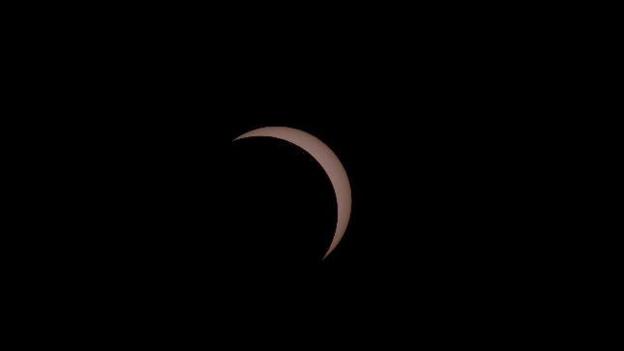
Residents across the East Midlands turned their eyes skyward on the evening of 12 August 2026 to witness the most substantial solar eclipse visible from the UK since 1999. Depending on location within the region, up to around 90% of the Sun's disc was obscured by the Moon as the event unfolded over the course of roughly two hours.
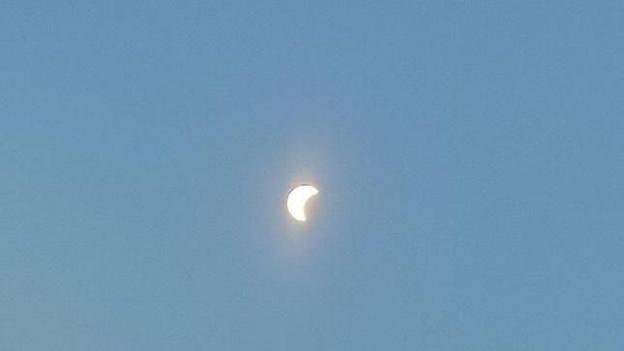
A partial solar eclipse occurs when the Moon passes between the Earth and the Sun, blocking a portion of the sunlight that would otherwise reach us. Because the three bodies do not perfectly align, only part of the Sun's disc is covered rather than the whole, producing a crescent-shaped effect at the peak of the event.
When did the eclipse begin and peak?
According to a national broadcaster's report, the eclipse was forecast to begin in Derby and Nottingham at around 18:14 BST, reach its peak at approximately 19:11 BST, and conclude by around 20:04 BST. The same report put coverage in Leicester at roughly 91% at maximum. A separate weather bulletin from the broadcaster noted that across the UK as a whole, obscuration ranged from about 90% to 96% depending on location, with the peak nationally falling between 19:02 and 19:16 BST.
How did people watch safely?
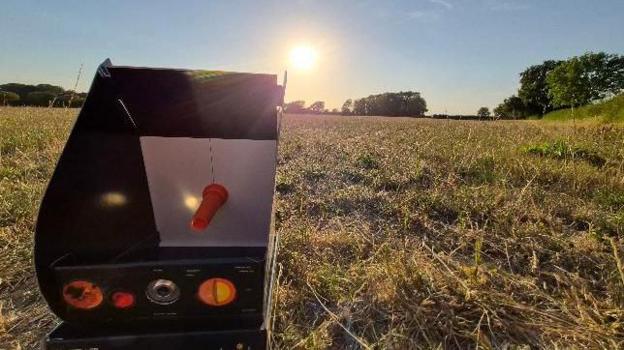
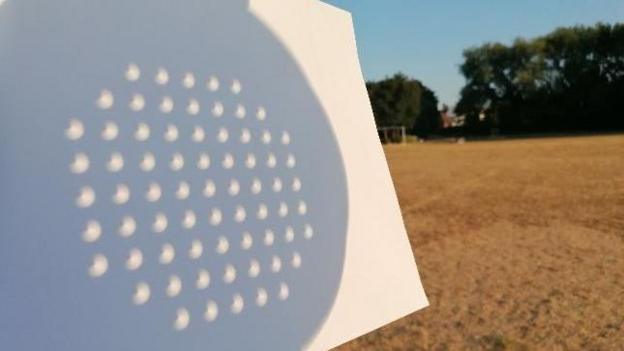
Members of the public used a variety of methods to observe the event without risking eye damage, including specialist eclipse glasses, pinhole projectors and even household items such as colanders, which can project multiple crescent images of the Sun onto a surface. The UK Health Security Agency had advised that anyone wishing to view the eclipse directly should use indirect viewing techniques or eclipse glasses certified to the ISO 12312-2:2015(E) safety standard, according to official health guidance.
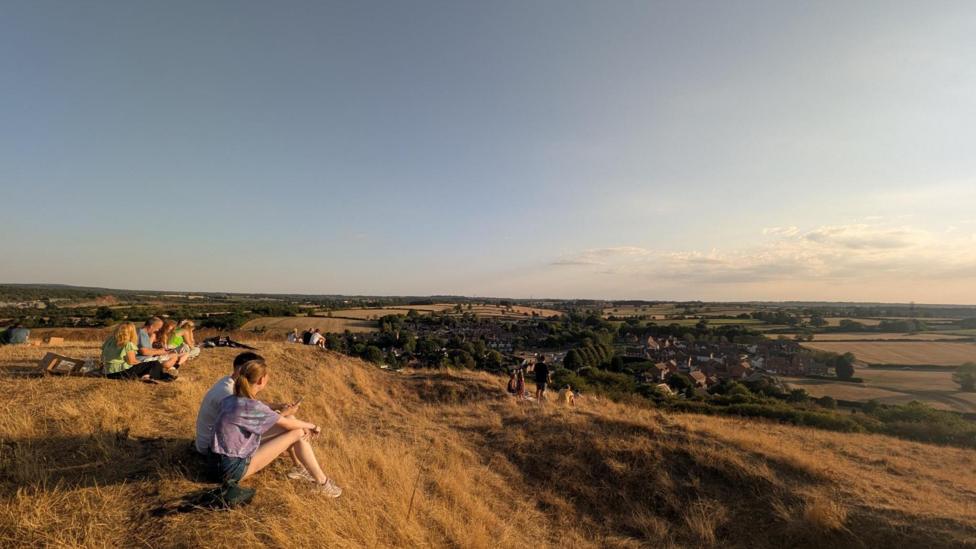
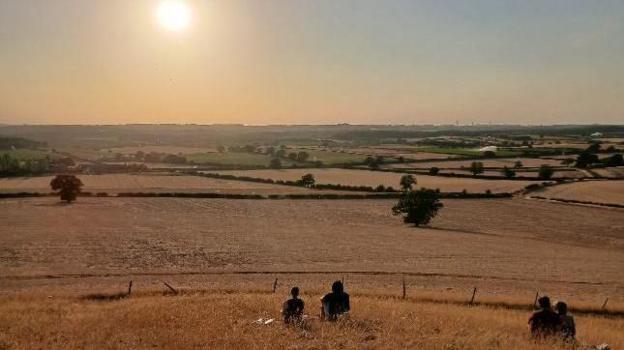
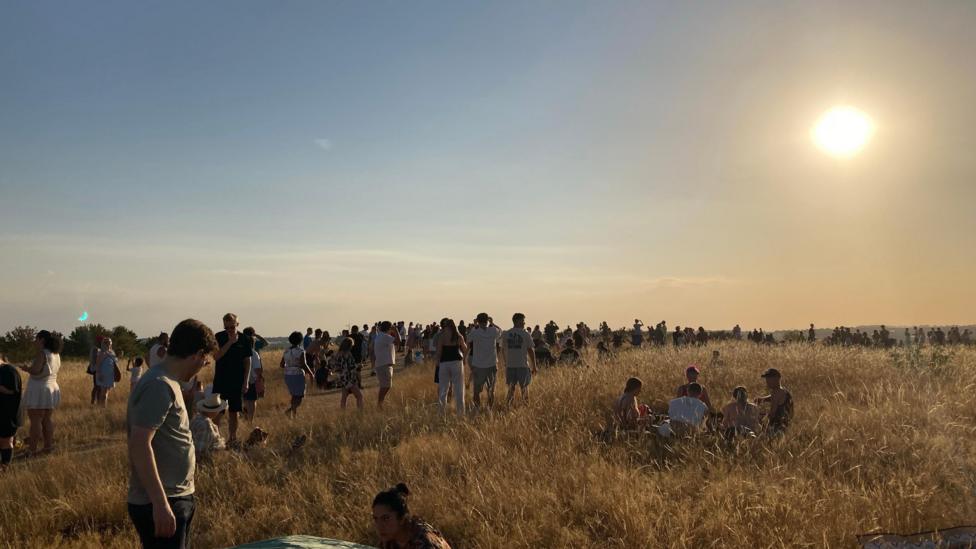
Crowds gathered at vantage points across Leicestershire, Nottinghamshire and Derbyshire to watch together, with groups assembling on Breedon on the Hill in Leicestershire and at an organised event in Bestwood.
Where else was the eclipse seen in the region?
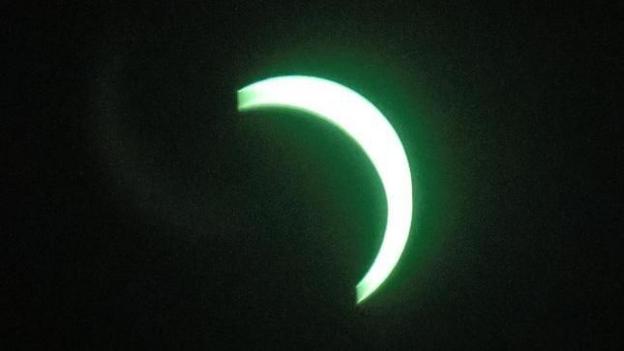
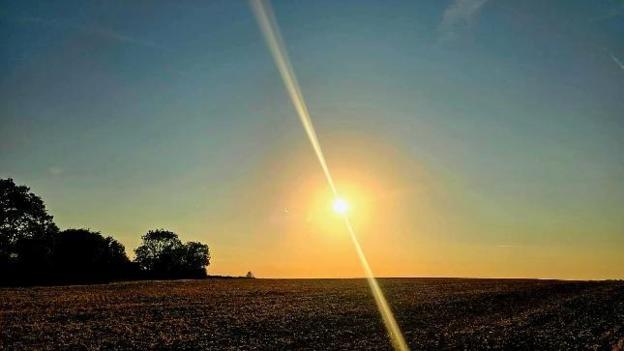
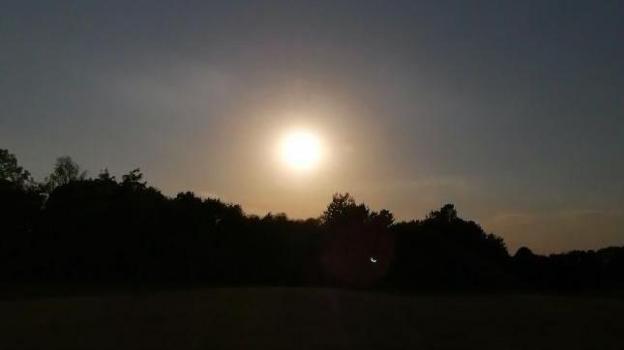
Weather Watchers from across the East Midlands submitted photographs showing the eclipse from a wide spread of towns and villages. Images were captured in Grove, Cropwell Bishop, Burton Joyce and Oxton in Nottinghamshire, in Braunstone in Leicestershire, and in Chellaston in Derby, illustrating how widely visible the event was even away from organised gatherings.

How does this compare with other parts of the country?
The East Midlands sighting formed part of a broader nationwide event. Coverage was even higher elsewhere: Lincolnshire recorded up to 96% coverage, its deepest eclipse since 1999, while crowds also gathered across Yorkshire and the West Country to watch what was described as the most striking eclipse seen from the UK since 1999. In the West Country, up to 95% of the Sun was covered, according to earlier reporting on the region's eclipse viewing conditions, though the event remained partial rather than total there too.
The Royal Observatory Greenwich confirmed that viewers across the UK and Ireland would see between roughly 90% and 96% of the Sun covered, and said the scale of the event made it the most extensive eclipse over British skies since the total eclipse of 1999, according to reporting on the eclipse's historical significance.
What happened after the eclipse in London?
The Royal Observatory Greenwich also broadcast a free live video feed of the eclipse from London on 12 August 2026, according to the observatory's own announcement. Separate viewing events had also been scheduled elsewhere in the country, including one at Broadgate Square in London starting at 18:00, as listed by an eclipse events listing.
Key Facts
- Up to around 90% of the Sun was covered by the Moon across the East Midlands on 12 August 2026.
- The eclipse began at roughly 18:14 BST in Derby and Nottingham, peaked at about 19:11 BST, and ended around 20:04 BST.
- Nationally, coverage ranged from about 90% to 96%, with the peak occurring between 19:02 and 19:16 BST.
- It was the most extensive eclipse visible from the UK since the total eclipse of 1999.
- The Royal Observatory Greenwich livestreamed the event from London.


