Skywatchers across the South West of England and the Channel Islands are being offered a range of free and paid events to view a partial solar eclipse on 12 August 2026, with experts on hand to ensure people watch safely rather than risk their eyesight. Venues include a beachside car park, community observatories and even a pub that runs its own observatory, with organisers stressing that looking directly at the sun without proper protection can cause permanent damage.
Charlie Payne, who has helped organise an event on the Isles of Scilly, said anyone planning to watch independently should choose their spot carefully.
pick your favourite place to watch the sunset.
She added that the ideal location would be one with an unobstructed outlook.
somewhere where you've got really clear views and a clear line of sight to the horizon
Payne also warned that staring at the sun directly could seriously damage a person's eyesight, a caution echoed by astronomy groups across the region.
Why is this eclipse considered significant?
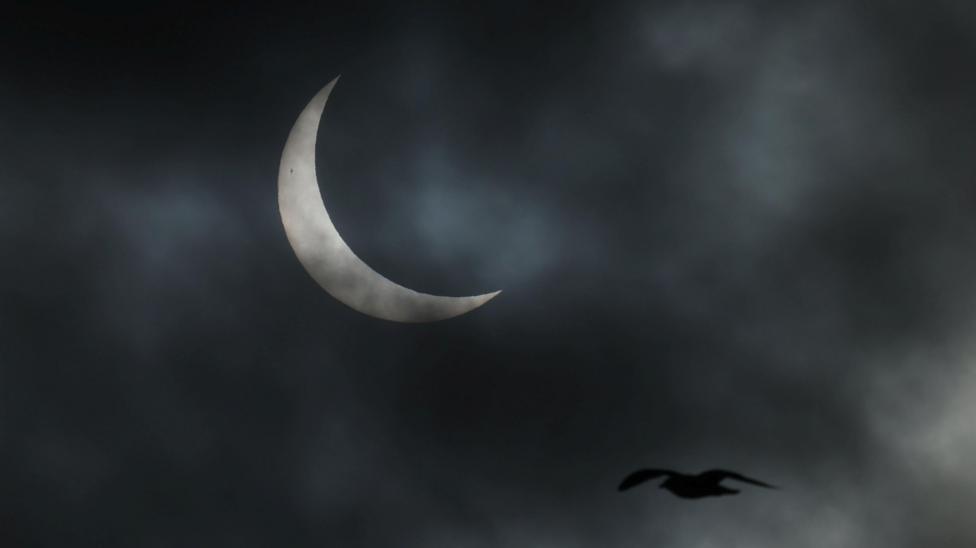
According to earlier reporting, the event marks the deepest partial eclipse visible from the UK since 1999, with coverage reaching as high as 96.5% in some locations depending on where viewers are standing, as detailed in coverage of the eclipse darkening skies across England and the Channel Islands. The West Country in particular is expected to see up to 95% of the sun obscured, with Cornwall and the Isles of Scilly offering some of the best vantage points, according to reporting on the West Country's biggest eclipse since 1999.
In Guernsey, Dr Jean Dean has separately described the event as a rare lifetime opportunity, noting that the next total eclipse visible from the island will not occur until 2081, according to earlier reporting on the Guernsey astronomer's comments.
What times will the eclipse be visible?
In Devon and Cornwall, the eclipse is expected to begin at around 18:18 BST, reach its peak at 19:15 and conclude at approximately 20:10. In Guernsey and Jersey, the timings are slightly later, with the eclipse starting at around 18:21, peaking at 19:17 and finishing at about 20:10.
Where can people watch on the Isles of Scilly?
The Cosmos Community Observatory is running a free event on St Martin's between 18:00 and 20:00, on the lawns of the Karma Hotel, where telescopes fitted with solar filters and eclipse glasses will be available. The event is open only to residents and holidaymakers on St Martin's.
Payne described the rarity of an eclipse of this depth, saying:
It's a really big deal. These kind of eclipses don't happen very often and one almost this deep, almost near to totality is pretty rare.
What events are planned in Cornwall?
Kernow Astronomers have prepared 420 pairs of eclipse glasses to distribute at their gathering in the National Trust car park at Carnewas, near the Bedruthan Steps on Cornwall's north coast. Frank Johns, from the club, highlighted the location's outlook towards the Atlantic.
We really have got a good view to the west and you can see right towards the ocean.
Elsewhere on Cornwall's south coast, the Smugglers Rest at Talland Bay, near Looe, is holding a ticketed event, with organisers saying proceeds will go towards funding an access ramp at the venue. As with other paid events in the region, attendees have been advised to check ticket availability before setting off.
How can people watch in Devon?
Members of Plymouth Astronomical Society plan to distribute eclipse glasses and assist viewers at a free event at Lowery Cross near Yelverton, arriving from 17:00 with telescopes to help attendees observe safely. Once darkness falls, members also intend to help visitors spot the Perseids meteor shower.
The Norman Lockyer Observatory in Sidmouth is hosting a ticketed event from 17:00, covering both the partial eclipse and the later Perseids display from around 21:30. The evening will include storytelling from 20:30, astronomer-led safe viewing, and a live stream from a venue in Spain, where a full eclipse is expected to be visible.
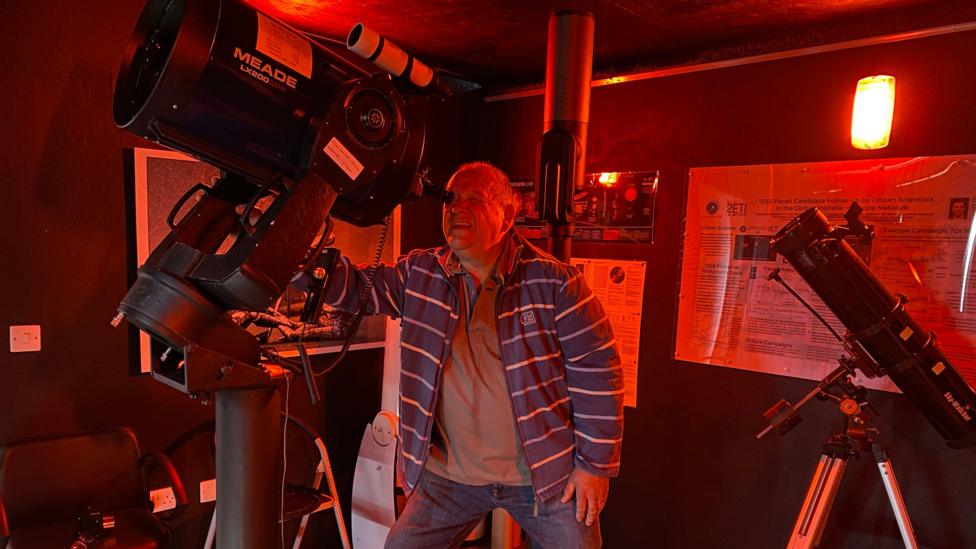
The Poltimore Inn at North Molton, on the edge of Exmoor, is running a ticketed event using its own on-site observatory. Landlord Alan Boddington said the darkening skies would create a striking atmosphere even without totality.
it is still going to be quiet and dark and the birds will think it is night time.
Boddington noted that the pub sits within a dark sky reserve and is thought to be among only a handful of pubs in England equipped with their own observatory.
What guidance is being given in Guernsey and Jersey?
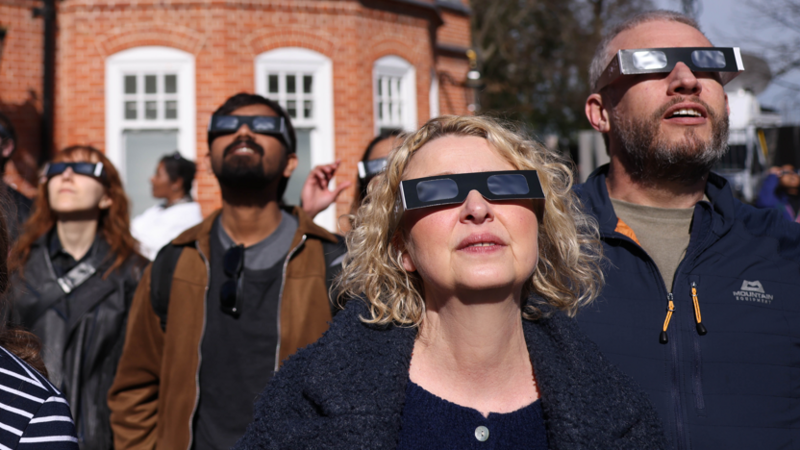
Dr Jean Dean, from La Société Guernesiaise's astronomy section, has advised islanders to head to Guernsey's west coast for the best views, recommending either certified eclipse glasses or projecting the sun's image onto card using a back-to-the-sun technique. Eclipse glasses have also been distributed through Les Bourgs Hospice charity shops in St Martins and St Sampsons.
Dean gave a stark warning about the dangers of unprotected viewing.
burn your retina in your eye and you will be permanently blind.
She also cautioned against combining eclipse glasses with binoculars or telescopes, though they can safely be worn over spectacles.
In Jersey, the Jersey Astronomy Club is setting up several solar telescopes at the slip at Le Braye on St Ouens Bay and plans to have solar glasses available for visitors. The club warned that looking through binoculars or telescopes lacking proper solar filters risks collecting more sunlight than the human eye can tolerate, potentially causing blindness. Without correct filters, the club said, the safest approach is projection rather than direct viewing.
the only safe way to observe an eclipse is to use the telescope or binoculars to project an image, not into your eye but onto a piece of white paper or card
It added that finder scopes should be covered or taped over.
to prevent any accidents
What do international safety experts say?
According to NASA's eclipse safety guidance, a partial solar eclipse is never safe to observe directly without proper eye protection, and viewing through cameras, binoculars or telescopes lacking a dedicated solar filter can cause serious eye injury. The agency's guidance also notes that pinhole projectors offer a safe alternative for anyone without access to certified eclipse glasses.
Guidance from the American Association of Physical Sciences and the American Association for Pediatric Ophthalmology and Strabismus states that only filters meeting the ISO 12312-2 standard are safe for direct solar viewing, and recommends that eclipse glasses be put on before looking towards the sun and removed only once the viewer has turned away. A separate safety explainer from an international broadcaster's eclipse safety coverage advises using certified eclipse glasses or a handheld solar viewer, or fitting a front-mounted solar filter to a telescope, binoculars or camera.
What happens after this eclipse?
Beyond 12 August 2026, NASA's public eclipse guidance, including its safe-viewing checklist and indirect observation methods, remains available for anyone preparing to watch future eclipses. For Channel Islands residents, that guidance may prove useful well before the next total eclipse becomes visible from Guernsey, which is not expected until 2081.
Key Facts
- The eclipse peaks at 19:15 BST in Devon and Cornwall, and at 19:17 in Guernsey and Jersey, on 12 August 2026.
- Coverage reaches up to 96.5% in some UK locations, making it the deepest partial eclipse since 1999.
- Kernow Astronomers have stocked 420 pairs of eclipse glasses for their Cornwall event.
- Only ISO 12312-2 certified filters are considered safe for direct solar viewing, according to international ophthalmology guidance.
- The next total eclipse visible from Guernsey is not due until 2081.