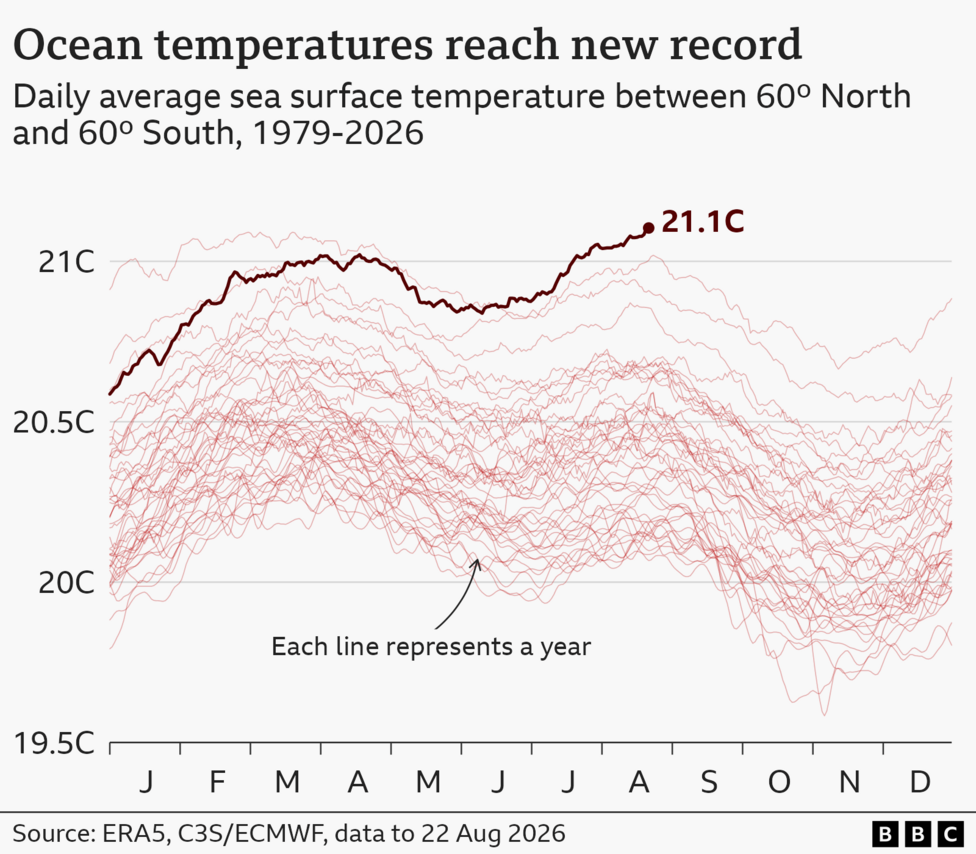
The world's oceans have reached their warmest surface temperature on record, driven by a combination of long-term human-caused climate change and a rapidly intensifying El Niño weather system that scientists warn could become the strongest in living memory.
On 22 August 2026, the average surface temperature of the planet's seas outside polar regions reached 21.1°C (70°F), according to data from the European Copernicus climate change service. This surpasses the previous record of 21.09°C, which occurred on three separate days in March 2024, and far exceeds typical temperatures for this time of year.
This record is another clear signal of an ocean under growing stress,said Dr Samantha Burgess, deputy director of Copernicus.
El Niño is adding heat to the system, but it is doing so on top of decades of human-driven warming.
The timing of this record is particularly significant because global ocean temperatures typically reach their annual peak in March or April, coinciding with the end of summer in the southern hemisphere. August records are unusual, suggesting that the oceans are already experiencing extreme warmth well before the natural seasonal cycle would normally produce peak temperatures. Since the southern hemisphere contains more of the planet's ocean water than the northern hemisphere, it exerts a larger influence on average sea temperatures worldwide.
The Copernicus measurements are based on sea temperatures 10 metres below the surface, compiled from data collected by buoys, ships and satellites to produce a global estimate. While the margin by which this record was set remains very small and all global estimates carry inherent uncertainties, the underlying trend is unmistakable.
How is El Niño intensifying the warming?
El Niño is a natural climate pattern that brings unusually warm waters to the surface of the eastern and central tropical Pacific Ocean. When warm water spreads across such a vast area, global average temperatures typically spike as well. According to the World Meteorological Organization, El Niño intensified rapidly between July and September 2026, with seasonal-average sea-surface temperature anomalies expected to exceed 2°C in key equatorial Pacific regions.
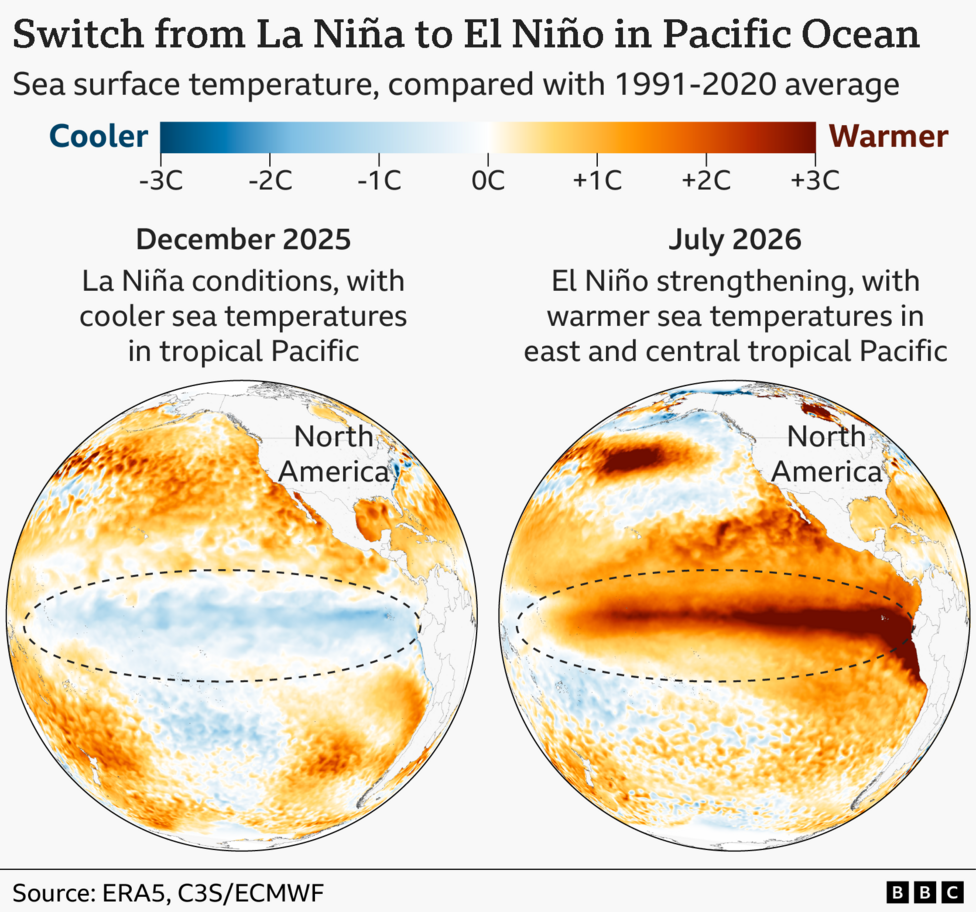
What concerns scientists most is that ocean temperatures are already at record levels while El Niño remains some distance from its expected peak strength. According to WMO forecasts, El Niño is expected to continue strengthening into a strong event during August–October 2026, with anomalies potentially exceeding 2.9°C in key monitoring regions. The phenomenon is forecast to keep intensifying until around Christmas 2026, with scientists warning it is on course to be the strongest in centuries. This trajectory suggests ocean temperatures could climb even further into 2027.

The extra heat from El Niño is layering on top of decades of warming caused by human greenhouse gas emissions. According to Copernicus data reported in August 2026, the extra-polar oceans averaged 20.96°C in July 2026 alone, demonstrating the sustained nature of the warming trend.
What are the wider consequences of warming oceans?
Elevated ocean temperatures trigger cascading effects across weather systems, marine ecosystems and human communities. Warmer seas fuel more extreme weather by providing storms with additional moisture and energy, while also intensifying heatwaves on land in some coastal regions by reducing the cooling effect of sea breezes. Warmer water expands physically, raising sea levels and increasing the risk of coastal flooding. Intense ocean heat can be devastating for marine habitats, particularly coral reefs and other temperature-sensitive ecosystems.
Beyond the tropical Pacific, vast areas of ocean are already experiencing extreme warmth. The waters surrounding the UK and Europe have been in marine heatwave conditions for much of 2026. In the western Mediterranean, marine heatwave conditions have persisted with temperature anomalies reaching approximately 6°C above average.
The increasing frequency of marine heatwaves is already putting increasing pressure on marine ecosystems and the communities that depend on them,Burgess noted.
The oceans absorb more than 90% of the excess heat trapped by humanity's greenhouse gas emissions, primarily from the burning of fossil fuels. Scientists emphasise that such widespread ocean warmth across regions far removed from El Niño's Pacific influence is a clear indicator of the growing impact of human-caused climate change on the world's seas.
How does this connect to earlier warming trends?
This August record follows a pattern of escalating ocean temperatures throughout 2026. In July, global sea surface temperatures hit a new July record, driven by developing El Niño conditions layered on long-term warming, as Europe endured record heat, drought and wildfires. The El Niño event itself officially began in June 2026, with the World Meteorological Organization warning of a potentially super-strong event that could drive record global temperatures and disrupt weather, food supplies and economies through 2027.
The Met Office has warned that the developing El Niño event is likely to be the strongest in living memory, with sea surface temperatures potentially exceeding 3°C above normal—unprecedented since 1950. Combined with climate change, 2027 is forecast to experience potentially historic temperature anomalies.
What happens next?
El Niño conditions are expected to remain dominant through the remainder of 2026, with probabilities staying at or above 90% in forecast periods extending into late 2026. The phenomenon is forecast to continue strengthening through the end of the year and into the October–December 2026 period. Scientists warn that this trajectory could see ocean temperatures climb further into 2027, potentially setting additional records as the El Niño event reaches its peak strength.
The combination of a historically strong El Niño event and the ongoing warming from human-caused climate change presents an unprecedented challenge for marine ecosystems and coastal communities worldwide. Governments and environmental agencies are being urged to prepare for potential disruptions to weather patterns, food supplies and economic activity as this rare convergence of natural and human-driven warming unfolds.
Key Facts
- Ocean surface temperatures reached 21.1°C on 22 August 2026, surpassing the previous record of 21.09°C set in March 2024
- El Niño is expected to intensify until around Christmas 2026 and could become the strongest in centuries
- The oceans absorb over 90% of excess heat from human greenhouse gas emissions, primarily from fossil fuel burning
- Marine heatwaves are already affecting large ocean regions, including the Mediterranean and waters around the UK and Europe
- Warmer oceans fuel extreme weather, raise sea levels, and threaten marine ecosystems including coral reefs