Prime Minister Andy Burnham has unveiled a £30 million investment to enable communities across the United Kingdom to own and operate their own renewable energy projects, marking the first phase of what the government describes as the largest community energy programme in British history.
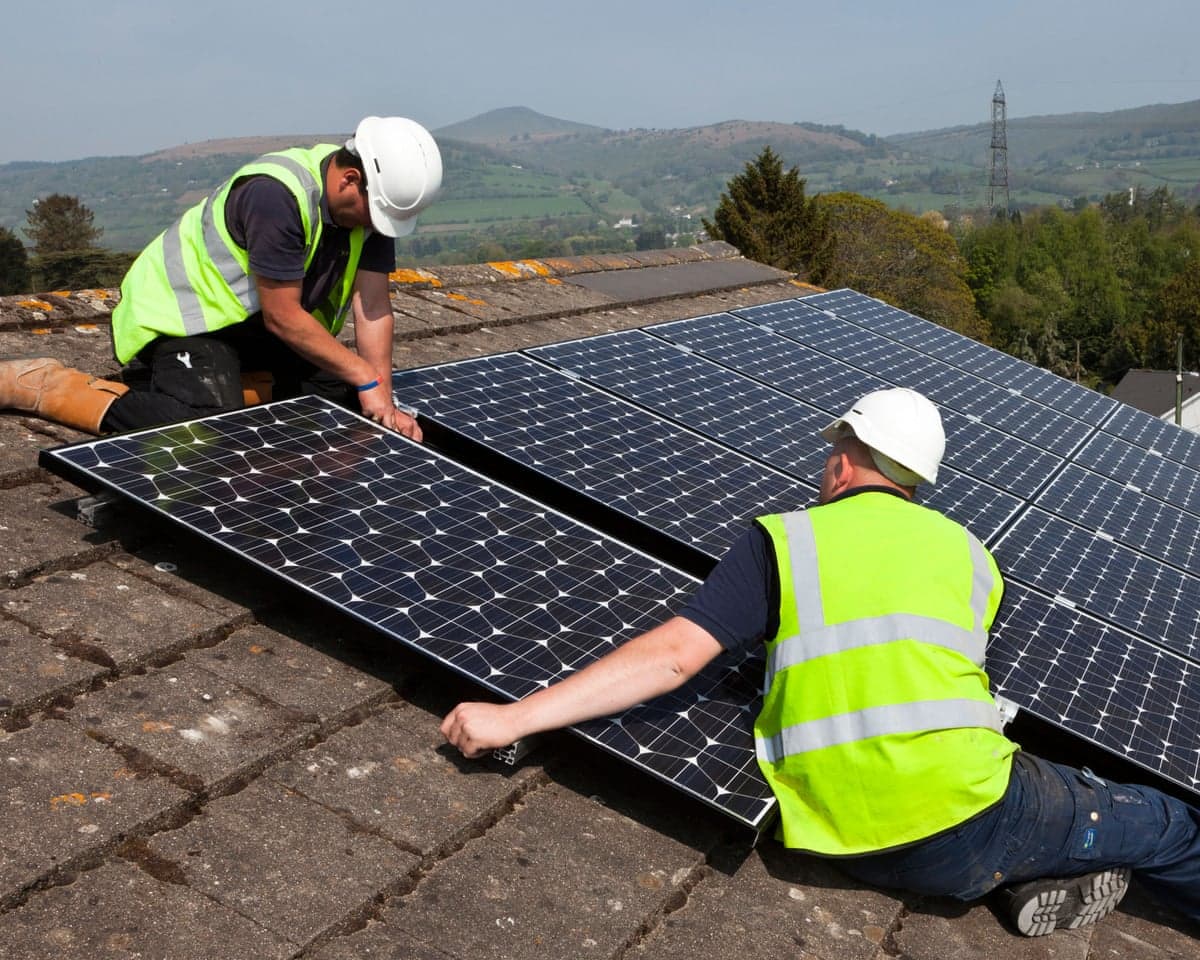
Announced on 17 September 2026, the People's Power funding initiative will allow villages, towns and cities to develop solar installations on public buildings, establish community-owned wind farms, construct hydroelectric schemes in local rivers, or pursue other renewable technologies suited to their areas. Every council and community group receiving funding will retain at least partial ownership of the energy infrastructure it builds, ensuring that financial returns flow back into local economies rather than to distant shareholders.
This initiative sits within a broader commitment to decentralise control over essential services. Burnham has previously pledged stronger public control of essential services and announced plans to extend devolution powers across England, establishing a Manchester-based government office to drive regional economic growth. The community energy programme extends this philosophy to the energy sector, positioning local ownership as a cornerstone of the government's approach to the green transition.
How will communities access the funding?
Eligible applicants include parish and town councils, faith groups, sports teams and community interest companies. The funding is split into specific streams, including a £20 million Community Fund and a £5 million Partnerships Grant for English local authorities working with community energy partners. Organisations can access feasibility-study grants of up to £40,000 and project-development grants reaching £100,000, enabling communities to move from concept to operational renewable installations.
Why is the government prioritising community energy now?
Burnham has framed the initiative as a response to the immediate climate crisis facing Britain. Recent extreme weather has demonstrated the urgency of the transition: heatwaves have left healthcare workers collapsing in hospitals and transport workers operating in temperatures exceeding 40 degrees Celsius. The Prime Minister argues that British people understand the severity of global heating and want direct involvement in solutions rather than being passive observers of change imposed from above.
The community energy programme also addresses affordability concerns. Burnham's first move as prime minister was an £850 million VAT cut on electricity bills, plus £340 million extra for homelessness support, providing immediate relief from October 2026. However, the government contends that lasting bill reductions require increased domestic renewable generation. By enabling communities to produce and own clean energy locally, the scheme aims to reduce long-term dependence on expensive imported energy and volatile global markets.

What is the long-term vision?
The £30 million announced represents the opening phase of an ambition to eventually reach £1 billion in community energy investment. The government intends this larger programme to support more than 1,000 People's Power projects across all four nations of the UK. This scaling-up is designed to occur progressively through the remainder of this decade, with the initial funding round establishing proof of concept and building momentum for wider rollout.
Burnham has drawn parallels with his approach as Mayor of Greater Manchester, where he brought buses back under public control, capped fares and modernised the fleet. He argues the same principle—designing systems around the needs of those who use and pay for them—should apply to energy infrastructure. Rather than allowing private companies to capture the wealth generated by the green transition while consumers bear the costs through regulation and higher bills, the government proposes that communities should both own the assets and retain the benefits.
How does this fit into Britain's net-zero commitment?
The initiative is positioned as central to meeting the government's legally binding commitment to reach net-zero greenhouse gas emissions by 2050. Burnham has described the green transition as
the best chance we will ever have to reindustrialise Britain, arguing that decentralised renewable energy can create jobs, lower bills and restore public confidence in the country's future. The People's Power programme embodies this vision by distributing economic opportunity and decision-making power across communities rather than concentrating them in Westminster or among large energy corporations.
The government presents two contrasting paths forward. One follows the traditional Whitehall model: imposing regulation and costs on citizens while allowing private companies to capture the rewards. The alternative, which Burnham advocates, involves supporting people through the transition by creating employment, reducing energy costs and returning control to local level. Community ownership of renewable energy exemplifies this second approach.
What happens next?
Applications for the People's Power funding are now open, with the government beginning the process of selecting projects and allocating the initial £30 million across communities. The selection process will determine which councils, community groups and organisations receive grants to develop their renewable energy schemes. As projects are approved and constructed, the government intends to use early successes to build the case for expanding the programme toward the £1 billion target, with development expected to continue through 2030.
Burnham has emphasised that the scheme represents a fundamental shift in how Britain approaches essential infrastructure.
Everyone should have a say and a stake in their future, he stated, describing the People's Power initiative as embodying
community power in every sense. Power owned by local people, power generated by local projects and power returned to every postcode.
Key Facts
- The government launched £30 million in People's Power funding on 17 September 2026, the first phase of an intended £1 billion community energy programme supporting more than 1,000 projects across the UK.
- Eligible applicants include parish councils, faith groups, sports teams and community interest companies, with grants available for feasibility studies (up to £40,000) and project development (up to £100,000).
- All funded projects must include at least partial community ownership, ensuring local retention of financial returns and decision-making authority over renewable energy infrastructure.
- The initiative complements the government's VAT cut on electricity bills and forms part of a broader commitment to reach net-zero emissions by 2050 through decentralised renewable generation.