Andy Burnham promised to end rough sleeping in England in his first pledge as prime minister, allocating an additional £340m over three years as he seeks to replicate the homelessness schemes he rolled out in . Speaking in front of Downing Street immediately after becoming prime minister on Monday, Burnham said he would try to get people off the streets “at the earliest opportunity”.
The announcement was welcomed by homelessness campaigners, who say the pledge can be met with enough money and political will. The prime minister’s critics, however, greeted the promise with scepticism, pointing out that despite having set out a similar goal as Greater Manchester mayor, Burnham had overseen .
Officials said the government would now put an extra £340m into its homelessness strategy – equivalent to £113m a year – which would come from unused parts of the housing department’s budget.
The newly appointed business secretary, Jonathan Reynolds, has defended the policy, declaring the cut to VAT on electricity bills “a statement of priorities”. Responding to that the cut remained unfunded, Reynolds told Radio 4’s Today programme:
double quotation markThey are part of the government’s pressure, it is a legitimate decision to remove that pressure and instead use the allocation of resources … It’s a straightforward switch spend, it’s the right decision to make, and one that will be made by the British people.
Why are the Lib Dems criticising the VAT cut?
In our we mentioned criticism of the tax cut announcement on household electricity bills from the Lib Dem leader, Ed Davey, who has told Times Radio that the policy is “coming apart at the seams” already.
“It’s a bit confusing isn’t it? And I don’t think it’s the best way to help people with their bills,” Davey added.
He said his party was calling for an “essential energy guarantee”, which the Lib Dems claim will cut energy bills by giving every household an essential amount of energy, equal to 50% of typical consumption, at a “discounted rate”.
Davey calls for Burnham to hold a budget as soon as possible so the figures can come under proper scrutiny. Sticking to the commitments not to raise the main rates of income tax, national insurance or VAT rule out the most obvious ways to raise revenue.
Also speaking on Times Radio, the shadow defence secretary, James Cartlidge, said that the Office for Budget Responsibility said last year that the digital ID card scheme had not been funded. He said:
“They (the OBR) literally said that, so you can’t fund a tax cut… with savings from a programme that itself wasn’t funded.”
What did Burnham announce first as prime minister?
Good morning and welcome to our live coverage of UK politics. Burnham announced an £850m tax cut on electricity bills to help ease cost of living pressures in his first significant policy announcement as prime minister. It means that electricity bills will be reduced by an average of £45 a year from October.
Downing Street said the move will be partly funded by scrapping Keir Starmer’s digital ID scheme, which would have cost an estimated £1.8bn over three years.
The newly appointed chancellor, John Healey, said the cut will “bring down inflation while supporting households in every postcode”, signalling the political direction of the new cabinet. While welcomed as a positive initial step to help people save money off their bills, the policy has been criticised, including by Lib Dem leader Ed Davey, for not going far enough.
In an extraordinary intervention this morning, Darren Jones, Starmer’s former chief secretary, said the money had not been set aside for the digital ID scheme, which Burnham says will pay for the VAT tax cut. :

double quotation markGood news that VAT will be cut on electricity bills. It’s a simple way for families to save a few quid, and to mechanically help to keep inflation that little bit lower. But the DigitalID program was unfunded. The government will have to set out how it will pay for its new policies at the budget.
Burnham will chair his first Cabinet meeting at 12.30pm after having removed Starmer loyalists from it yesterday. , David Lammy, Darren Jones, Steve Reed, Peter Kyle, Richard Hermer, Liz Kendall, Jo Stevens and Hilary Benn. But Reeves was understood to have turned down another job to return to the backbenches. We will bring you the latest throughout the day, which promises to be a busy one.
Here is a non-exhaustive list of the members of the new cabinet:
- Home secretary: Shabana Mahmood
- Health secretary: Yvette Cooper
- Work and pensions secretary: Pat McFadden
- Housing secretary: Angela Rayner
- Business secretary: Jonathan Reynolds
- Education secretary: Lucy Powell
- Equalities minister: Bridget Phillipson
- Defence secretary: Wes Streeting
- Environment secretary: Angela Eagle
- Energy secretary: Miatta Fahnbulleh
- Scottish secretary: Douglas Alexander
- Welsh secretary: Stephen Kinnock
- Northern Ireland secretary: Chris Bryant
- Transport secretary: Heidi Alexander
- Chancellor of the Duchy of Lancaster: Louise Haigh
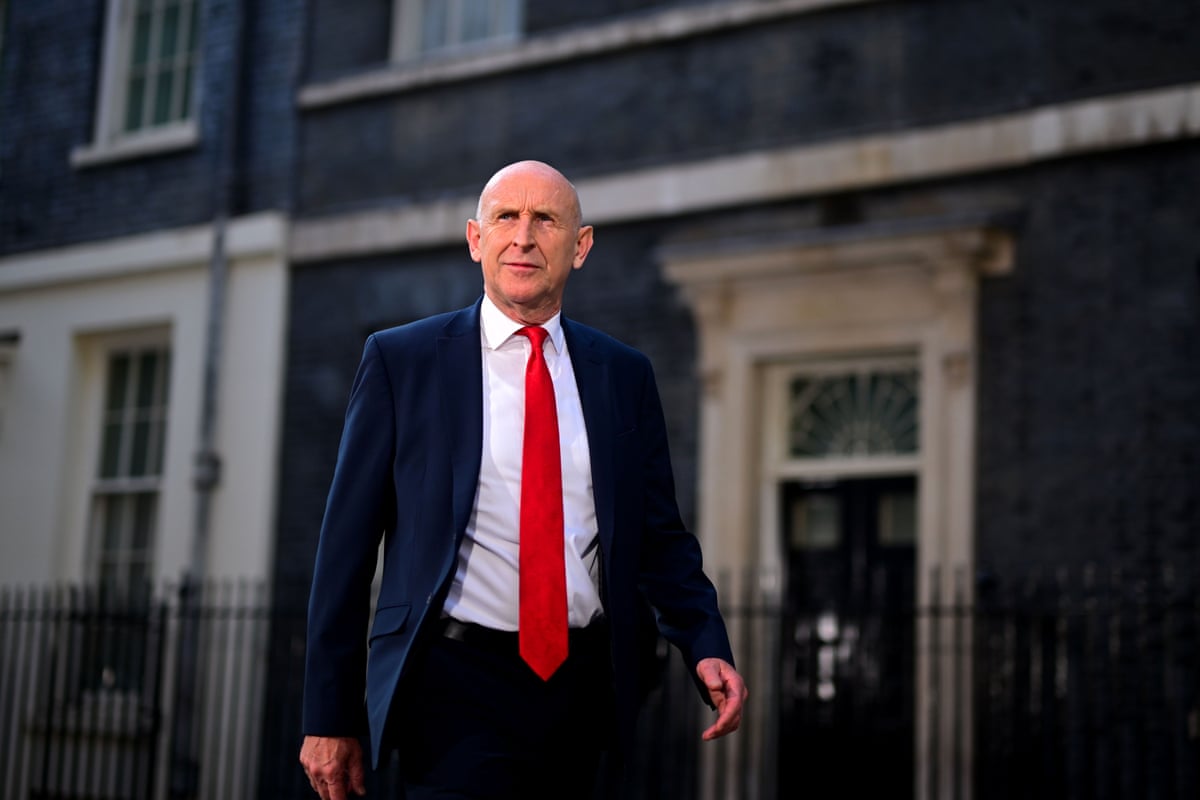
John Healey departs Downing Street as chancellor after being appointed to the position by the new prime minister, Andy Burnham. Photograph: Victoria Jones/Shutterstock
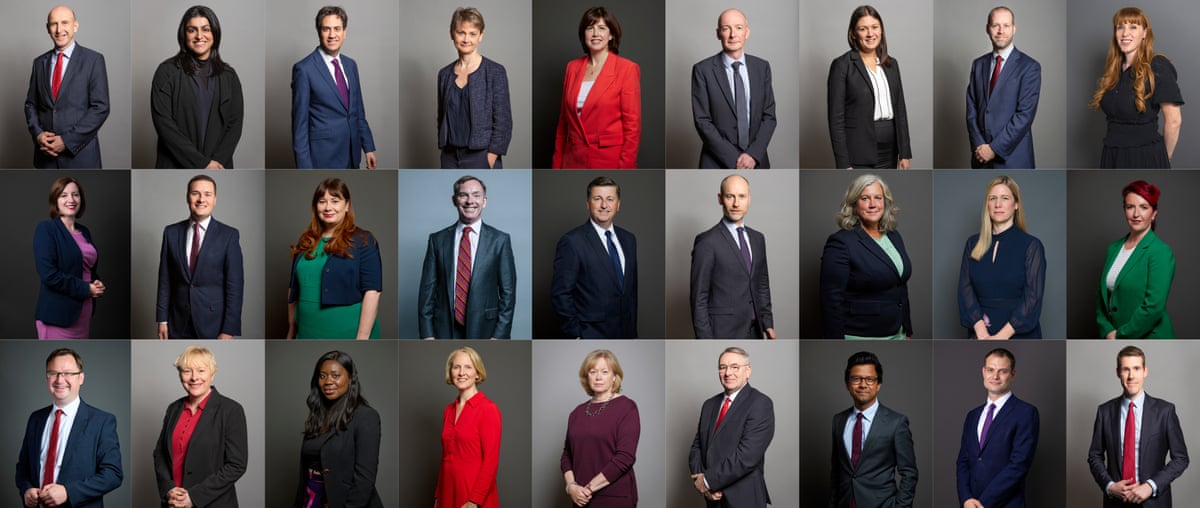
Composite of members of the new Cabinet. Photograph: UK Parliament/PA
How is the new cabinet taking shape?
Burnham’s cabinet reshuffle removed Starmer loyalists and brought in a new line-up across key departments. The appointments listed above show the breadth of the changes, including Shabana Mahmood at home secretary, Yvette Cooper at health secretary and Pat McFadden at work and pensions secretary.
The list also includes Angela Rayner as housing secretary, Jonathan Reynolds as business secretary, Lucy Powell as education secretary, Bridget Phillipson as equalities minister and Wes Streeting as defence secretary. Angela Eagle has been named environment secretary, Miatta Fahnbulleh energy secretary, Douglas Alexander Scottish secretary, Stephen Kinnock Welsh secretary, Chris Bryant Northern Ireland secretary, Heidi Alexander transport secretary and Louise Haigh chancellor of the Duchy of Lancaster.
The government said the prime minister would chair his first Cabinet meeting at 12.30pm, with further developments expected through the day.
What happens next?
The government will now have to set out how it will pay for its new policies at the budget, after questions were raised over the funding for the digital ID scheme. Burnham’s supporters say the VAT cut on electricity bills and the homelessness pledge show his priorities, while critics argue the finances need closer scrutiny.
Homelessness campaigners say the extra £340m over three years could help the government meet its aim of ending rough sleeping in England if it is matched by political will. The prime minister’s critics remain doubtful, citing his record as Greater Manchester mayor and the lack of detail in some of the funding plans.
The political debate is expected to continue as the new Cabinet settles in and the government prepares to explain the numbers at the budget.
Key Facts
- Andy Burnham pledged to end rough sleeping in England and put an extra £340m into homelessness support over three years.
- He announced an £850m cut to VAT on electricity bills, reducing average bills by £45 a year from October.
- Downing Street said the electricity bill cut would be partly funded by scrapping Keir Starmer’s digital ID scheme, estimated at £1.8bn over three years.
- Jonathan Reynolds called the VAT cut “a statement of priorities”.
- Burnham will chair his first Cabinet meeting at 12.30pm after reshaping the cabinet.