Emyr Lewis has won the Chair at the National Eisteddfod of Wales, held this year at Garreg Las, marking the second time he has claimed the honour after his first success at the National Eisteddfod of Neath and district in 1994. The winning entry, submitted under the pseudonym A, was chosen from a field of 16 entries — the highest number since 1988 — after judges described the contest as exceptionally close.
Lewis previously won the Crown at the National Eisteddfod in the Ogmore Valley in 1998, making him one of relatively few poets to have secured both major literary honours at the festival across their career.
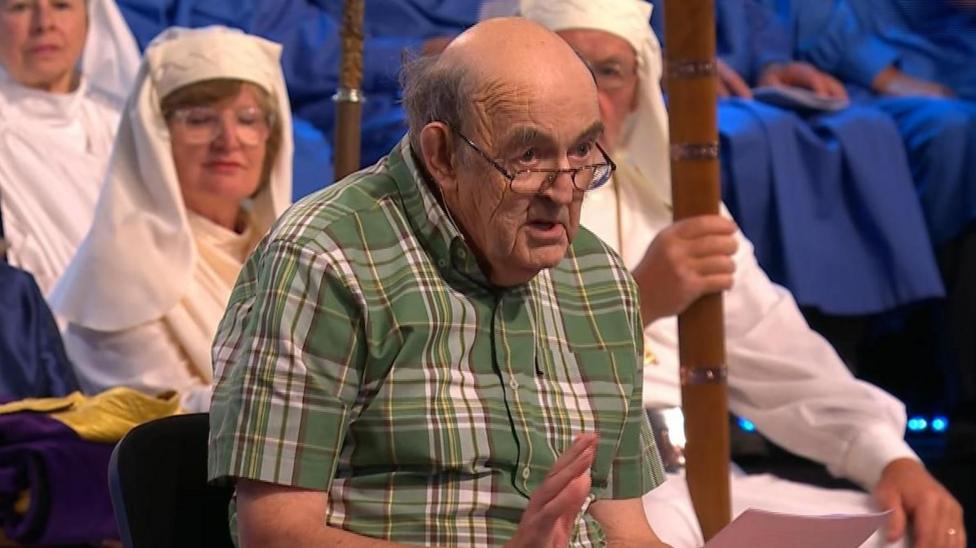
This year's Chair competition was judged by Idris Reynolds, the Archdruid Mererid Hopwood, and Carwyn Eckley, who himself won the Chair at the National Eisteddfod of Rhondda Cynon Taf. Delivering the adjudication on behalf of his fellow judges, Reynolds said the standard had been outstanding.
Who is Emyr Lewis?
Lewis was born in London and moved with his family to Cardiff at the age of six. He attended the Welsh-medium school in London, Bryntaf Primary School and Rhydfelen Comprehensive School, where his interest in cynghanedd (traditional Welsh strict-metre poetry) was sparked by his Welsh teacher, Nia Daniel, now known as Nia Royles. He went on to refine his craft under the guidance of the englyn poet T Arfon Williams.
He holds a degree in English from the University of Cambridge and a law degree from the University College of Wales, Aberystwyth, and has lived in Craig-cefn-parc near Swansea for 36 years. Lewis has published three volumes of poetry: Chwarae Mig, Amser Amherffaith/Dysgu Deud Celwydd yn Tsiec, and twt lol. He has also been a regular member of the Glamorgan team in the Ymryson y Beirdd poetry contest and has served as adjudicator of the Ymryson's daily englyn competition for four years.
Professionally, Lewis worked as a solicitor until 2019, when he was appointed head of the Department of Law and Criminology at Aberystwyth University, where he now holds the title of Professor Emeritus. Earlier in his career he worked at the Wales Governance Centre at Cardiff University and served as a member of the Council of Europe's Committee of Experts, which scrutinises how nations treat minority languages.
What made this year's competition so closely fought?
Entrants were asked to compose an awdl, or a collection of poems, in strict cynghanedd metre using one or more traditional Welsh verse forms, running to as many as 250 lines on the theme of "Line/Lines". According to Idris Reynolds, two entries stood out above the rest: one titled Pwll y Wrach, and the winning entry, A.
Discussing the winning poem, Reynolds offered high praise for its inventive and daring departure from convention:

"Dyma reiat o awdl sy'n dod â newydd-deb carlamus i gystadleuaeth y Gadair. Mae'n tywys yr awdl eisteddfodol i fannau na fu yno o'r blaen wrth blymio i ddyfnderoedd abswrd yr isymwybod. Diolch i A am awdl wefreiddiol a thyner."
He added that reaching a decision alongside his fellow adjudicators had been a genuine privilege given the closeness of the contest:
"Braint o'r mwyaf yw cytuno â'm cyd-feirniaid mai eiddo A yw'r gadair eleni a hynny mewn cystadleuaeth nas gwelwyd ei thynnach, am wn i, ers Eisteddfod Aberteifi yn 1976."
What does the Chair itself look like?
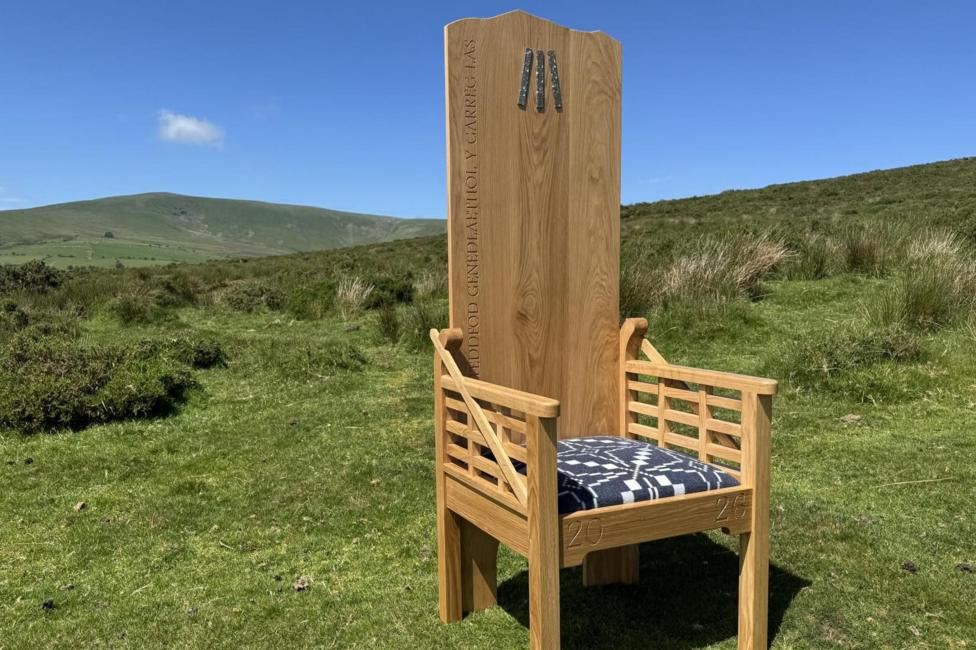
The design of the Chair draws inspiration from the seat of Lord Rhys, an historic chair that can still be viewed today at Cardigan Castle. This year's Chair was donated by the Pembrokeshire Coast National Park Authority, while the accompanying £750 prize was funded by Geraint and Siân James of Siop Awen Teifi in Cardigan. The Chair itself was designed and crafted by Tomos Lewis, who originates from Llanglydwen.
How does this fit into the wider Eisteddfod y Garreg Las programme?
The Chair ceremony forms part of a packed schedule at Eisteddfod y Garreg Las, which is taking place in north Pembrokeshire from 1 to 8 August 2026. According to Nation.Cymru, both the Crown and the Chair for this year's festival were formally presented to the Executive Committee at a special ceremony in St Davids on 19 June 2026, held as part of celebrations marking the Eisteddfod's 850th anniversary.
This year's festival is notably large in scale: organisers have programmed more than 1,000 events and activities and anticipate around 150,000 visitors over the course of the week, according to a report on the festival's cultural significance. The same coverage notes that the Eisteddfod takes its name from the bluestone associated with the Preseli hills. The festival site itself is located at Llantwd, near Cardigan, Pembrokeshire, SA43 3NU, according to Carmarthenshire Council's newsroom.
Lewis's Chair win comes amid a run of major literary announcements at this year's festival. Martin Huws was named winner of the Crown for his work Fan[-]go, praised by judges for its bold handling of a difficult theme, while Gareth Evans-Jones of Anglesey took the Prose Medal for work described by judges as a masterpiece. Separately, Rebecca Thomas won the Daniel Owen Memorial Prize for her unpublished novel Ynys Gwales.
What happens next?
The formal Chairing Ceremony, at which Emyr Lewis will be officially chaired before the public, is scheduled for Friday 7 August 2026 at 16:00 in the Pavilion, according to Nation.Cymru. The National Eisteddfod of Wales at Garreg Las continues until 8 August 2026, according to Ceredigion County Council.
Key Facts
- Emyr Lewis has won the Chair for the second time, having first won it in 1994 at Neath and district; he also won the Crown in 1998 at Ogmore Valley.
- This year's competition drew 16 entries, the highest number since 1988, judged as exceptionally close between two poems.
- The Chair was designed by Tomos Lewis and inspired by the historic seat of Lord Rhys at Cardigan Castle.
- The Chairing Ceremony takes place on Friday 7 August 2026 at 16:00 in the Pavilion.
- This year's Eisteddfod runs from 1–8 August 2026 in north Pembrokeshire, with over 1,000 events expected to draw around 150,000 visitors.