Cooking during the transition from summer to autumn demands an approach that balances simplicity with visual appeal and flavour. This collection showcases two dishes that embody that philosophy: a striking squid ink spaghetti that comes together while the pasta cooks, and a frozen fig dessert that captures the season's finest fruit at peak ripeness.
The philosophy behind late-summer and early-autumn cooking centres on keeping preparation manageable, particularly as routines shift with the return to work and school. This principle holds true whether you are preparing a weeknight dinner, hosting guests, or arranging a leisurely Sunday meal. Both recipes here demonstrate how minimal effort can yield maximum impact on the plate and palate.
What makes seasonal cooking work at this time of year?
The key lies in selecting ingredients at their absolute best and allowing them to shine without unnecessary complexity. The pasta sauce requires only the time the pasta spends cooking, while the semifreddo takes advantage of figs when their flavour is most concentrated and their texture most luscious. This approach aligns with broader seasonal eating philosophy, where chefs emphasise simple, flavorful recipes that make entertaining feel effortless.
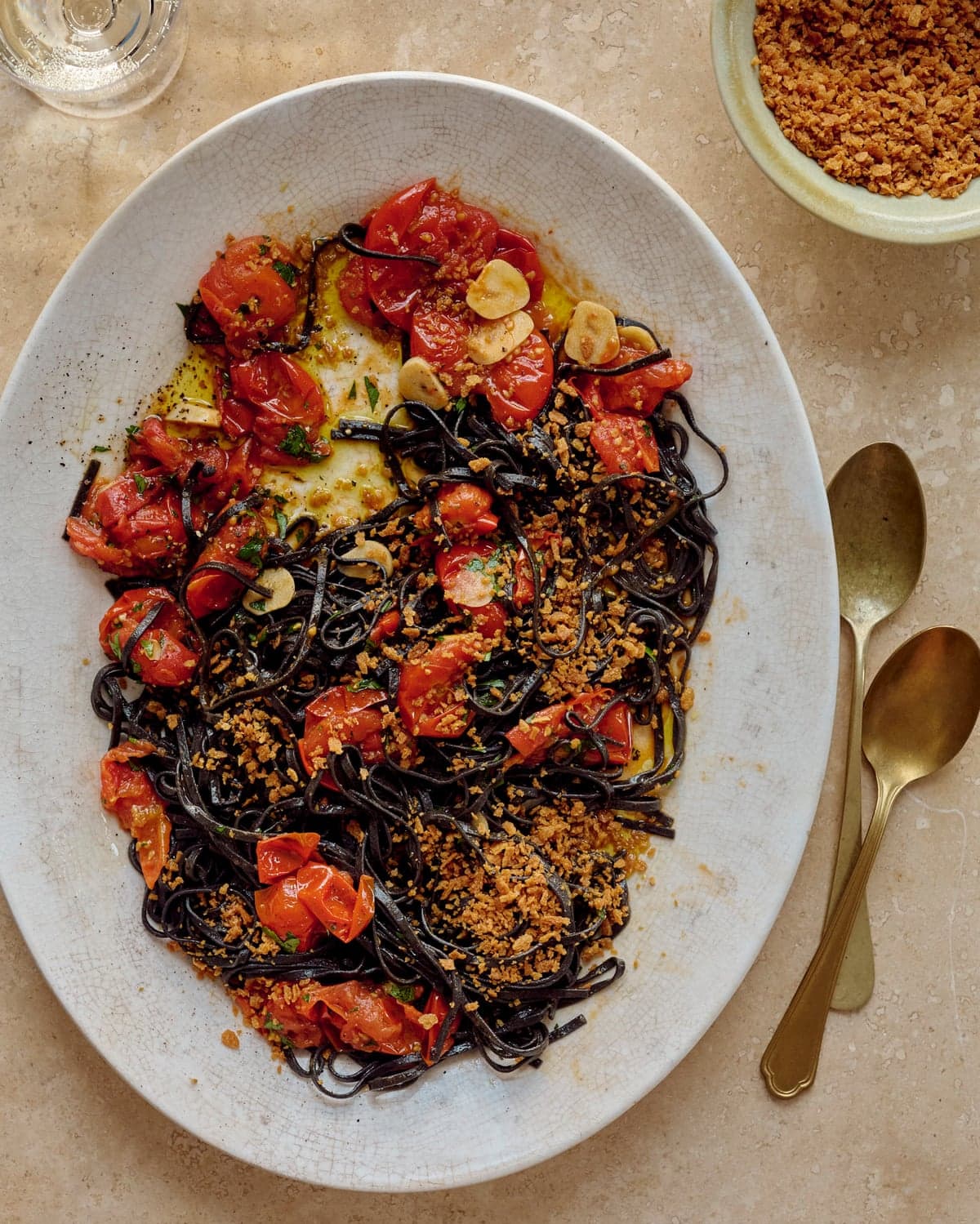
Squid Ink Spaghetti with Anchovies, Cherry Tomatoes and Pangrattato
The visual contrast between the black pasta, bright red tomatoes, and golden breadcrumbs creates a striking presentation, while the combination of flavours—briny anchovies, sweet tomatoes, and crispy crumbs—delivers genuine complexity. This dish builds on the tradition of Italian pasta recipes that use humble ingredients to create memorable meals. Similar approaches appear in recipes that pair spaghetti with tomatoes and toasted breadcrumbs, a combination that has long featured in Italian home cooking.
How to make the pangrattato
The toasted breadcrumb topping is prepared first and can be made ahead. Tear 150g of day-old sourdough or country bread into rough pieces and pulse in a food processor until the texture resembles coarse, uneven breadcrumbs. Heat 3 tablespoons of extra-virgin olive oil in a large frying pan over medium heat, then add 2 peeled and finely sliced garlic cloves. Cook gently, stirring, for one to two minutes until fragrant but not coloured. Add the leaves from 3 sprigs of thyme, cook for a further 30 seconds, then stir in the breadcrumbs. Cook, stirring regularly, for eight to ten minutes until the mixture is evenly golden and crisp throughout. Season with a pinch of fine sea salt and black pepper, then transfer to a plate to cool completely. Any leftover pangrattato keeps well in an airtight container and works particularly well scattered over salads or other pasta dishes.
How to prepare the pasta dish
Bring a large pan of well-salted water to a boil and cook 400g of squid ink spaghetti according to packet instructions until al dente. While the pasta cooks, heat 4 tablespoons of extra-virgin olive oil in a large frying pan over medium heat. Add 3 peeled and thinly sliced garlic cloves and cook gently, stirring, for two minutes until fragrant and just beginning to colour. Add 300g of ripe cherry tomatoes and cook, stirring, for three to four minutes until they soften and begin to burst. Stir in 6 anchovy fillets in oil and press them into the pan with the back of a spoon so they dissolve into the oil. Pour in 75ml of dry white wine, increase the heat, and allow the mixture to bubble and reduce by about half.
Using tongs or a spider sieve, lift the cooked pasta directly into the tomato pan, or alternatively drain it while reserving some cooking water. Add a splash of pasta water and toss and stir until the sauce lightly coats the pasta. Finish with the finely grated zest and juice of half an unwaxed lemon and 1 small handful of finely chopped flat-leaf parsley. Taste and adjust the seasoning with black pepper and additional lemon juice as needed. Divide the pasta between bowls and finish each serving generously with about 50g of the pangrattato and a final drizzle of extra-virgin olive oil.

Honey, Thyme and Fig Semifreddo
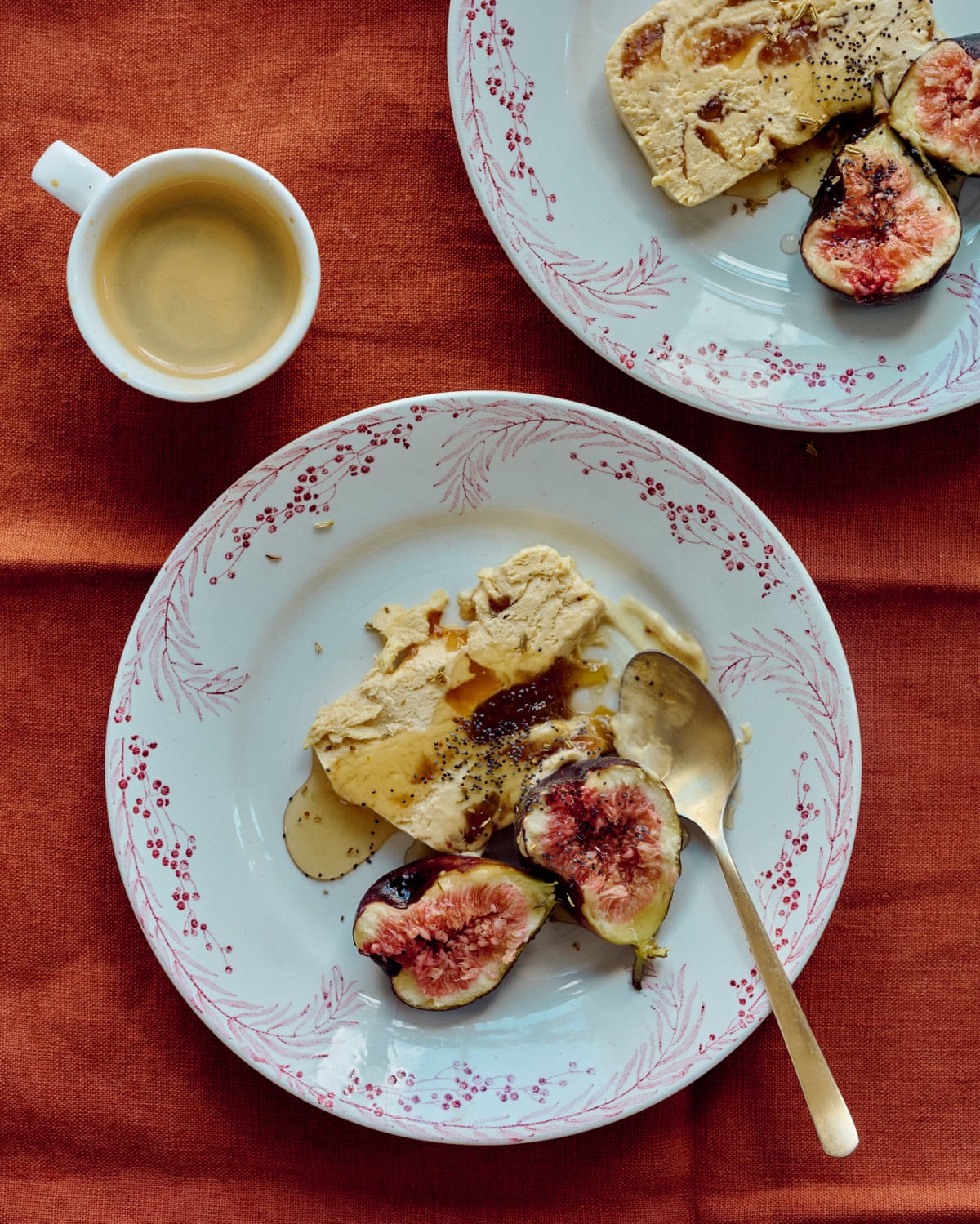
This frozen dessert showcases figs at their most flavourful and pairs them with the subtle herbaceous notes of thyme and the richness of honey. The semifreddo should be removed from the freezer about ten to fifteen minutes before slicing and serving, allowing it to soften slightly for the best texture. The dessert is finished with warm honey, fresh figs, and toasted seeds for a simple yet refined conclusion to the meal. Italian fig semifreddo recipes typically require a minimum of six hours in the freezer before serving, though overnight freezing is ideal, making this a dish that benefits from advance preparation rather than same-day assembly.
How to infuse the cream
Begin by infusing the cream with thyme. Put 300ml of double cream and 3 sprigs of fresh thyme in a small pan and heat until just below boiling. Remove from the heat, stir in the finely grated zest of half an unwaxed lemon, and leave to infuse and cool for twenty to thirty minutes. Once cooled, strain the cream through a fine sieve, then chill thoroughly before whipping to soft peaks.
How to make the honey sabayon
For the honey sabayon, place 3 large egg yolks, 75g of chestnut honey or good-quality floral honey, and a pinch of fine sea salt in a heatproof bowl set over a pan of barely simmering water, ensuring the base of the bowl does not touch the water. Whisk for six to eight minutes until the mixture is pale, thick, and has tripled in volume. Remove from the heat and continue whisking for two to three minutes more until the mixture is just warm. If using it, fold in 20g of cooled brown butter—that is, melted and browned, then left to cool. While optional, the brown butter adds a subtle depth of flavour that complements the honey and figs.
How to prepare the fig ripple
Warm 200g of fig jam with 1 tablespoon of aged balsamic vinegar and a tablespoon of water until the mixture is smooth enough to ripple through the semifreddo, then remove from the heat and leave to cool completely. The balsamic adds a subtle acidity that balances the sweetness of the figs and honey.
How to assemble and freeze the semifreddo
Fold a third of the thyme-infused whipped cream into the sabayon to loosen it, then, taking care not to knock out the air, gently fold in the remaining cream until well incorporated. Line a small loaf tin with baking paper, leaving plenty of overhang on all sides. Spoon in a third of the semifreddo mixture, drizzle over some of the fig ripple, then use a knife gently to swirl it into the mix to create a marbled effect. Repeat twice more with the remaining semifreddo mixture and fig ripple, finish with a final swirl of the knife, then cover with the overhanging paper and freeze for at least eight hours, and ideally overnight.
How to serve the semifreddo
Remove the semifreddo tin from the freezer ten to fifteen minutes before serving. Once it has softened slightly, lift it out of the tin using the paper overhang to help, then place on a board and cut into six slices. Arrange 4 fresh figs, quartered, around the slices, top with 2 tablespoons of warm honey, and finish with a sprinkling of 1 pinch of toasted poppy seeds, 1 pinch of toasted and lightly crushed fennel seeds, a few picked thyme leaves, and a small pinch of flaky sea salt.
Why these recipes work for the season
Both dishes exemplify the approach to seasonal cooking that has become increasingly popular among contemporary chefs. Seasonal recipes that celebrate peak ingredients like tomatoes and figs allow cooks to work with produce at its most flavourful, reducing the need for complex techniques or additional seasonings. The squid ink pasta requires minimal active cooking time, making it suitable for busy weeknights, while the semifreddo, though requiring advance preparation, demands only straightforward techniques and can be made a day ahead of entertaining. Together, they demonstrate how understanding the rhythm of seasonal ingredients and matching them with appropriate cooking methods creates meals that feel both effortless and special.