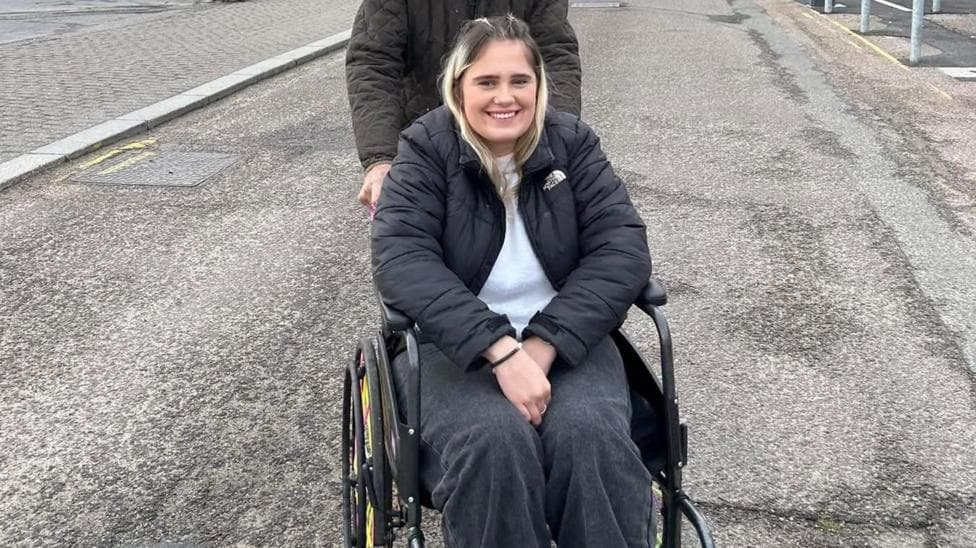
A 24-year-old wheelchair user was left in tears after crawling on her hands and knees through a Great Western Railway train when staff refused to provide a ramp to help her disembark, an incident that has left her still fighting for compensation nearly nine months later.
Phoebe Tesoriere, who has hereditary spastic paraplegia—a condition causing weakness and stiffness in the leg muscles—was travelling from London Paddington to Bath Spa with her parents in December 2025 when the incident occurred. After speaking with the assistance desk, her family was directed to the only designated wheelchair space on the train and assured that a ramp and support would be waiting at their destination.
Upon arrival at Bath Spa, however, staff informed them that Phoebe's carriage had stopped beyond the platform, making it impossible to use a ramp. Despite staff checking which station she would exit at multiple times during the journey, they never informed her of this critical problem.
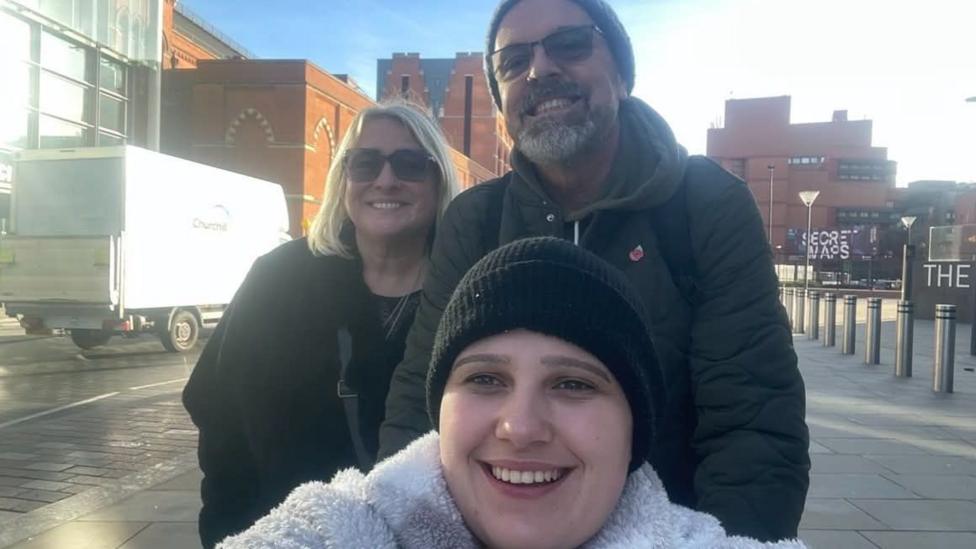
The family was told to remain on the train and travel to Bristol Temple Meads—a 15 to 20-minute journey—then purchase another ticket back to Bath Spa. This solution was impossible: Phoebe's grandparents were waiting at Bath Spa station to collect them and drive her back to Caerphilly, where she was living at the time.
When staff suggested Phoebe try to manoeuvre her wheelchair through the train aisle, it would not fit. Left with no alternative, she crawled through three carriages to reach an exit where her parents could lift her back into her wheelchair using a ramp that staff had failed to position in advance.
I was crying. People were staring. One passenger reached down to stroke my back and apologised to me, telling me what was happening wasn't acceptable. She was trying to comfort me, but in that moment I felt like a dog.
Phoebe's mother, Kirstin Tesoriere, described witnessing the incident as traumatic.
When I close my eyes I can still see it, the pity on other passengers' faces. It was humiliating for her.
Why has compensation still not been paid?
Phoebe filed a formal complaint with Great Western Railway on the day of the incident, but the investigation was not completed until May 2026—five months later. In its response, the train company acknowledged her experience was extremely poor and admitted fault at multiple points.
GWR confirmed in writing that Phoebe would receive compensation. However, despite providing her bank details as requested, she has received no payment and says the company has ignored every email she has sent since June.
Nearly nine months after I complained, I am still fighting to get an answer. No disabled passenger should ever have to crawl.
In emails reviewed by a national broadcaster, GWR stated:
There were opportunities for us to recognise that there would be an issue at Bath Spa, and we failed to identify them. In my view, the situation you were placed in—and your subsequent action to leave the train—was entirely avoidable. Put simply, this should not have happened. I am truly sorry for the distressing and uncomfortable experience you had when leaving the service.
According to GWR's complaints procedure, the company is required to investigate complaints by confirming what happened, gathering evidence, and interviewing staff where appropriate. The procedure also states that GWR's Passenger's Charter provides for compensation in some cases of failed Passenger Assist.
A GWR spokesman told a national broadcaster:
We are really sorry. Ms Tesoriere should have been able to travel with confidence and dignity and we let her down, both when we helped her board and at several points during her journey where we had opportunities to put it right. We have apologised to her personally and have made improvements to how we support customers boarding at London Paddington, so no-one else goes through this.Regarding compensation, the spokesman added that the company was doing everything possible to complete the final steps as quickly as possible.
What impact has this had on the family?
Phoebe had taken her parents to London as a Christmas gift, purchasing tickets to a concert the night before their journey home. The trip was meant to create positive memories, but the incident has had lasting consequences.
Kirstin said she understood that mistakes were made but believes her daughter has been treated inexcusably since the incident.
I can't forgive them for how they've made an awful traumatic experience last for months.She added that her daughter is now afraid to use public transport and has already lost so much to her diagnosis.
She's just scared now and she's already lost so much to her diagnosis. You just want your children to be happy.
The family has not used public transport since December 2025. Due to the progressive nature of Phoebe's condition, her mobility is expected to deteriorate over time, making reliable and accessible transport increasingly vital.
What broader accessibility issues does this reveal?
Phoebe's experience reflects wider challenges facing disabled passengers across the UK transport network. A 19-year-old disabled passenger reported being left without support services for eight hours at Amsterdam airport during the UK air traffic control crisis in September 2026, highlighting how people with additional needs are disproportionately affected during transport disruptions.
Similar accessibility barriers exist elsewhere. Dumfries and Galloway has only three wheelchair-accessible taxis for a population of 150,000, forcing users to book days in advance, while Glasgow's subway has only two wheelchair-accessible stations, forcing users to navigate stairs manually.
Phoebe is vocal about the need for systemic change.
It's ridiculous that disabled passengers are still expected to go through this.She emphasises that many people wrongly assume accessibility has improved significantly.
People believe everything is accessible these days, but it really isn't.
GWR has stated it has made changes to how it manages passenger assistance for customers travelling from London Paddington as a direct result of Phoebe's complaint, though she continues to await both a full resolution and the compensation the company promised.