Limited Lift Access on Glasgow Subway
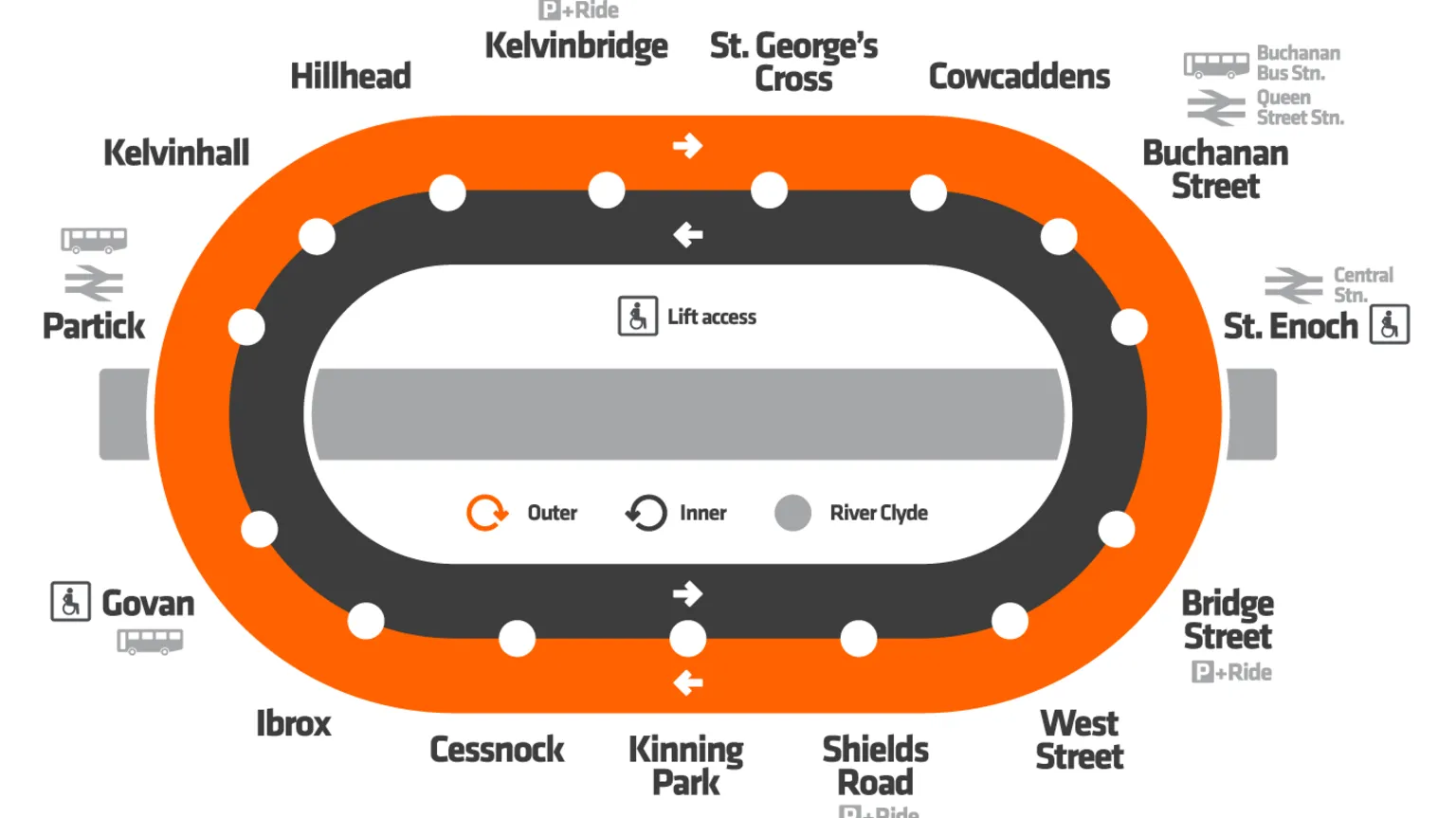
Glasgow's subway system comprises 15 stations, yet only two of these stations are equipped with lifts providing access to the platforms.
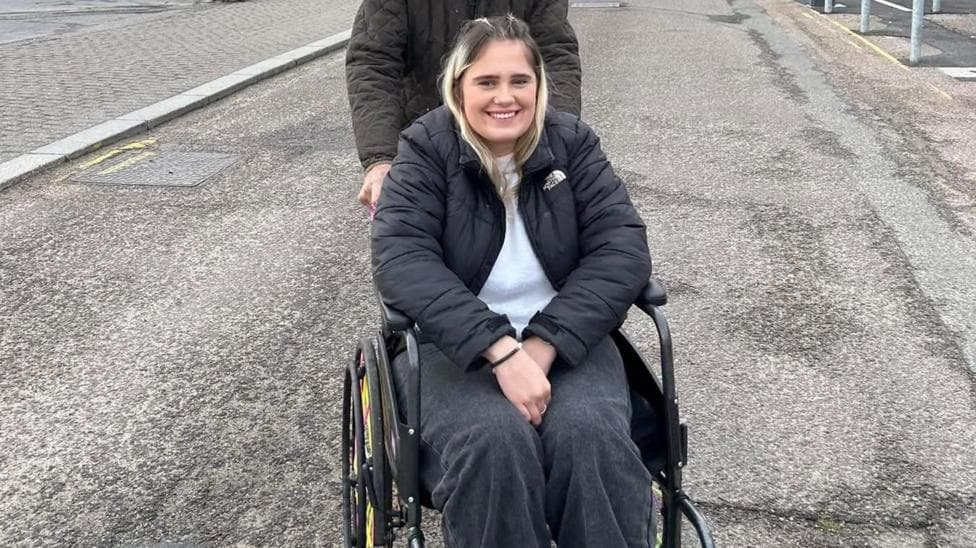
For Rae, a full-time wheelchair user, this presents a significant challenge.
"The way I use the subway independently is I bum-shuffle down the stairs with my chair in front of me," Rae explains.
"My chair has a bar at the back and I hold on to that and I slowly like go down on its back wheels while I bum-shuffle behind it.
"It's exhausting, but it's what I have to do."
Rae emphasizes that while they are not embarrassed by the method, it is far from dignified.
"People do stare at me," Rae says.
"It's like I'm in a zoo sometimes and I don't like that."
It was a visit to London that motivated Rae to advocate for improved subway accessibility in Glasgow.
"I came back from that trip experiencing a not-perfect, but much more accessible underground," Rae states.
In London, over a third of the 272 Tube stations — 94 in total — offer step-free access.
As a result, Rae, aged 18, launched the 'Access2Transport' campaign on Instagram, advocating for an "accessible underground" system for wheelchair users.
The Glasgow Subway is the third oldest underground metro system worldwide, serving approximately 13 million passengers annually.
It operates within a Victorian tunnel system that is nearly 130 years old.
Recent modernizations include a new fleet of trains introduced last year, which feature designated wheelchair spaces.
However, only two stations — St Enoch and Govan — currently provide wheelchair accessibility.
Constraints of Modernisation Efforts
An SPT spokeswoman explained that the modernizations must conform to the limitations imposed by the small Victorian tunnel system inherited.
The current modernization project, agreed upon in 2010, involves a comprehensive overhaul including new ticketing systems, trains, signaling, and refurbishment of all 15 stations, with a budget of £288 million.
The spokeswoman noted that while the possibility of installing lifts at all stations was considered, it was quickly determined to be unfeasible at stations with a single "island" platform, which applies to nine stations.
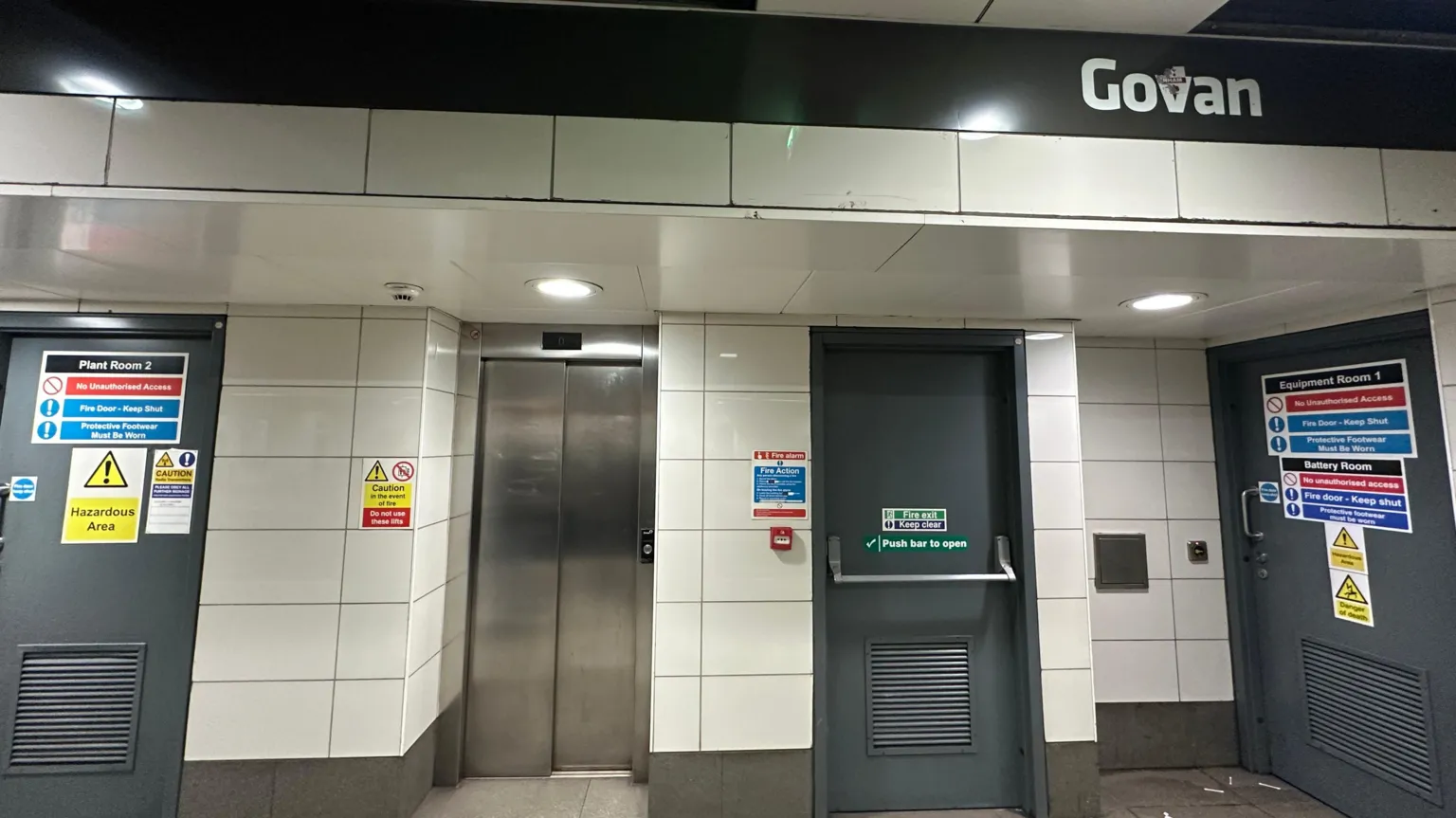
At stations with double or "flank" platforms, lifts must run vertically from the concourse to each platform, a configuration only possible at Govan and St Enoch stations.
The size of the lifts is constrained by the available space.
SPT stated it will continue exploring options to increase step-free access at its stations.
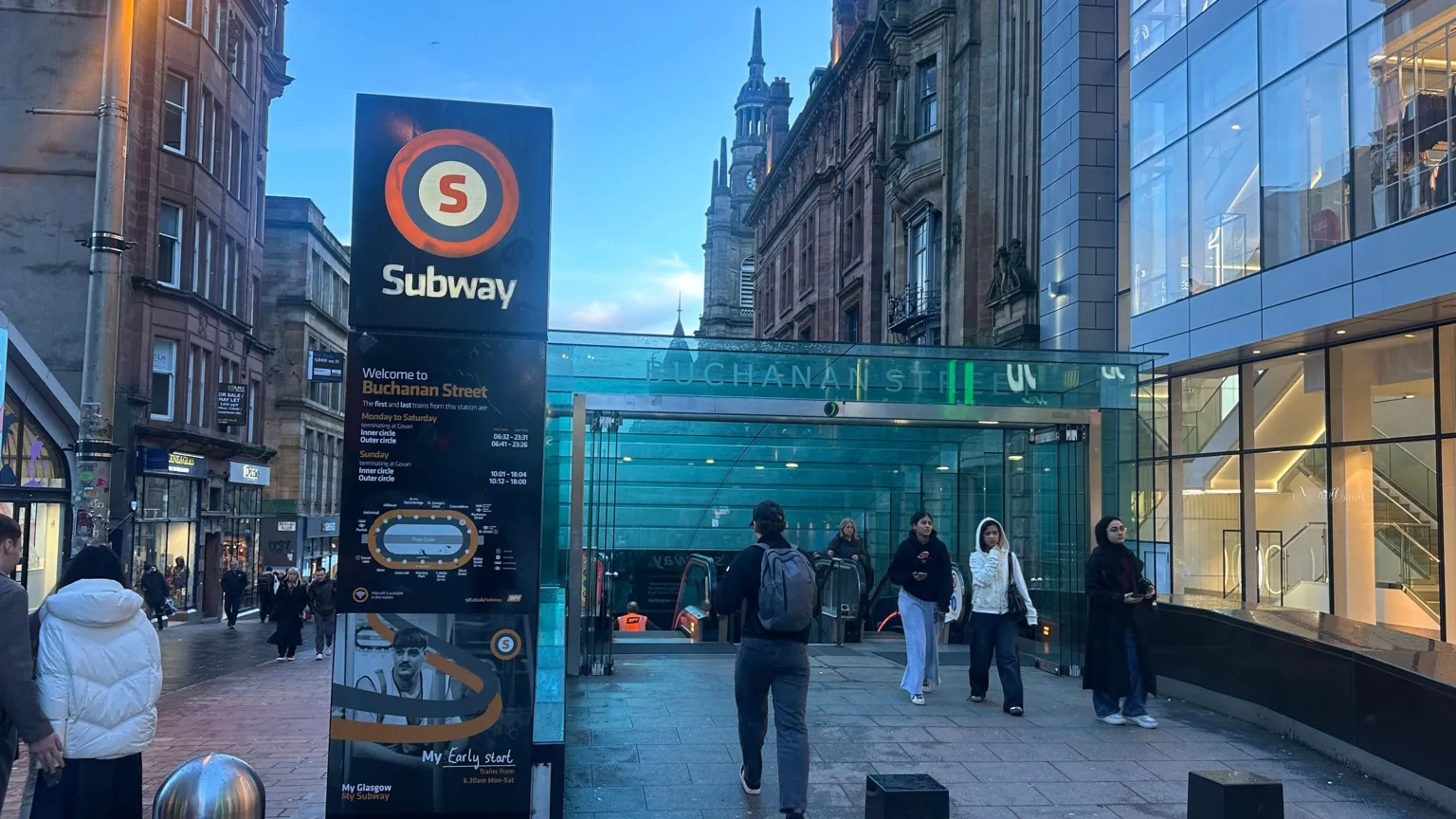
There is an opportunity to consider lift access from street level to the platform on one circle at both Buchanan Street and Hillhead stations, and a contractor has been appointed to investigate possible designs.
"We also take our responsibilities to help those who require extra assistance to travel with us, for whatever reason, very seriously," the spokeswoman said.
"We welcome all our disabled passengers on our service, while also recognising and working within its limitations."
"At this moment, the only safe way for wheelchair users to access the system without endangering themselves or others is to use Govan or St Enoch stations."
Local Government Perspective
Deputy Lord Provost Bailie Christy Mearns, a Scottish Green Councillor for Anderston/City/Yorkhill Ward and a board member of SPT, commented on the issue.
"For many, including people with disabilities and families with babies and young children, public transport can be extremely challenging to use.
"The lack of lifts in subway and train stations is raised most often, so I am pleased that two new subway stations are being investigated for step-free access improvements."
Broader Accessibility Concerns Beyond the Subway
For Rae, the challenges extend beyond the subway system to other forms of transport, such as buses.
Rae reports using buses only occasionally and only when no other options are available.
While bus companies like First provide dedicated wheelchair spaces, these can also be occupied by prams, limiting availability for wheelchair users.
When a wheelchair user is on their own at a bus stop, Rae notes that buses often pass by despite the user signaling to board.
"They park really far away and then don't get the ramp out, but let all the other able-bodied people on," Rae explains.
"It's more of a systemic issue rather than a one-off situation."
"I can't rely on them anymore."