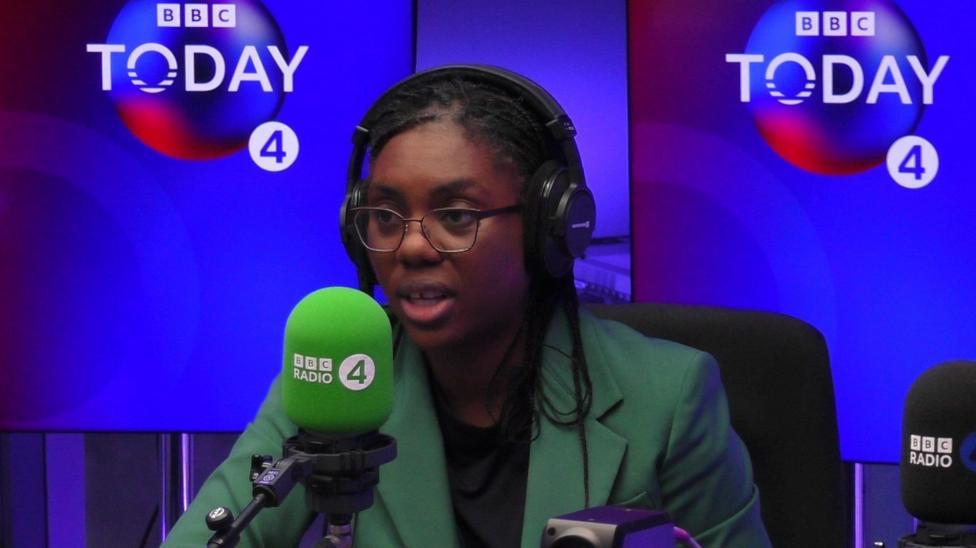
Conservative leader Kemi Badenoch has defended her use of double amputee marathon runners as an example when outlining plans to reduce welfare spending by £36bn annually, rejecting criticism that the comments were insensitive or inappropriate.
Speaking to BBC News, Badenoch maintained her position that people capable of working should be encouraged to do so, even when facing significant health challenges. She acknowledged using "extreme examples to illustrate things" but insisted this approach reflected common sense policy-making.
The remarks have drawn sharp criticism from Paralympian Richard Whitehead, a double amputee who has won four Paralympic medals. Whitehead accused Badenoch of "weaponising" his sporting achievements, stating that individual success should not be used to justify reducing support for disabled people more broadly.
What did Badenoch say about disabled people and work?
In a speech outlining Conservative welfare proposals last week, Badenoch highlighted examples of people with significant disabilities who contribute economically and socially. She noted that "double amputees run marathons. People who are housebound do wonderful creative work from home. People with autism run some of the biggest tech companies in the world." She used these instances to argue that millions of people can contribute to their economy, families and communities despite facing serious challenges.
When asked in a BBC Radio 4 Today programme interview whether she accepted the comments were insensitive, Badenoch rejected this characterisation entirely.
"No, no, no. I do not accept it. I will speak the truth, and I will say what I believe is common sense. What I know is that if people can work, then we should encourage them to work."
She further elaborated on her reasoning, stating:
"If someone can do that, then yes, your condition of ADHD or anxiety is mild."Badenoch emphasised her starting principle:
"If you can work, you should work, and the Conservative Party is going to help you get a job."
When pressed on whether her language might discourage people from seeking necessary support, Badenoch maintained her stance.
"I will say things as they are. People may disagree with things that I say, and that's fine, this is a free country, people are free to disagree, but they know where I'm coming from."
How have disabled people and politicians responded?
Whitehead's reaction was direct and forceful. In a social media post, he stated:
"Disability should never be judged through isolated examples of individual achievement, but through an understanding of the barriers people and families face every day. The fact that some double-leg amputees can run marathons does not mean that disability support is unnecessary. Equally, the fact that some people with ADHD thrive despite limited support does not mean that others do not need meaningful assistance."
Prime Minister Andy Burnham characterised Badenoch's comments as "crass and insensitive", marking a significant political clash over welfare policy. On 18 November, Badenoch and Burnham clashed at Prime Minister's Questions over welfare spending and youth unemployment, with Burnham asserting that the government was making progress on reducing the welfare bill.

What are the Conservative welfare proposals?
The Conservative Party's welfare overhaul targets specific groups currently receiving benefits. The party proposes stopping people from claiming disability benefits for "milder mental health issues and neurodiversity conditions such as anxiety, depression and ADHD", as well as "routine back and joint pain". According to LBC, the Conservatives' 52-page plan says £13.7bn in savings would come from disability and sickness benefit reforms, including ending payments for mild mental health conditions and routine back and joint pain.
The party says its proposals to overhaul sickness and disability benefits would save £13.7bn annually. To offset the impact on those no longer eligible for cash support, the Conservatives would invest £1bn into health services, enabling people to access treatment for their conditions instead of receiving direct payments.
The broader Conservative savings package of £36bn includes additional measures beyond disability benefit changes. According to Sky News, the plan includes £9.5bn from restricting benefit eligibility for some foreign nationals and £3.1bn from scrapping the two-child benefit cap. Labour has disputed the plan's costings and warned that removing the cap would push 450,000 children into poverty.
The Conservative proposals also relate to earlier welfare policy discussions. The party has previously pledged to cut benefits for children with milder ADHD and behavioural disorders, proposing to restrict Disability Living Allowance payments to children with severe conditions while offering alternative support through mental health services.
What happens next?
The government is expected to publish draft welfare-reform proposals early next year, with legislation to follow. Additionally, the Sir Stephen Timms review of Personal Independence Payment is expected to be published the week after 18 November, which may inform further policy discussions on disability support.