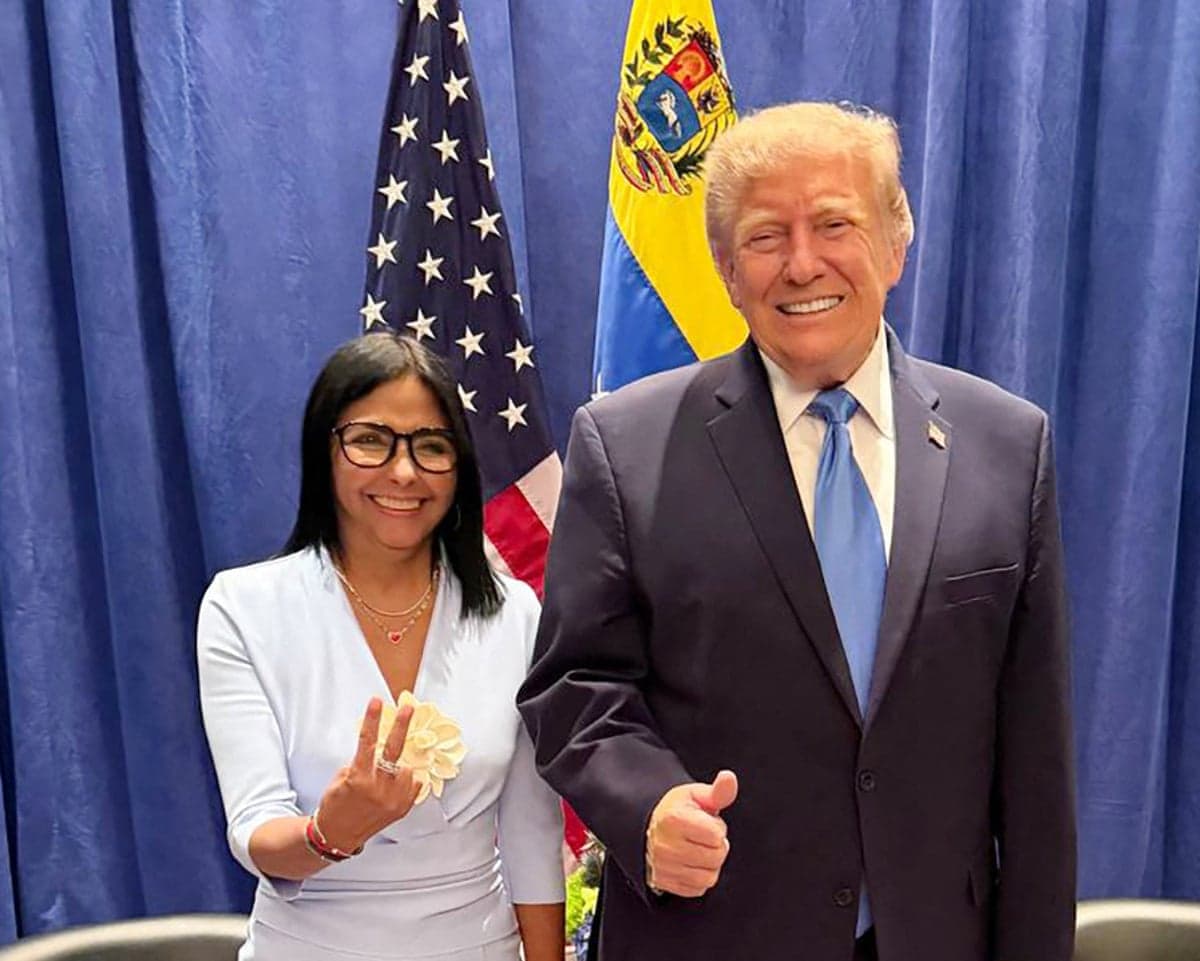
Venezuela's interim president Delcy Rodríguez has described a meeting with Donald Trump in New York as "historic," celebrating the encounter at a luxury Manhattan hotel just nine months after the US orchestrated the removal of her predecessor, Nicolás Maduro, who now sits in a Brooklyn jail.
The two leaders met late on Tuesday at the Lotte New York Palace hotel, located approximately 7 miles from the federal detention facility where Maduro has been held since his capture during a special forces operation in Caracas. According to the White House, the encounter was structured as a "pull-aside"—a more informal meeting than a formal bilateral summit—held during UN General Assembly week. This marked the first face-to-face meeting between Trump and Rodríguez since Maduro's removal in January.
When an American journalist asked Rodríguez on the eve of the meeting whether she planned to visit Maduro during her New York stay, she offered no response. Instead, she prioritised the Trump engagement, which observers viewed as central to her efforts to secure international legitimacy following years of diplomatic isolation under Maduro's authoritarian regime.
What was discussed at the meeting?
Rodríguez announced the substance of the talks in an Instagram post, stating:
We held a historic meeting with … Donald Trump, with whom we discussed strengthening the bilateral relationship between our countries and advancing a cooperation agenda in strategic areas such as energy, mining, security and other matters of common interest.According to , Venezuelan ministers and top officials had been advancing negotiations for months before Rodríguez's trip, with talks centred on debt and energy arrangements.
The meeting was attended by top US officials, including Secretary of State Marco Rubio and Deputy Chief of Staff Stephen Miller, according to a White House aide. Oliver Blanco, one of Rodríguez's senior diplomats, characterised the encounter as marking
a new stage of dialogue and understanding between both countriesand described it as
an important step toward new opportunities for our country and our people.Blanco also shared a photograph showing himself and Trump both smiling and giving a thumbs-up gesture.
What is the oil deal at the centre of this relationship?
Hours before the Tuesday meeting, Rodríguez sat in the UN General Assembly hall as Trump boasted about a recently concluded oil agreement.
It was a war … [and] to the victor belong the spoils,Trump declared, referring to the oil deal between the US and Venezuela. Observers noted that Rodríguez appeared to wince during this statement.
The agreement grants the United States majority control of 65 billion barrels of Venezuela's oil reserves, described by Trump as
the largest oil deal in history.This arrangement represents a dramatic shift in Venezuela's resource management, with the country ceding control of its oil revenues to Washington. The deal aims to double US oil reserves and lower American gas prices.
This concession came after Trump warned Rodríguez in the aftermath of Maduro's capture that she would
pay a very big price, probably bigger than Maduroif she did not comply with US demands. Since that warning, Rodríguez has made a series of major concessions beyond the oil agreement, fundamentally restructuring Venezuela's relationship with the United States.
How has this meeting been received in Venezuela?
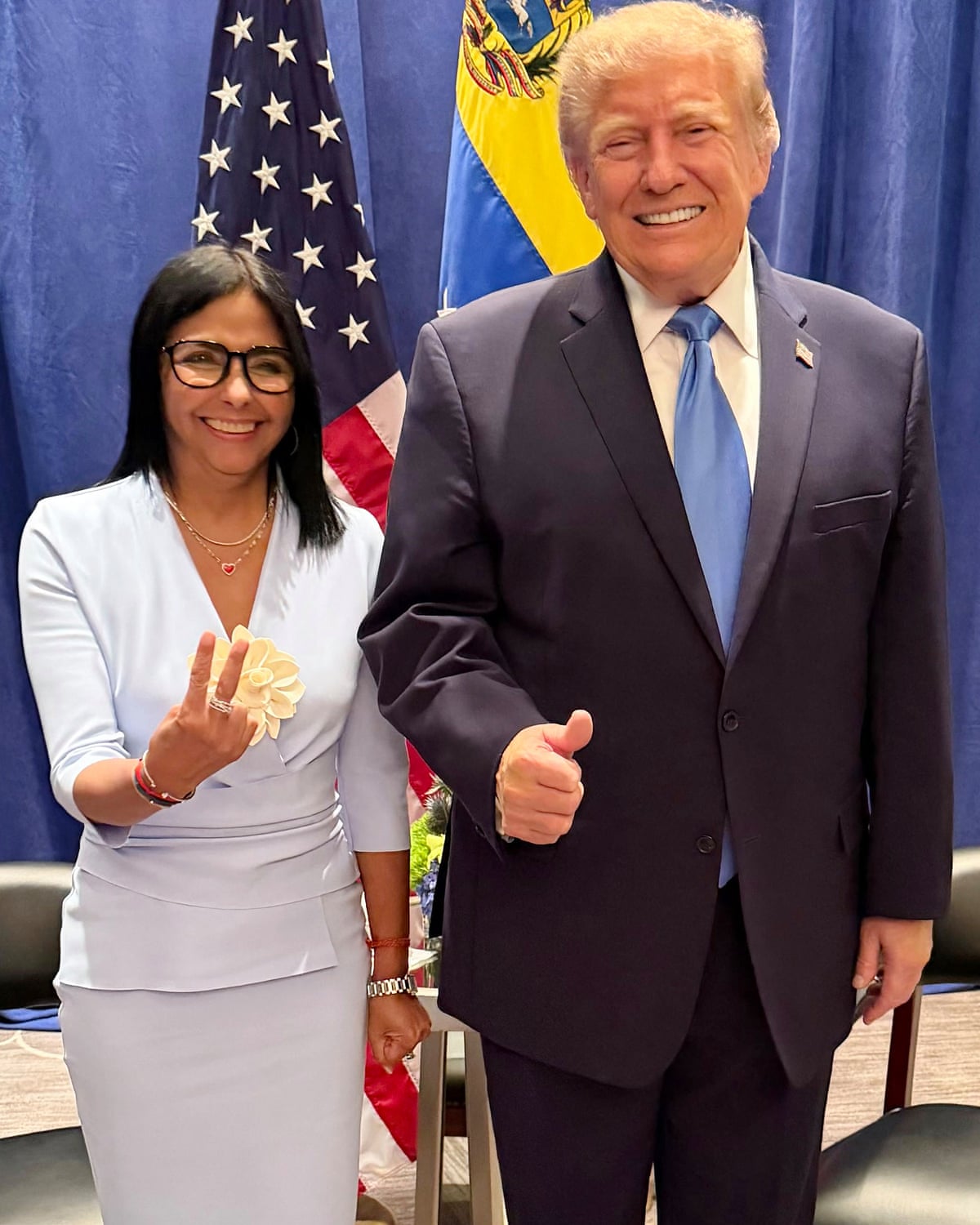
Critics within Venezuela have characterised Rodríguez's treatment by Trump as a humiliation for a socialist politician who spent years denouncing American imperialism. Some observers detected signs of discomfort in the photograph of the two leaders, noting that Rodríguez appeared to be clenching her left fist as she posed beside the grinning US president.

One opposition figure denounced the encounter as a meeting between a representative of a foreign power and a collaborator. However, Rodríguez has succeeded in consolidating power domestically, with Trump appearing more focused on securing access to Venezuela's natural resources than on pushing for fresh presidential elections that might restore democratic governance to the South American nation.
Trump has repeatedly praised Rodríguez's leadership as "fantastic" and "terrific," while simultaneously undermining the opposition leader María Corina Machado. Machado, who departed Venezuela late last year to receive her Nobel Peace Prize in Oslo, has remained unable to return to the country and is currently exiled in Panama. She reportedly made three separate attempts to re-enter Venezuela this week, all of which failed.
How does this fit into broader US strategy in Latin America?
The Trump administration's approach to Venezuela represents a significant departure from previous US policy in the region. Before Tuesday's encounter, the most recent meeting between a US president and a Venezuelan leader occurred in 2015, when Barack Obama and Maduro spoke briefly during a regional summit in Panama. At that 2015 gathering, Obama acknowledged that the era of direct US intervention in Latin American affairs had ended.
Trump has adopted a markedly different philosophy, actively reasserting American dominance in a region Washington has historically viewed as its sphere of influence. Beyond Venezuela, Trump's regional strategy includes attempts to topple Cuba's communist government through economic pressure and efforts to influence Brazilian politics. According to reporting on the Venezuelan military restructuring, Rodríguez has replaced all senior military commanders following the dismissal of the defence minister who was close to Maduro, moves undertaken amid US pressure and economic crisis.
The US has also applied diplomatic and economic pressure to support far-right candidate Flávio Bolsonaro in Brazil, actions that have drawn sharp criticism from Brazilian President Luiz Inácio Lula da Silva. Addressing the UN General Assembly on Tuesday, Lula responded to such efforts without directly naming the United States, declaring:
We will not allow the enemies of democracy – internal or external – to attack the will of the people. Brazilian democracy belongs to the Brazilians.He added emphatically:
Brazil doesn't fit into anyone's back yard.
Lula, who faces a challenging re-election battle in October's vote, did not meet with Rodríguez during her New York visit but stated that the
people of Venezuela deserve to decide their own future.He also called for fresh elections in Venezuela, a position that contrasts sharply with Trump's apparent willingness to work with Rodríguez regardless of her democratic legitimacy.
What is the historical context for this shift?
Under Maduro's leadership, Venezuela descended into economic chaos and increasingly authoritarian governance, transforming the nation into an international pariah. The country faced punishing international sanctions that devastated its economy. Venezuela also endured significant natural disasters during this period; the nation reeled from deadly twin earthquakes in June 2026, which prompted Rodríguez to call for unity and accept international aid to address infrastructure damage and rescue operations.
The transition from Maduro to Rodríguez has opened new opportunities for foreign investment in Venezuela's energy sector. BP will operate the second phase of Venezuela's Loran gasfield with Gulf-linked partners XRG and UCC, representing one of the first major foreign investments since Maduro's removal, pending regulatory approval.
What happens next?
Rodríguez is scheduled to address the UN General Assembly on Wednesday, providing her with a platform to articulate Venezuela's new international positioning. The underlying negotiations on debt and energy arrangements are expected to continue, with the framework established during the Tuesday meeting likely to guide future discussions between Venezuelan and American officials.
Key Facts:
- The meeting between Trump and Rodríguez on Tuesday was the first face-to-face encounter between a US president and Venezuelan leader since Maduro's removal in January 2026
- The 65-billion-barrel oil deal grants the United States majority control of Venezuela's oil reserves, fundamentally restructuring the country's resource management
- Rodríguez has consolidated power domestically despite criticism from Venezuelan opposition figures who view her concessions to the US as humiliating
- Trump's regional strategy represents a sharp reversal of the Obama administration's approach, actively reasserting US dominance in Latin America
- The meeting occurred during UN General Assembly week, with Rodríguez scheduled to address the assembly on Wednesday