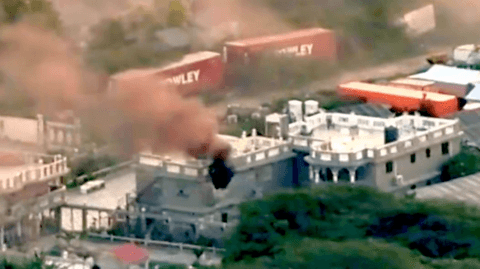
Haiti's Prime Minister Alix Didier Fils-Aimé has commended the Salvadorean military's efforts in combating gang violence following a coordinated assault on a property said to serve as a base for the 400 Mawozo criminal organization. According to BBC News, El Salvador's President Nayib Bukele announced that a joint task force had "destroyed" what he described as the residence and operational headquarters of Lanmò San Jou, the gang's leader, and the 400 Mawozo organization itself.
Bukele released video footage on X documenting the assault on the large compound, which showed multiple helicopters conducting strikes as dozens of individuals fled the property. Writing in Creole on the platform, he stated "we kept our promise," noting that the alleged gang members "ran away without even trying to fight." Local media outlets reported that approximately 20 people were killed during the operation, which took place in the early morning hours on Sunday. According to the Miami Herald, the strike occurred around 2:30 a.m. with four helicopters providing air support—two piloted by Salvadorean troops and two by Haitian forces.
However, local media also reported that Lanmò San Jou, whose actual name is Wilson Joseph, was not present at the property during the attack. The BBC has not independently verified the video posted by Bukele or confirmed whether the property is genuinely the headquarters of the 400 Mawozo, Haiti's largest criminal gang, which has gained notoriety for conducting kidnappings for ransom.
Fils-Aimé posted a message on X on Monday thanking the Salvadorean military's dedication "in the fight against gangs" and pledged that the two nations would continue collaborating with the UN-backed Gang Suppression Force (GSF) to "regain control of the territory and restore state authority." He added in capital letters: "THE GANGS WILL GET NO SLEEP!" While he did not offer additional specifics regarding the joint operation or casualty figures, Fils-Aimé shared a still image from Bukele's video showing a helicopter firing a projectile at the compound.
What prompted the operation?
The assault on the alleged gang headquarters apparently followed a social media exchange in which a user on X urged Bukele to target the complex. "Where is that house? Give us the exact address, and we'll destroy it," the Salvadorean president replied to the post, which has since been removed, apparently for breaching X's community standards.
The operation came months after four Salvadorean air force technicians were ambushed and taken hostage on 18 October while working as part of the GSF. In response, Bukele dispatched an additional 2,000 soldiers to Haiti to search for the missing personnel. According to AP News, Haiti's National Police, Salvadorean troops and the GSF located the burned vehicle used by the four missing technicians on 3 November, though the men themselves were not recovered.
Following the kidnapping, Bukele directly addressed "the gang leaders and gang members holding our four compatriots hostage in Haiti." He wrote in Creole: "We have already finished with the gangs in El Salvador, and we can finish with you too," referencing his aggressive crackdown on gang violence within his own country.
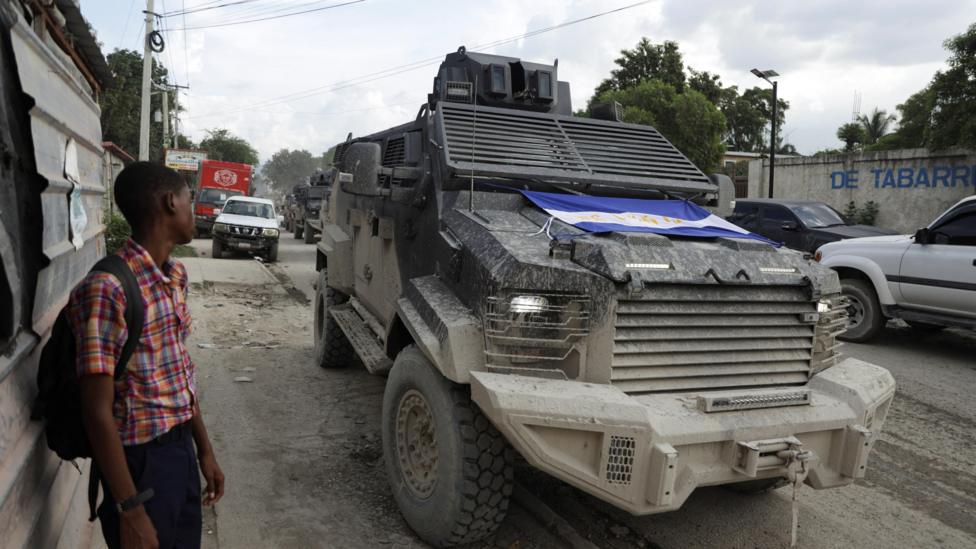
How did Salvadorean forces become involved in Haiti?
A small contingent of Salvadorean troops has been stationed in Haiti since January 2025 as part of a multinational force tasked with suppressing gang violence. Before the ambush of the four technicians, El Salvador had deployed at least 124 personnel to the GSF, primarily for aviation and technical duties such as medical evacuations. The UN Security Council-backed GSF was established to confront gangs, protect vital infrastructure and facilitate the movement of humanitarian aid.
However, Bukele's decision to send thousands of additional troops to Haiti following the abduction has drawn criticism from observers who contend that not all of these forces operate within the GSF's command structure. This has raised questions about the operational legitimacy and legality of their actions in the Caribbean nation. According to AP News, the UN stated that Salvadorean troops sent to search for the missing technicians were operating outside the GSF framework and should comply with international law. Haiti's prime minister asserted that foreign forces were under Haitian command, a position that Bukele had not publicly confirmed.
Amnesty International has called on both countries to "ensure all operations conducted by Salvadorean forces in Haiti comply with international human rights law."
What other gang operations have occurred recently?
The strike on the 400 Mawozo headquarters represents part of a broader campaign against organized crime in the region. A separate drone strike killed Mathias Saintil, leader of the Nan Boston gang and a senior figure in the Viv Ansanm alliance, on 8 November, according to Haiti's prime minister.
Gang violence has become an escalating crisis across Latin America. In Mexico, violence has surged in major cities following the capture of prominent drug traffickers, while in Venezuela and Ecuador, authorities have targeted leaders of transnational criminal organizations operating across the continent.
Bukele has established himself as a forceful opponent of gang activity, having implemented a controversial crackdown in El Salvador that has drawn both praise for reducing homicides and criticism from human rights organizations regarding detention practices and due process concerns.