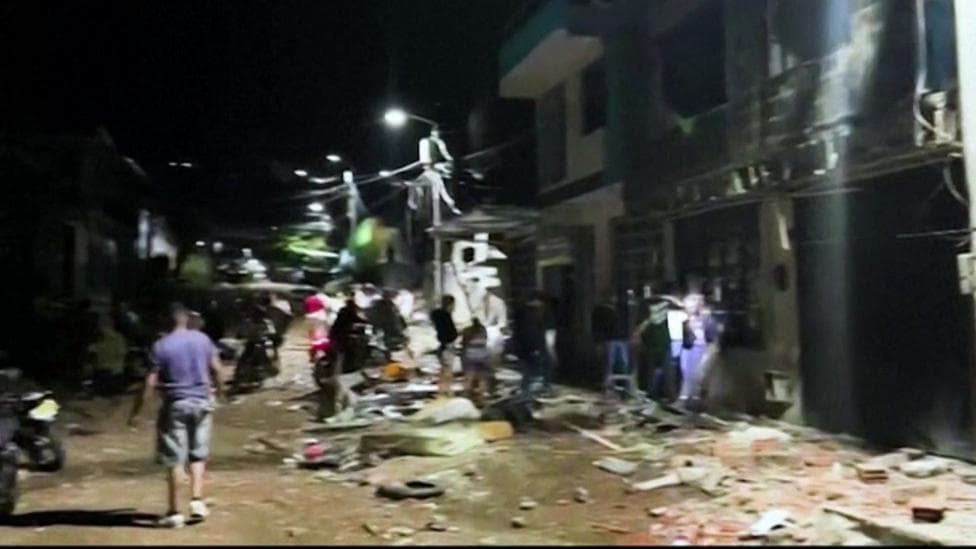
A truck loaded with explosives detonated near a military installation in Planadas, Tolima province, western Colombia, on Sunday, killing at least four people. Among the dead was a two-month-old baby girl, according to Tolima governor Adriana Magali Matiz. The blast damaged a hospital, a pharmacy, and multiple nearby structures in what authorities are treating as a deliberate attack.
According to BBC News, the explosion occurred as armed criminal groups have intensified operations against Colombian security forces in apparent retaliation for a military offensive launched by the country's new administration. The identity of those responsible remains under investigation, though reports indicate southern Tolima has a significant presence of FARC dissident factions, including the Ismael Ruiz Front, though no group had claimed responsibility at the time of reporting.
Mayor Juan Camilo Hueje ordered an immediate curfew and evacuation of the municipal health centre following the attack. Multiple injured people were transported to Domingo Savio school for emergency treatment, as the damaged hospital could not accommodate the wounded.
What triggered the escalation?
President Abelardo de la Espriella, who took office in August 2026 after Washington pledged $1 billion in security assistance, has pursued an aggressive crackdown on illegal armed groups across the country. Within weeks of his inauguration, he terminated peace negotiations that his left-wing predecessor Gustavo Petro had initiated, declaring that
in my government, criminal will have no political status, no leniency, and no impunity.
De la Espriella has expanded military operations beyond those authorised under Petro's administration, including direct bombing campaigns against armed group camps. This represents a sharp departure from Petro's stated
total peace strategy, which had emphasised dialogue as the only viable path to ending violence perpetrated by Colombia's numerous illegal factions. Petro himself had suspended some negotiations after repeated violations of ceasefire terms, but de la Espriella has gone significantly further in dismantling the entire peace framework.
How have armed groups responded?
Criminal organisations have responded to the intensified military pressure with a wave of attacks targeting security personnel. On Saturday, one day before the Planadas bombing, a motorcycle rigged with explosives detonated in southern Huila province, killing a police officer and injuring six others. De la Espriella characterised that incident as
a cowardly terrorist attack.
Beyond vehicle-borne explosives, illegal groups have increasingly employed drone technology to deliver ordnance. On 23 October, a marine infantryman was killed and four others wounded when a drone-delivered explosive struck a Navy vessel in Cauca province. Early reports suggested the Planadas attack may have involved explosive-carrying drones alongside the truck bomb, though authorities had not yet established the precise circumstances.
What is the scale of damage?
The explosion caused widespread destruction across Planadas. A hospital serving the community sustained significant damage, as did a pharmacy and numerous residential and commercial buildings in the vicinity of the blast site. The full extent of structural damage and the complete casualty count remained under assessment as emergency services worked to account for all those affected and treat the injured.
What happens next?
Local authorities and the governor's office are coordinating with security forces to conduct a comprehensive damage assessment and provide support to affected residents. No further scheduled military operations or policy announcements have been reported at this time, though the incident is likely to intensify scrutiny of de la Espriella's security strategy and the cycle of escalating violence between state forces and armed groups.