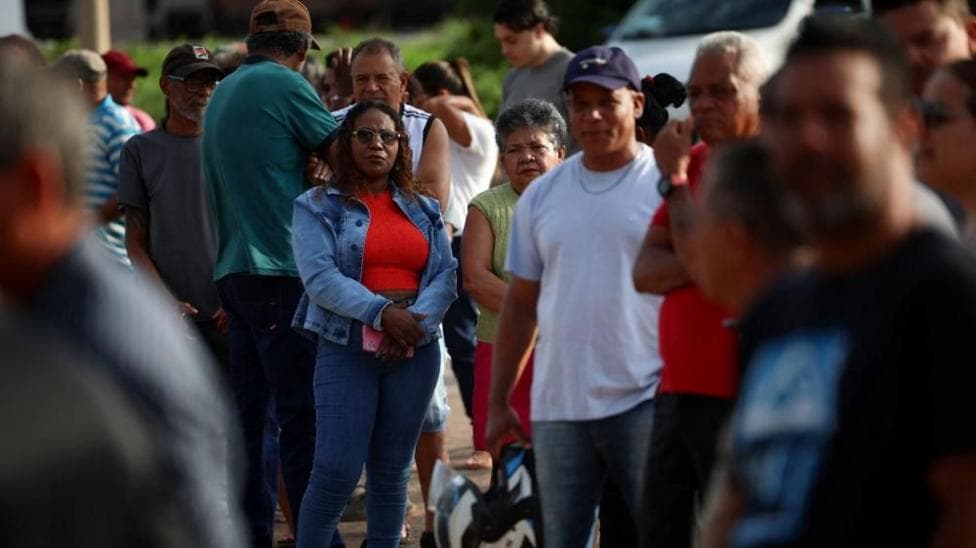
Polling stations across Brazil opened on Sunday as voters chose their next president in a closely contested runoff election. According to BBC News, the race pits 80-year-old incumbent left-winger Luiz Inácio Lula da Silva, seeking a fourth non-consecutive term, against 45-year-old right-wing senator Flávio Bolsonaro.
Bolsonaro, son of former president Jair Bolsonaro who is serving a 27-year prison sentence for plotting a coup after his 2022 election loss, entered the runoff as the frontrunner. In the first round held on 4 October, he secured 47.03% of valid votes compared to Lula's 45.16%, a margin of 2.2 million votes, according to CNN. More than 150 million voters were eligible to participate in the runoff, according to G1.
Historically, no candidate trailing after the first round has ever managed to overturn a deficit and win in a second-round runoff in Brazil. US President Donald Trump characterised Bolsonaro's first-round performance as a
"very big" victory.
This runoff represents a rematch of sorts with the 2022 election, when Lula defeated Jair Bolsonaro by 50.9% to 49.1%, a narrow margin that set the stage for this year's polarised contest.
What are Bolsonaro's campaign promises?
Bolsonaro's supporters expressed confidence that he would deliver transformative change through a promised aggressive crackdown on organised crime, combined with tax cuts and reductions in public spending. He campaigned intensively on the eve of the election in Belo Horizonte, the capital of Minas Gerais—a state considered essential for any winning presidential candidate since the 1980s.
In a social media video addressing supporters, Bolsonaro declared:
"The time is almost here. There are only a few hours left before we shape the future of our nation for the next 30 or 40 years."
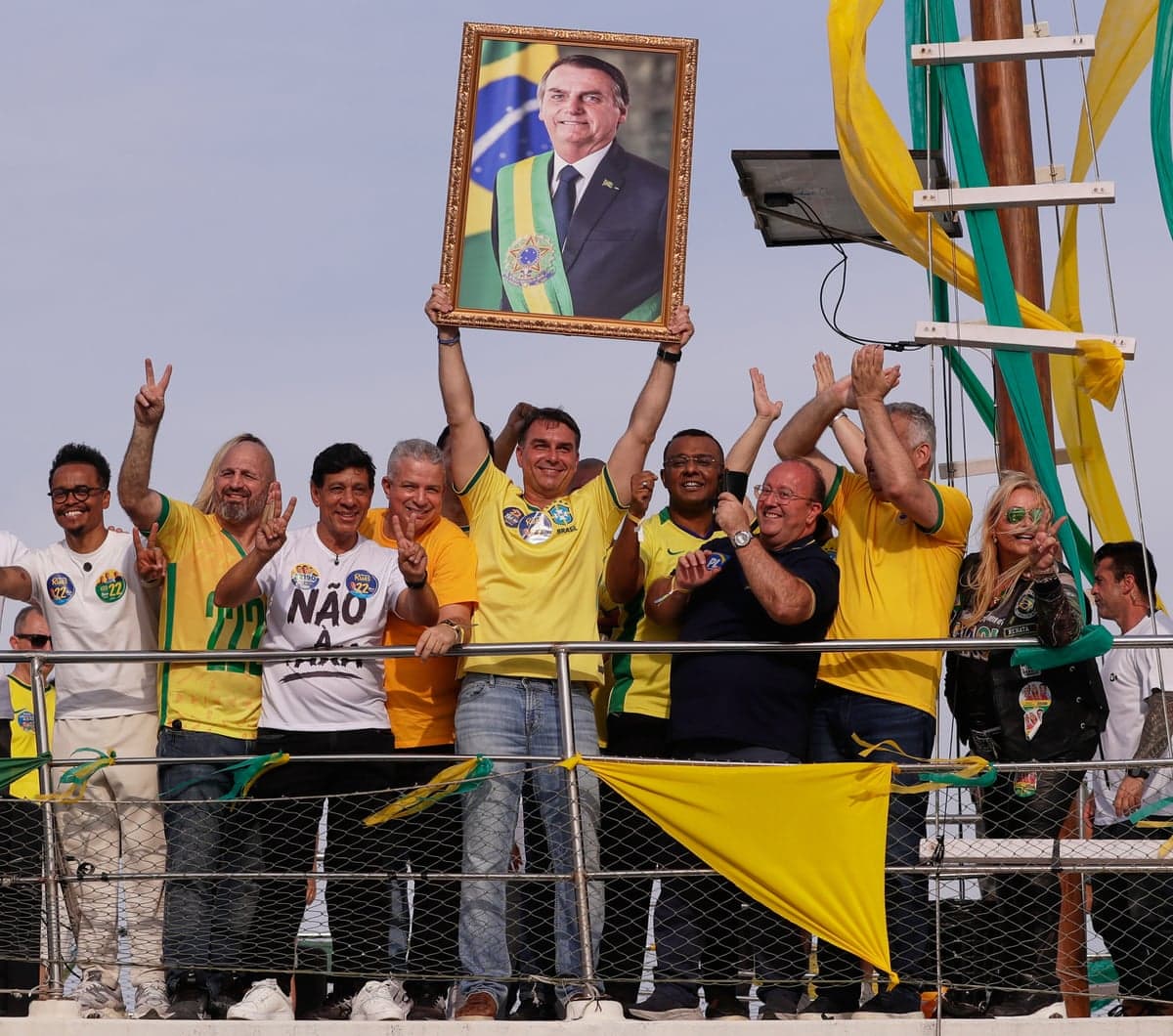
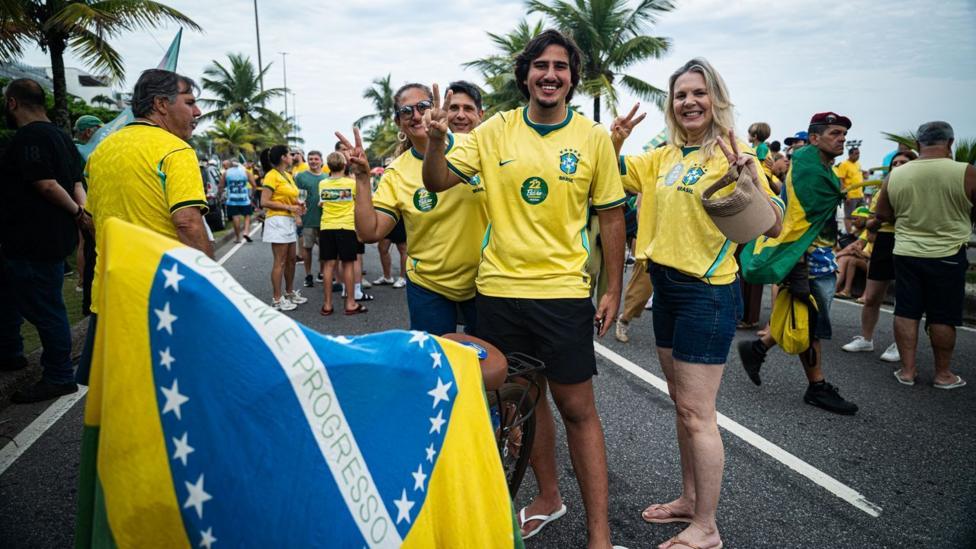
A significant element of his platform involves pledging to release his father, who is currently serving his sentence under house arrest due to health concerns. In Barra de Tijuca, Rio de Janeiro, where Jair Bolsonaro maintains a residence, supporters gathered in national colours to rally behind the candidate.
One Bolsonaro supporter told BBC News:
"Brazil needs change, and Flávio is the person that represents that today, after so many years of the Left destroying the economy and the country."Another emphasised her support for his pledges to
"end violence in Brazil, end terrorism, narco-trafficking, and to reduce interest rates".
How is Lula campaigning?
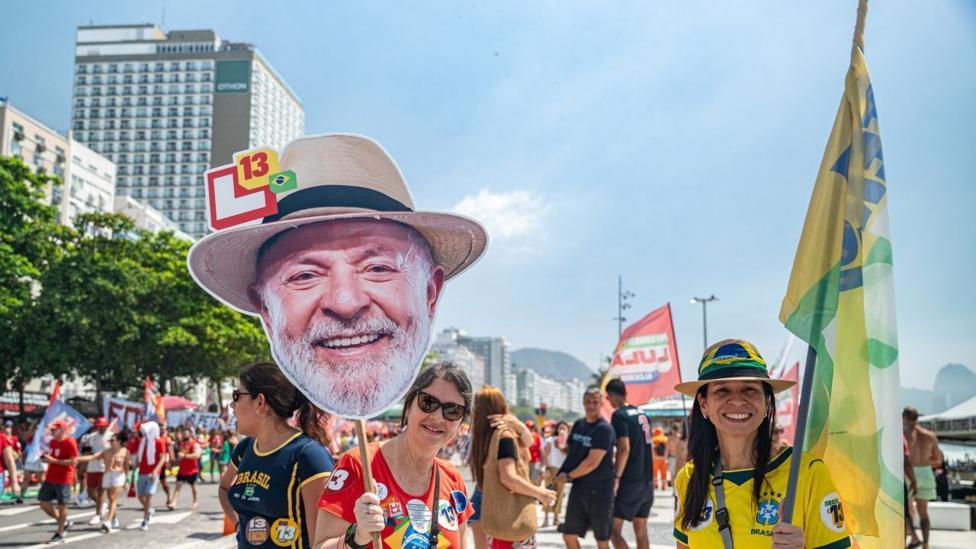
Lula's campaign has focused on mobilising supporters through large-scale rallies designed to boost turnout, particularly after 33 million eligible voters abstained in the first round. On Saturday, he addressed a massive crowd on Rio de Janeiro's Copacabana beach, framing the election as a matter of national
"sovereignty"and presenting voters with a choice between those who support Brazil's independence and those aligned with foreign interests.
Lula stated:
"We're going to win the election for one simple reason: it's true that the people want change [but] they want to move forward. They don't want to go backward."
A Lula supporter named Roberta told BBC News:
"This movement is to show we have strength. We've woken up, we're coming to the street to make a difference and turn the vote around."Another supporter, wearing Brazil's national yellow and green football shirt, argued that Bolsonaro supporters had
"appropriated"the jersey but that Lula's movement was reclaiming it.
What are the key policy differences?
Lula's administration and the Workers' Party have characterised this election as a
"battle for democracy", contending that Jair Bolsonaro's conviction for coup-plotting demonstrates that
"Bolsonarismo"represents a fundamental threat to Brazil's democratic institutions. The party has also accused the United States of interfering in the election, though Washington has dismissed these allegations as
"baseless".
During Lula's current term, relations with the Trump administration have been strained. Lula has emphasised that Brazil
"does not fit into anyone's backyard", an apparent reference to Trump's stated
"Donroe Doctrine"—a national security strategy asserting that US dominance in the Western hemisphere should remain unchallenged.
Bolsonaro, by contrast, argues that collaboration with Washington to combat powerful criminal organisations—which exercise substantial control in parts of Brazil—will restore state authority to gang-controlled territories. He has also repeatedly labelled the Workers' Party as corrupt, reminding voters of the massive financial scandals that plagued the party for years and have eroded support among many Brazilians.
What happened in the first round?
Bolsonaro's first-round victory on 4 October advanced him to the runoff, while his mother Michelle, brothers Carlos and Jair Renan, and uncle Renato also won election, cementing the Bolsonaro family's emergence as a major political force in Brazil. The first-round result has alarmed climate campaigners, signalling potential acceleration of Amazon deforestation.
However, environmental developments have complicated the narrative. Brazil's Amazon deforestation has fallen to record lows, with a 41.8% decline in the year to July 2026, though concerns have emerged about fire activity in the region.
How close is the race?
Pre-election polling has shown an extremely tight contest. A poll reported Flávio Bolsonaro at 51% and Lula at 49% of valid votes, indicating that the outcome remains uncertain despite Bolsonaro's first-round advantage. The candidates also faced off in a televised debate days before the runoff, providing voters with a direct comparison of their positions.
What happens next?
Polls are scheduled to close at 5 p.m. Brasília time on 25 October, with the electoral court expected to release consolidated results after closing. Lula plans to be in São Paulo to watch the results unfold on Sunday evening, while Bolsonaro will be in the capital Brasília—also where his father is under house arrest.