Brazil's government has announced that deforestation rates in the Amazon and savanna regions have reached record lows in the year to July 2026, a development that comes as the nation prepares for a presidential election runoff where the rainforest's future stands as a central issue. According to BBC News, satellite data reveals the Amazon deforestation rate fell by 41.8% compared to the previous year—the largest decline since records began in 1988—while the Cerrado savanna region saw a 23.8% reduction.
Left-wing President Luiz Inácio Lula da Silva, who took office three years ago, made a commitment to eliminate deforestation by 2030 in the Amazon after rates had increased substantially under his right-wing predecessor, Jair Bolsonaro. On 25 October 2026, Lula will compete in a runoff against Flavio Bolsonaro, Jair's son, with opinion polls indicating an extremely tight contest. Flavio is anticipated to pursue policies similar to his father's administration, though he has committed to combating organised crime in the Amazon region.
The specific measurements underscore the scale of the achievement. According to Brazil's National Institute for Space Research (INPE), deforestation covered 3,335 km² in the Amazon and 5,516.69 km² in the Cerrado during the measurement period. These figures represent substantial improvements over the previous record lows of 4,571 km² in the Amazon, set in 2012, and 6,319 km² in the Cerrado, recorded in 2019. The largest areas of cleared forest in the Amazon were concentrated in Pará state (1,130 km²), Mato Grosso (849 km²), and Amazonas (525 km²), while Maranhão led the Cerrado region with 1,718.59 km² of deforestation.
Why does the Amazon matter globally?
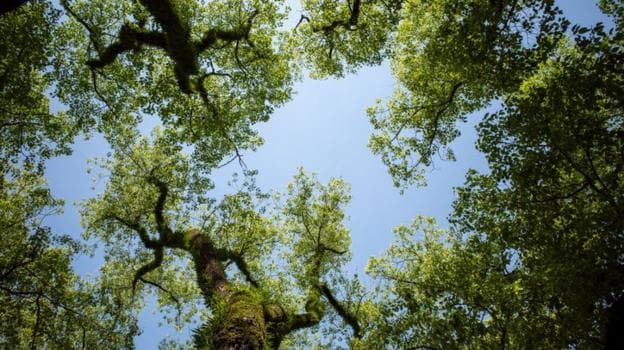
The Amazon rainforest represents the world's largest tropical forest and serves as a critical component in global climate change mitigation efforts. Approximately 60% of the Amazon is situated within Brazil's borders. These forests support millions of species and, when functioning healthily, absorb enormous quantities of carbon dioxide that would otherwise contribute to planetary warming. However, the rainforest has faced mounting pressure from decades of deliberate land conversion for agricultural and logging purposes, alongside climate change impacts that scientists warn can create conditions conducive to wildfires.
How did deforestation increase under Bolsonaro?
During Jair Bolsonaro's presidency from 2019 to 2022, the Amazon experienced a dramatic acceleration in forest loss. His administration promoted mining activities in indigenous territories and authorised extensive forest clearances while simultaneously reducing resources dedicated to forest protection. According to reporting from AFP news agency, the Amazon lost nearly 60% more forest area during Bolsonaro's four-year term compared to the preceding four years.
What changes did Lula implement?
Upon assuming office, Lula reversed the environmental policies of his predecessor and achieved deforestation rates that reached a six-year low during his initial year in office. His administration strengthened environmental monitoring systems and increased penalties for illegal logging activities.
"Our goal is to achieve zero illegal deforestation by 2030,"Lula stated in a post on X on Friday.
The DETER alert system, operated by INPE, provides additional evidence of progress. According to INPE's monitoring data, the system recorded 2,874.38 km² under deforestation alerts in the Amazon from August 2025 to July 2026, representing a 36% decrease from the previous period and 55.6% below the prior decade's average.
How is this achievement being assessed?
Brazil's Environment Minister, Joao Paulo Capobianco, characterised the decline in Amazon deforestation as "absolutely stratospheric". Marcio Astrini, executive secretary at climate advocacy group Observatorio do Clima, described the reduction as a "historic achievement" for Brazil.
"It shows that with political will, it is possible to curb deforestation and greenhouse gas emissions,"Astrini remarked.
What concerns exist about the election period?
Despite the record-low deforestation figures for the year to July 2026, concerns have emerged regarding the election campaign period. Authorities are investigating whether recent fires were deliberately set for political purposes ahead of the runoff; fire counts had tripled since 4 October, despite remaining near historic lows earlier in the year, according to reporting on the election dynamics and environmental concerns.
What happens next?
The presidential runoff between Lula and Flávio Bolsonaro is scheduled for 25 October 2026. The outcome will significantly influence Brazil's environmental trajectory, as the two candidates represent markedly different approaches to Amazon protection and development policies. The election result will determine whether Brazil continues its current deforestation reduction strategy or shifts toward policies that prioritise resource extraction and development in the rainforest region.
Key Facts
- Amazon deforestation fell 41.8% in the year to July 2026, the largest decline since records began in 1988
- The Cerrado savanna region experienced a 23.8% reduction in deforestation during the same period
- Satellite monitoring uses August-to-July measurement periods when lower cloud cover enables more accurate forest loss detection
- The presidential runoff on 25 October 2026 will determine Brazil's future environmental policies
- Lula's administration has committed to achieving zero illegal deforestation by 2030