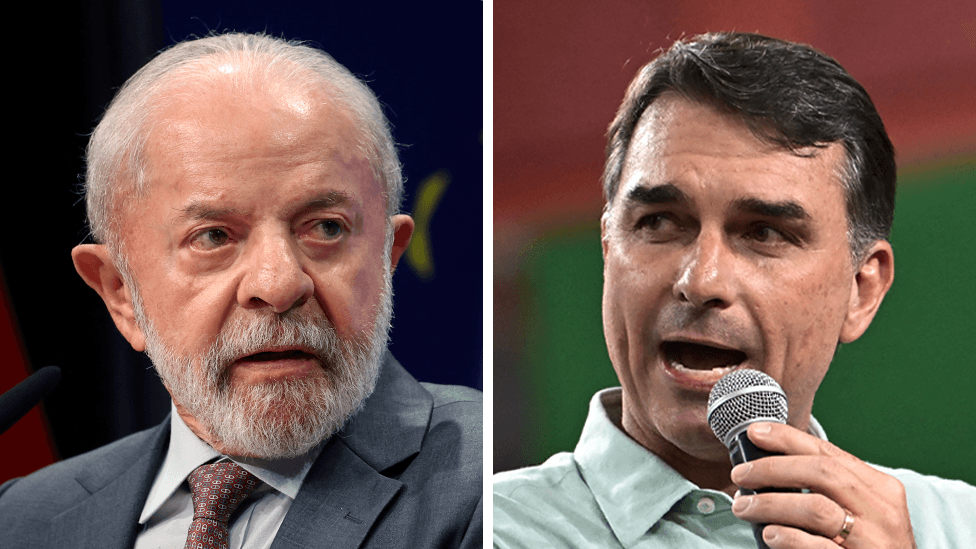
Brazilians have begun voting in a general election dominated by two front-runners whose names carry enormous weight in the nation's recent political history. The incumbent, 80-year-old left-wing veteran Luíz Inácio Lula da Silva, is being challenged by 11 candidates, with the most prominent being 45-year-old right-winger Flávio Bolsonaro. Four years ago, Lula narrowly defeated Flávio's father, Jair Bolsonaro, but the turbulent aftermath—which included Jair's conviction for plotting a coup after supporters stormed Congress—has fundamentally reshaped Brazilian politics and continues to dominate this election cycle.
The race is exceptionally tight. According to final polling data, Lula stands at 45 to 46 percent of valid votes, while Flávio Bolsonaro trails at 42 to 45 percent, depending on the pollster. All other 10 candidates remain at 4 percent or below. With nearly 160 million Brazilians eligible to vote, the election will determine not only the presidency but also governors, two-thirds of the Senate, the entire Chamber of Deputies, and more than 1,000 state assembly seats.
Voting is compulsory for Brazilians aged 18 to 70 who are literate, with fines imposed on those who abstain. Citizens aged 16 and 17 may vote voluntarily. If no candidate secures 50 percent of valid votes in the first round on 4 October, the top two contenders will advance to a runoff scheduled for 25 October. Polls close at 5 p.m. Brasília time, when the electoral court will begin publishing results. Brazil uses electronic voting machines, and national results typically become clear within hours of polls closing.
The absent figure casting a long shadow
Jair Bolsonaro, the right-wing former army captain who governed Brazil from 2019 to 2023, will not appear on the ballot. The 71-year-old is barred from running for office and is currently serving a 27-year sentence for plotting a coup after losing the 2022 election to Lula. Due to recurring health issues, he remains under house arrest rather than imprisoned, but faces strict restrictions prohibiting him from posting on social media or making public statements.
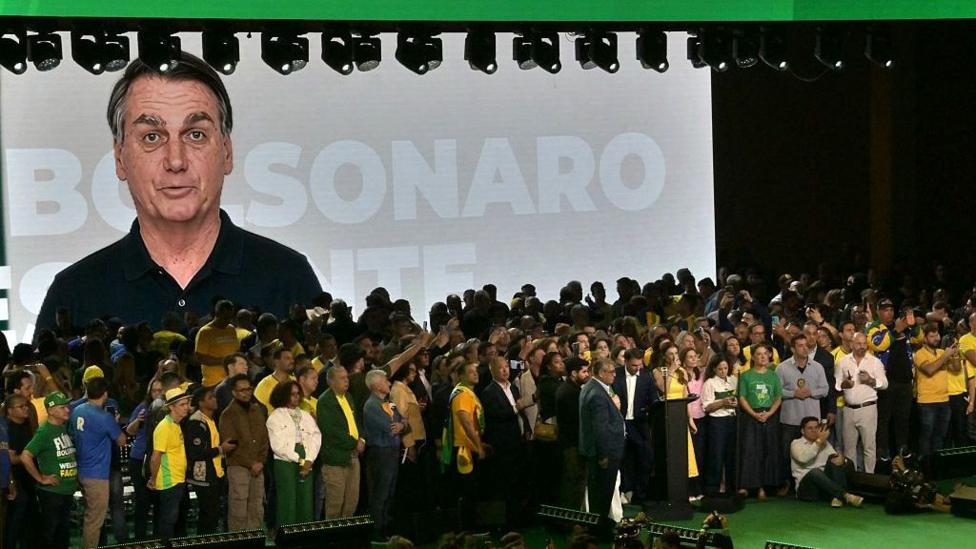
Despite these constraints, his influence permeates the election. At the event where Flávio Bolsonaro officially launched his presidential campaign, an AI-generated avatar of Jair Bolsonaro endorsed his son's candidacy. When the Supreme Court questioned the deepfake's legality, Jair Bolsonaro's legal team may have denied he granted permission for its use, yet there is little ambiguity that Flávio has his father's backing.
The shadow of Jair Bolsonaro extends beyond campaign imagery. In July, Argentine President Javier Milei attended a São Paulo rally supporting Flávio Bolsonaro, where he called Lula a "thief" and a "convict"—remarks that prompted Brazil to recall its ambassador to Argentina. Additionally, Congress has moved to reduce Jair Bolsonaro's prison sentence, overturning President Lula's veto in April, though the measure awaits Supreme Court confirmation.
What does Lula represent?
Lula, the candidate for the left-wing Workers' Party, has already served as president three times. He held two consecutive terms from January 2003 to December 2010, during which he was widely praised for lifting millions out of poverty through the Bolsa Família cash-transfer programme. He left office with approval ratings exceeding 80 percent, though his party was later engulfed in major corruption scandals.
Lula himself spent more than 18 months in prison between 2018 and 2019 after conviction on corruption and money laundering charges, which he has consistently denied. Those convictions were annulled in 2021, clearing the way for his 2022 presidential run, which he won by 1.8 percentage points against Jair Bolsonaro. When beginning his third term, he pledged it would be his last, yet his party endorsed him again this year despite his imminent 81st birthday.
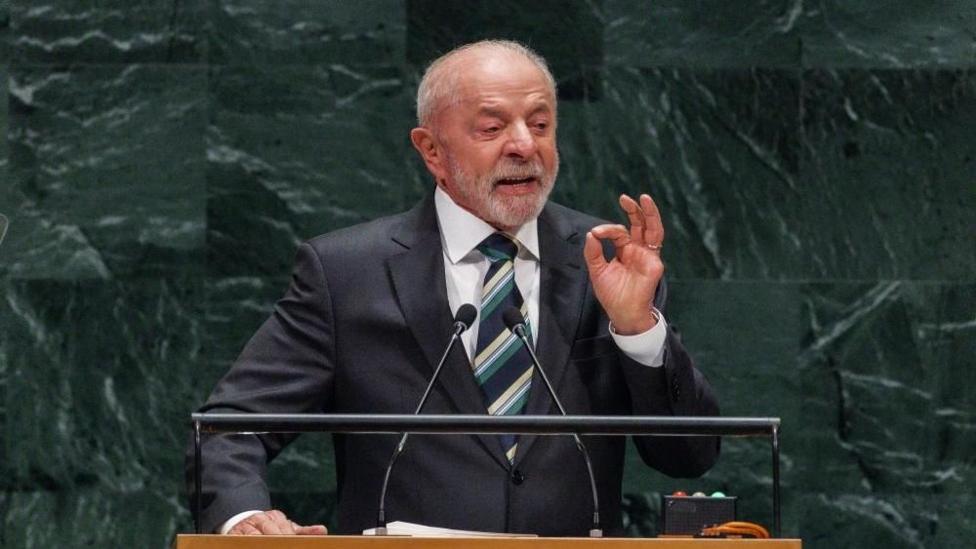
Lula remains a commanding figure on the left, though his environmental record has drawn scrutiny. While supporters praised him ahead of 2022 as the "saviour of the Amazon," some environmentalists have criticized recent decisions, particularly his support for exploratory oil drilling in offshore waters near the Amazon's mouth. Lula contends that oil revenues are essential for financing Brazil's transition to clean energy and maintains his commitment to eventually phasing out fossil fuels. His administration has highlighted the reduction in Amazon deforestation, with satellite data showing the area deforested in the first half of 2026 reached its lowest point in the past decade.
Relations between Lula and US President Donald Trump have been strained. Responding to Trump's "Donroe doctrine"—his administration's national security strategy asserting US dominance in the Western Hemisphere should remain unchallenged—Lula has insisted that "Brazil does not fit into anyone's backyard." He has also warned against "foreign and local enemies of democracy" interfering with the election, an oblique reference to both Flávio Bolsonaro and Trump administration figures who favor the right-wing candidate's victory.
What is Flávio Bolsonaro proposing?
Flávio Bolsonaro, a trained lawyer who has served as a senator since 2019, is running for the right-wing Liberal Party. Though perceived as less confrontational than his father, he is appealing to the elder Bolsonaro's supporters by promising to broadly continue his policies. His platform emphasizes tougher action on crime, lower inflation and spending, and closer ties with the Trump administration.
During his Senate tenure, Flávio has championed a tough-on-crime stance, advocating for longer sentences and more permissive gun laws, arguing that "decent citizens" should be able to defend themselves from criminals. He successfully lobbied for the US to designate Brazil-based criminal gangs Comando Vermelho and Primeiro Comando da Capital as Foreign Terrorist Organizations—a move Lula opposed. He has also courted evangelical voters and the agricultural sector, pledging to cut what he characterizes as unnecessary regulations and "get the state off farmers' backs."
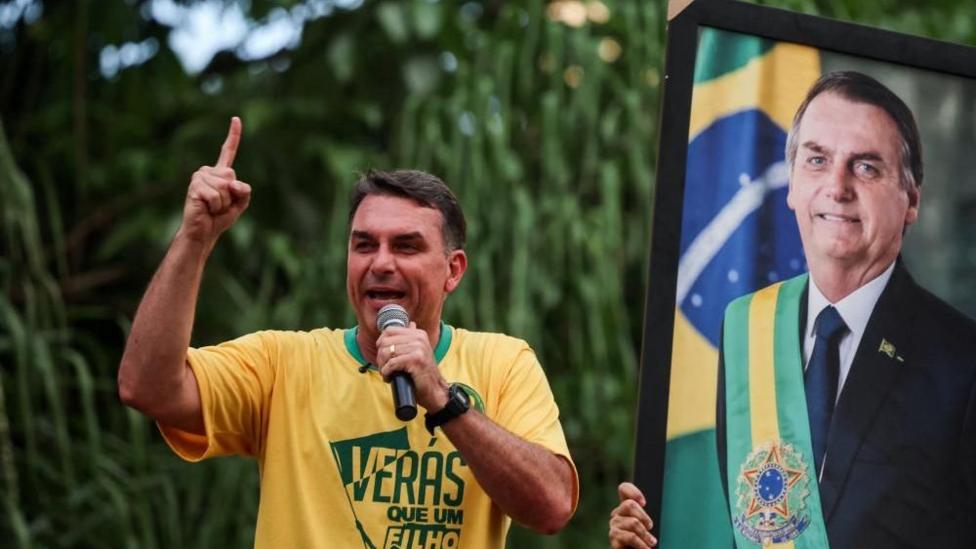
When questioned in an August interview with Globo about his 2019 claim that climate change did not exist, Flávio acknowledged "extreme climate events" but maintained they were "cyclical" rather than driven by human activity. He has actively cultivated Trump and his administration, portraying himself as a loyal ally during a May White House meeting and promising to join the US-led anti-crime alliance dubbed "Shield of the Americas" if elected.
What concerns are driving voters?
Until recent months, crime and security dominated voter concerns in polling. However, a scandal involving Daniel Vorcaro, a jailed banker accused of orchestrating one of Brazil's largest financial fraud cases, has thrust corruption to the forefront of electoral debate.
Flávio Bolsonaro acknowledged asking Vorcaro to finance a biopic about his father after voice recordings surfaced in which he requested 134 million reais ($25.9 million; £19.5 million). Police subsequently opened an investigation into Flávio for suspected corruption and money laundering related to the film's financing. Yet Lula's campaign has also suffered from the scandal, as alleged connections emerged between Vorcaro and Alexandre de Moraes, a Supreme Court Justice and Lula ally. Moraes presided over Jair Bolsonaro's trial and has issued numerous rulings regarding his detention conditions.
A police report indicated that Vorcaro made numerous calls and sent messages to a phone number investigators linked to Moraes, during which Vorcaro allegedly sought help avoiding arrest. Moraes has denied any impropriety, but the revelations shifted electoral attention from allegations against Flávio to those against the Supreme Court justice. Lula has attempted to distance himself, stating that "no one is above the law," but Flávio has weaponized the controversy, telling supporters at a rally that "voting for Lula means voting for Moraes," leveraging the right's intense antipathy toward the judge to consolidate his base.
Campaign controversies and debate cancellation
The election has been marked by misinformation and legal disputes. Brazil's Superior Electoral Court ordered the removal of 1,125 social-media posts spreading a false claim that Flávio Bolsonaro planned to strip Our Lady of Aparecida of her status as Brazil's patron saint. Additionally, both Lula and Flávio Bolsonaro declined to participate in a planned TV Globo debate before the first round; the broadcaster canceled the event, citing legal uncertainty following court rulings.
What happens next
Results will begin emerging on the evening of 4 October as the electoral court publishes tallies. If neither candidate achieves 50 percent of valid votes, a runoff between the top two contenders is scheduled for 25 October. The outcome will shape not only Brazil's domestic policy direction but also its relationship with the Trump administration and its approach to critical issues including Amazon protection, crime, and economic management.