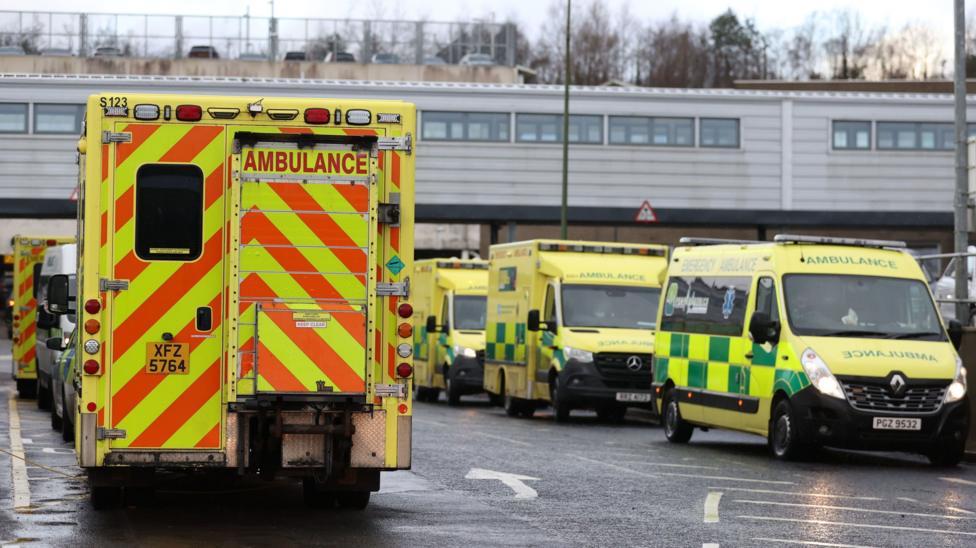
A two-hour ambulance handover limit at emergency departments faces severe challenges this winter, with more than 2,000 breaches recorded in the first four months of the Release to Rescue initiative. The scheme, introduced in 2026 to ensure patients wait no longer than two hours before being transferred from ambulances to hospital care, aims to free up crews to respond to emergency calls more quickly. According to BBC News, the Department of Health acknowledged the protocol had delivered improvements, noting that more than 6,000 waits exceeding two hours occurred during the same period the previous year.
The scheme's effectiveness is now in question as demand on emergency services continues to rise. The Department of Health reported that the scheme had reduced average handover times by 30 minutes, yet emergency medicine doctors warned it was shifting crowding into corridors and waiting areas rather than solving underlying capacity problems.
William Murphy, 85, experienced the system's limitations firsthand when he fell ill at his home in County Down in September. His son Ronnie described a distressing 12-hour wait for an ambulance, during which his father's condition deteriorated significantly. When told the ambulance service was under pressure, Ronnie expressed growing concern about the delay.

Dad was deteriorating still at that stage. He was completely off his feet, he couldn't walk,Ronnie recalled.
I was concerned - the length of time it was taking and Mum was ringing but they were just saying still the same message.
Upon arrival at hospital, William required immediate oxygen support, with severely depleted oxygen levels. Ronnie questioned what would have happened had his father's condition worsened further during the extended wait. The Northern Ireland Ambulance Service (NIAS) subsequently apologised for the delay, stating that
the demand for our services exceeds our capacity to respond in as timely a manner as we would like.

What happened at the hospital?
Ronnie's concerns extended beyond the ambulance wait. His father spent nearly two days in the Ulster Hospital's emergency department before being admitted to a ward, though Ronnie acknowledged the quality of care received was not in question. He described the emergency department as severely overcrowded, with every seat occupied and patients sitting and lying on floors, some in visible distress.
The South Eastern Health Trust expressed regret about the experience described by Ronnie and his family. Dr Michael Perry from the Royal College of Emergency Medicine highlighted a fundamental problem with the two-hour handover target: it addresses a symptom rather than the underlying cause of ambulance delays.

If we had a flowing system where patients moved in a timely fashion [through the hospital system], where there was space in emergency departments, ambulances would offload as soon as they arrive,Perry explained. He warned that approaching winter would intensify pressure on emergency departments through seasonal illness patterns, making the two-hour target increasingly difficult to meet.
To meet the requirement to offload ambulances in that timely fashion, it's going to be very challenging for us,he added.
How is the ambulance service affected?
Norman Cunningham, a Unite union representative for NIAS, identified a critical gap in the current approach. While ambulance handover delays outside hospitals are damaging to the service, the real problem lies with patients waiting at home who are seriously ill but cannot access an ambulance because crews are stuck at hospitals.

There will never be a quick fix with health because demand, particularly for the ambulance service, goes up 3% to 5% a year,Cunningham stated. NIAS told the Assembly that hospital handover delays had cost more than 25% of its capacity that year, highlighting the scale of the problem.
The financial stakes are significant. According to NIAS's savings plan published in August, £5.2 million of cuts to its 2026-27 budget depend on the successful continuation of Release to Rescue. The document warns that if other health trusts reduce their operational support for the protocol as part of their own cost-cutting measures, there will be a direct impact on NIAS capacity, response performance and expenditure.
How have health trusts responded?
The Department of Health acknowledged that severe pressures on emergency departments created additional challenges for implementing the Release to Rescue protocol. However, it maintained that the scheme had shown significant success, pointing to reductions in ambulance response and handover times across the health service.
The South Eastern Health Trust intermittently paused the protocol at the Ulster Hospital on 1 September following an exceptionally busy bank holiday Monday, when 23 ambulances breached the two-hour limit. This remains the only instance so far of a health trust pausing the policy. The trust reported that 90% of ambulance handovers were completed within two hours in August, representing significant progress in improving turnaround times.
The Southern Health Trust stated there had been no decision to pause the protocol at its emergency departments, though it acknowledged the two-hour target may occasionally be breached due to day-to-day service pressures. The Northern Health Trust said it had never stepped down the protocol, while the Western Health Trust and Belfast Health Trust both confirmed they had not paused it since its introduction.
What do the wider findings show?
A Royal College of Emergency Medicine survey found that five of Northern Ireland's nine emergency departments reported improved handover times but increased overcrowding after the policy began, suggesting the initiative may be trading one problem for another.
The broader context reveals a systemic issue. A Northern Ireland Audit Office review estimated ambulance handover delays cost about £50 million over five years and contributed to greater reliance on private ambulance providers, underscoring the long-standing nature of the problem and its financial consequences.
What happens next?
The Department of Health has asked all six health trusts, including the ambulance service, to make savings of up to 12% over three years. The success of Release to Rescue in meeting its two-hour target during the coming winter months will be closely watched, particularly as seasonal demand increases. The scheme's continuation remains dependent on sustained cooperation from all health trusts and their ability to manage patient flow more effectively within emergency departments.
The case of William Murphy and the experiences of families across Northern Ireland highlight the human cost of these systemic pressures. As the health service enters its most demanding season, the question remains whether the Release to Rescue protocol can be achieved without addressing the fundamental capacity and flow problems within hospitals themselves.