A Guernsey astronomer has urged people to make the most of a "once or twice in a lifetime" partial solar eclipse, as the next total eclipse visible from the island is not due until 2081. On Wednesday 12 August, people in the Channel Islands, the UK and Ireland will experience a partial solar eclipse when about 90% of the sun will be covered by the moon.
Dr Jean Dean, secretary of the astronomy section of La Société Guernesiaise, urged people to safely enjoy the "significant" solar event.
"For many of us who saw the 1999 total eclipse, this is probably the last really big eclipse we'll see," she said.
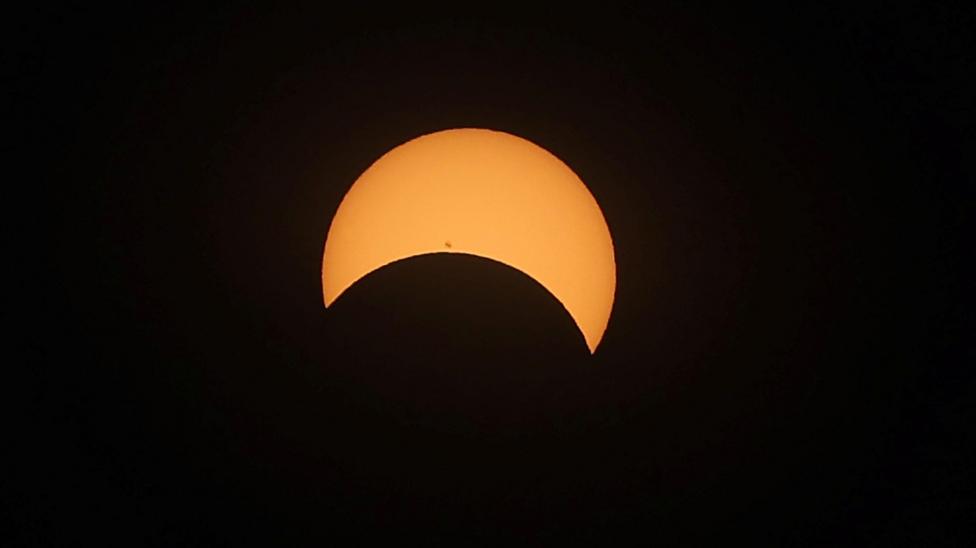
The eclipse is due to start at about 18:15 BST on 12 August.
August's eclipse will be the closest the islands have been to total coverage of the sun since the total eclipse in 1999.
How rare is the eclipse from Guernsey?
Dean said solar eclipses are not rare on the earth as a whole, explaining that they happen about every 18 months.
"Solar eclipses aren't rare on the earth as a whole. They happen about every 18 months.
[But] From any one particular location, its probably a once or twice in a lifetime event.
"For many of us who saw the 1999 total eclipse, this is probably the last really big eclipse we'll see.
"The next total eclipse from Guernsey will be in 2081, so that's quite a long way away."
What might people notice if the skies are cloudy?
Dean said clear skies would give the best view of the event but, if the weather was overcast, it would still "go dark, a little bit cold and the birds will go silent".
"That's because it's such a large eclipse - nature will start to respond, so it will be a little bit eerie if that does happen," she said.
According to Royal Museums Greenwich, viewers will see the eclipse begin at about 18:15 BST, with maximum coverage about an hour later. Dean said people would be able to see the eclipse from any point on the island where the setting sun was visible.
How can people watch safely?
Dean said it is very dangerous, even at that amount of coverage, to stare at the sun and that proper protection is needed.
"I need to stress that it's very dangerous - even at that amount of coverage - to stare at the sun.
"You really do need solar eclipse glasses Don't look directly at the sun. Sunglasses will not be adequate."
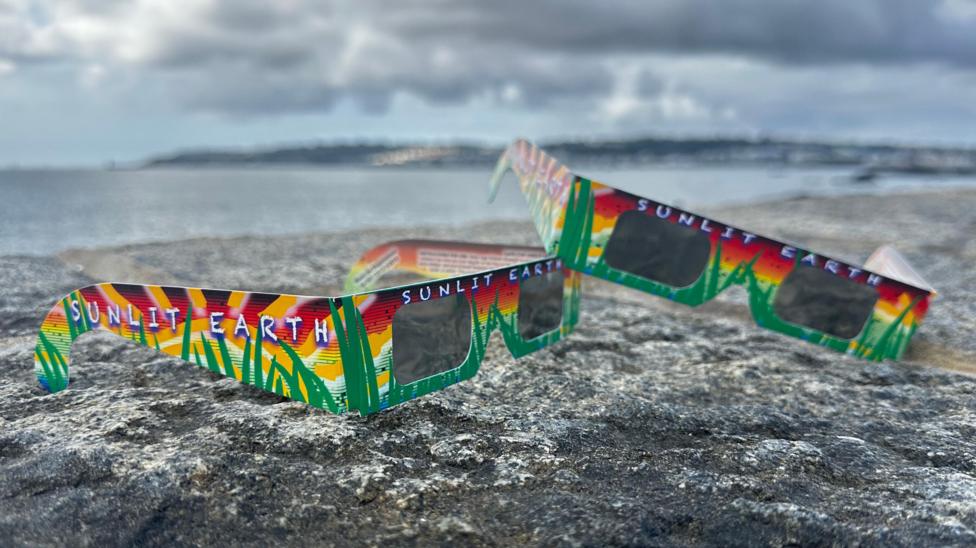

Dean said solar eclipse glasses were available in limited numbers at Les Bourg Hospice shops and were the best way to view the event safely.
"You will see the sun and you will see a few little sun spots, and you will slowly star to see the moon start taking little bites out of the sun as it progresses," she said.
"Find somewhere to sit, put them on and just enjoy the event."
Listen to the latest news for Guernsey
Follow BBC Guernsey on X, external and Facebook, external and Instagram, external. Send your story ideas to channel.islands@bbc.co.uk, external.
Out of this world: When and how to see the solar eclipse in August 2026
Six spectacular night sky events to put in your diary this summer
Stunning sky gazing events to come in 2026
Related internet links
La Societe Guernesiaise Astronomy Section
Key Facts
- The partial solar eclipse will be visible on Wednesday 12 August in the Channel Islands, UK and Ireland.
- About 90% of the sun will be covered by the moon.
- The eclipse is due to start at about 18:15 BST, with maximum coverage about an hour later.
- The next total eclipse visible from Guernsey is due in 2081.
- Dr Jean Dean said solar eclipse glasses are needed, and sunglasses are not adequate.