

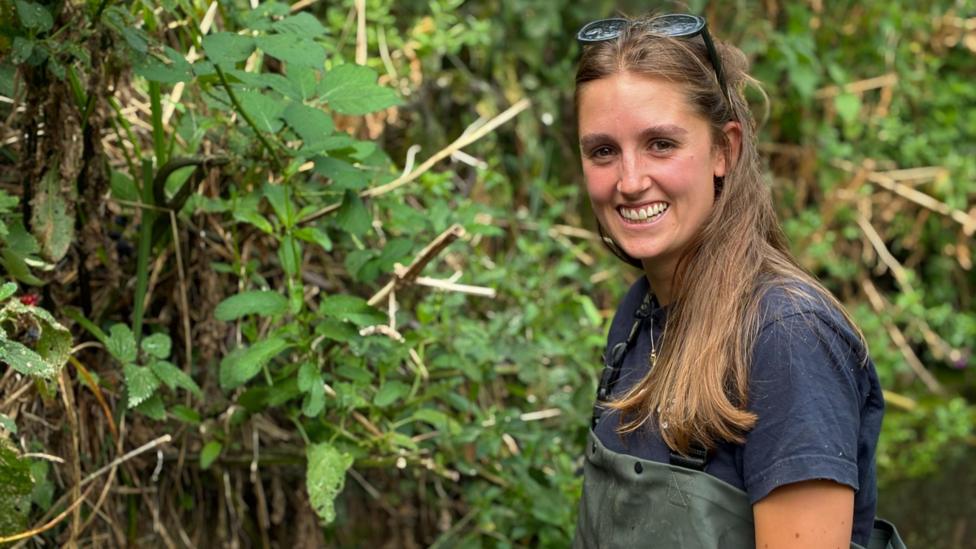
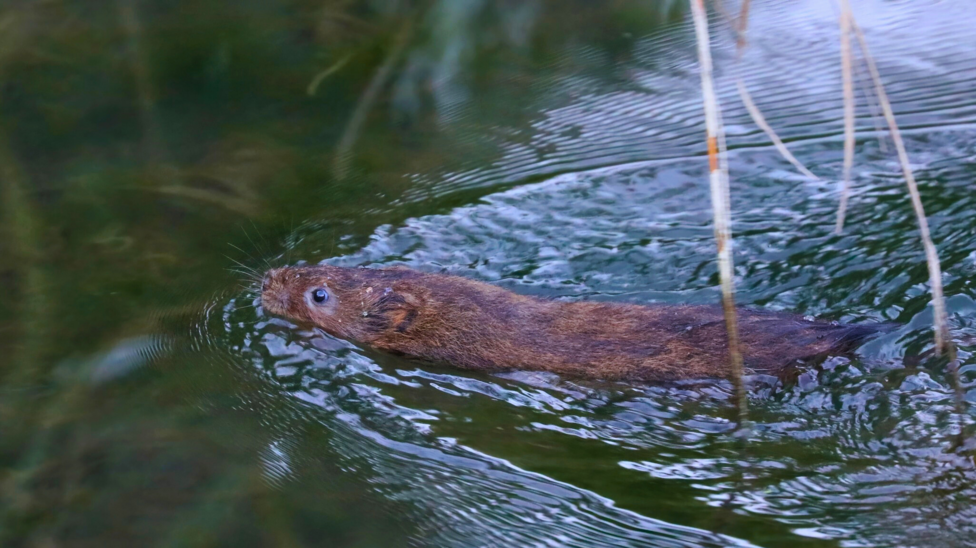
Conservationists monitoring the Hogsmill River in Surrey say a colony of water voles released into the chalk stream a year ago has not only survived the winter but is now spreading both upstream and downstream of its original release point. Urban rewilding officer Pia Trevelyan-Ashby, of Citizen Zoo, said droppings, active burrows and chewed vegetation found during recent surveys all point to a healthy, growing population following the release of 42 water voles in July 2025 by the South East Rivers Trust and Citizen Zoo.
"I've never been so excited to see a poo," says urban rewilding officer Pia Trevelyan-Ashby.
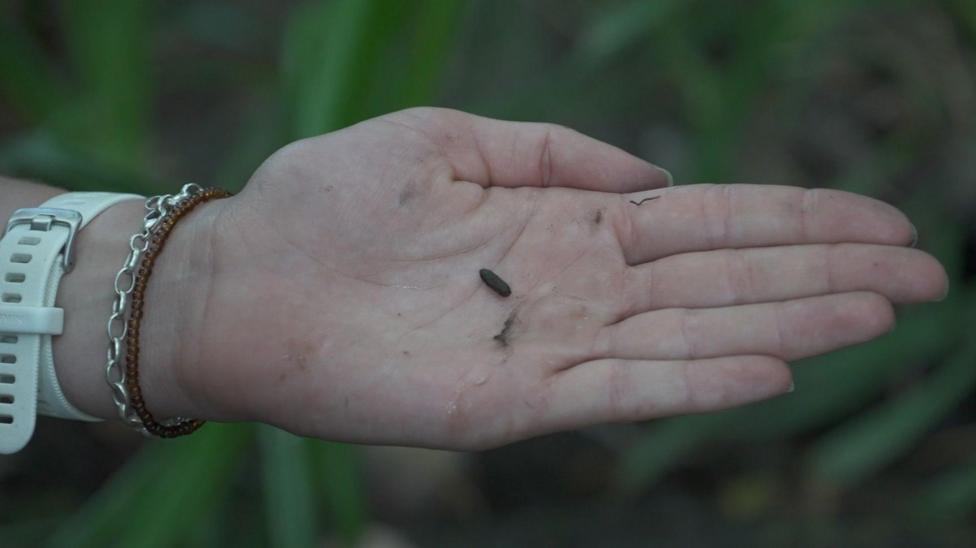
Holding up a small, Tic Tac-shaped dropping, she said it represented the clearest sign yet that the reintroduction was working.
"This is what success looks like."
How do conservationists know the voles have survived?
Trevelyan-Ashby explained that water vole numbers typically fall by around 80% over the winter months, making the presence of droppings, burrows and camera-trap footage in spring a strong indicator of survival rather than a simple continuation of last year's population. Citizen Zoo has installed camera traps and floating "latrine rafts", where the animals defecate, to build up a fuller picture of how the colony is faring across the site.
Why does the mink population matter so much?
The vole reintroduction is being carried out alongside a parallel effort, run with the Waterlife Recovery Trust, to remove non-native mink from Surrey's waterways, since the predators pose one of the biggest threats to the species alongside habitat loss. Laura Nee, catchment officer for the South East Rivers Trust, said mink can kill roughly one animal a day.
"predate on about one animal per day."
She added that clearing mink from a stretch of river has a direct knock-on benefit for the species living there.
"By removing one mink from the ecosystem you're then protecting all those species such as water voles," she said.


The scale of the decline that projects like this are trying to reverse is stark: the International Union for Conservation of Nature estimates the UK has lost as much as 90% of its water vole population since the 1970s, largely because of habitat destruction and predation by mink.
What evidence is being found on the riverbank?
Trevelyan-Ashby said she now spends what she called an "abnormal amount of time looking for poo", since droppings remain the most reliable single clue to how the rodents are doing. According to guidance from the People's Trust for Endangered Species, water vole droppings are typically cylindrical, around 8 to 12 millimetres long and shaped like a Tic Tac, while feeding signs often appear as neatly cut piles of vegetation sliced at roughly a 45-degree angle.
Recent surveys on the Hogsmill also turned up growing numbers of burrows in the muddy riverbank, though the same guidance notes that burrows alone are not conclusive proof of current occupation, since they can remain visible for years after voles have moved on. Trevelyan-Ashby said her team is finding more of them on every visit, and pointed to a telling detail at the entrance of one hole: a patch of darker, squashed droppings, which she described as a sign of an "active burrow" where voles have been "mushing" their waste. Water voles have scent glands on their feet and trample on their own droppings to mark out territory, a behaviour Trevelyan-Ashby said local volunteers have described as getting "very excited by flattened poo".
"We're finding more and more burrows every time we come," said Trevelyan-Ashby.
How does this compare with other reintroductions?
The Hogsmill scheme is one of several water vole projects under way across the South East. In Farnham, around 300 water voles were reintroduced to the River Wey after a 20-year absence, while Harpenden Town Council has brought 200 water voles back to the Batford Springs reserve following 40 years without them, backed by extensive habitat restoration. Further south, volunteers have spent years carrying out detailed monitoring of an established colony on Hampshire's River Meon, where reintroduction efforts dating back to 2013 have helped reverse a similar decline caused by habitat loss and mink. A separate reintroduction in the South Downs National Park has also been judged a success after monitors found fresh signs of vole activity there, according to a national broadcaster's report, suggesting the same survey methods used on the Hogsmill are proving effective elsewhere too.
Why does the return of water voles matter?
Before last year's release, water voles had been "locally extinct" in the Hogsmill catchment for more than two decades, despite once being common there. The species, familiar to many as the character Ratty in The Wind in the Willows, sits near the bottom of the food chain and serves as prey for numerous other animals, while also helping to keep riverside vegetation in check. Nee said their continued presence on the Hogsmill is itself a signal of improving river health.
"It shows that we've got enough vegetation, we have this more naturalised bank," she said.
Key Facts
- 42 water voles were released into Chamber Mead wetlands and the adjacent Upper Hogsmill River in July 2025.
- Water vole numbers can fall by roughly 80% over winter, making spring survey results a key test of survival.
- The UK has lost up to 90% of its water vole population since the 1970s, according to the International Union for Conservation of Nature.
- Mink, a non-native predator, can kill about one animal per day, according to the South East Rivers Trust.
- Similar reintroductions are under way on the River Wey, at Batford Springs and on the River Meon, alongside a separately monitored South Downs project.


