People across the Isle of Man are preparing to witness one of the best partial solar eclipses visible anywhere in the British Isles when the moon passes in front of the sun on Wednesday, 12 August 2026. The island sits just outside the path of totality, but forecasters expect around 93% of the sun to be obscured at the eclipse's peak, offering a dramatic change in daylight even though the sky will not go completely dark.
According to timeanddate.com, the event as seen from Douglas will reach a slightly lower peak obscuration of 92.36% at 7:09pm BST, with the eclipse ending at 8:03pm BST — figures that differ marginally from the 93% peak cited locally, though both point to an unusually deep partial eclipse for the region.
Astronomer Howard Parkin said the island was in an excellent position to observe this particular alignment of the sun and moon.
very well placed
He noted that another total solar eclipse would not be visible from this part of the world until the year 2151.
Parkin explained that the eclipse is possible because of a remarkable coincidence in the solar system: the moon is roughly 400 times smaller than the sun, but also about 400 times closer to Earth, meaning the two bodies appear almost identical in size from our perspective. Having personally observed four eclipses, he said the experience never loses its power.
nature at its absolute best
He added that each occasion had left him feeling
awestruck
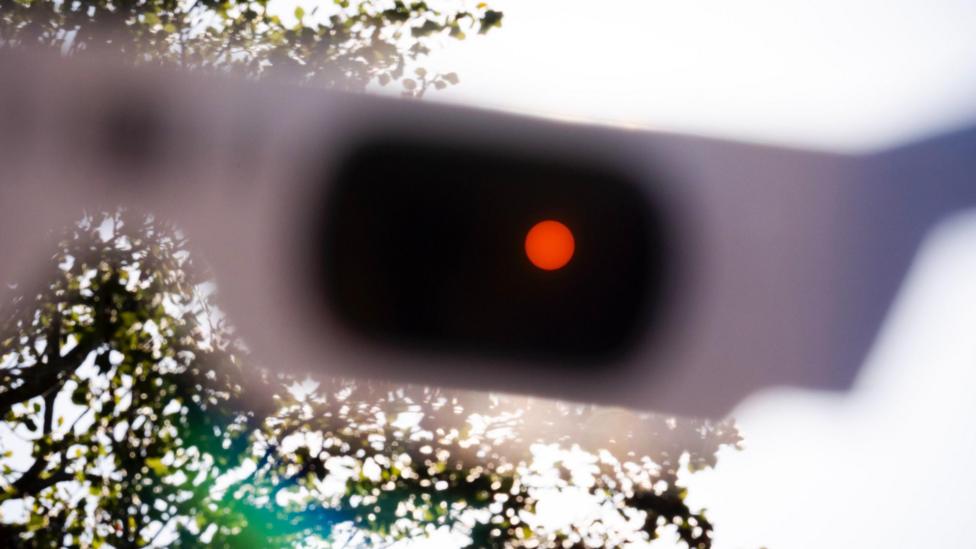
When exactly will the eclipse happen?
The eclipse is expected to begin shortly after 6:10pm BST on Wednesday, 12 August 2026, building to its maximum point at around 7:09pm, when close to 93% of the sun will be covered, before finishing shortly after 8:00pm. Parkin said conditions were shaping up to be dry and bright, which should make for ideal viewing across the island.
He explained that although the sky would not turn completely black, it would noticeably dim.
it won't go pitch black
Instead, he said, the light would resemble dusk, with only a slender crescent of the sun remaining visible.
it'll go semi-dark, it'll be like dusk
Even at such a high level of coverage, Parkin pointed out that a small sliver of sunlight still produces significant brightness.
even 7% of the sun will still give quite a degree of illumination
Where is the best place to watch from?
Parkin recommended heading to the island's west coast for the clearest views, singling out Peel and Niarbyl as particularly good vantage points. He stressed that anyone watching the eclipse should take precautions to protect their eyesight.
extremely important
He urged everyone observing the event to use proper solar eclipse eyewear rather than looking directly at the sun.
How does this compare with the rest of the UK and beyond?
The Isle of Man's experience will be part of a much wider event stretching across the UK, Ireland and beyond. Totality will be visible in parts of Iceland, northern Spain, northern Portugal, and sections of the Atlantic and North America, where the period of full darkness will last for a maximum of about ninety seconds.
Ireland's west coast is expected to see an even greater share of the sun blocked out, with coverage estimated at around 95-96%. According to the Royal Observatory Greenwich, coverage across the UK and Ireland as a whole will range from roughly 90% to 96%, with the southwestern tip of Ireland potentially reaching almost 97.5%. NASA's eclipse page lists London at 91% coverage, with the partial phase beginning there at 6:17pm and reaching its maximum at 7:13pm.
This level of coverage marks the most significant partial eclipse visible from the region since the total solar eclipse of 1999, and none of comparable scale is expected until 2151. The Met Office has also advised that the best views across the UK will be from the far southwest, recommending observers seek out high ground or west-facing coastlines.
Similar guidance has been issued elsewhere in the UK. Coverage of the wider UK eclipse has highlighted North West England viewing spots and safety advice, while reporting on England and the Channel Islands notes coverage there ranging from about 88% to 96.5%, the deepest seen since 1999. Astronomy groups in the South West and Channel Islands are running free and ticketed events to help the public watch safely, and the West Country — including Cornwall and the Isles of Scilly — is expected to enjoy some of the best views in England, with up to 95% of the sun obscured.
What safety guidance has been issued?
The UK Health Security Agency published safety guidance on 23 July 2026, urging the public to take precautions when watching the eclipse rather than looking directly at the sun without protection. Parkin's own advice echoed this, with his repeated emphasis on proper eyewear reflecting concerns raised by health officials ahead of the event.
What happens after 12 August 2026?
Once Wednesday's eclipse has passed, observers in the Isle of Man and much of the surrounding region will have a long wait for anything comparable. Astronomers have confirmed that no eclipse of similar magnitude will be visible from this part of the world again until 2151, making the 2026 event a rare opportunity for those keen to witness such a dramatic astronomical alignment.
- Peak coverage on the Isle of Man is expected to reach around 93%, according to local estimates, or 92.36% according to timeandate.com
- The eclipse begins shortly after 6:10pm BST and ends shortly after 8:00pm BST on 12 August 2026
- Peel and Niarbyl were named as the best west-coast viewing locations
- Totality will be visible in Iceland, northern Spain, northern Portugal and parts of the Atlantic and North America
- No comparable eclipse will be visible from the region again until 2151