

As anticipation builds for a partial solar eclipse over parts of England and the Channel Islands, residents who witnessed the last total solar eclipse of the 20th century are recalling what it was like when daylight briefly vanished. On 11 August 1999, the Moon fully obscured the Sun over Cornwall and the Channel Islands, the only places in the British Isles to experience totality, plunging those areas into a few minutes of eerie darkness.
For those in Devon and Cornwall, the upcoming partial eclipse is expected to begin at around 18:18, reach its peak at approximately 19:15, and conclude by about 20:09. In Guernsey and Jersey, the event will follow a similar timeline, starting near 18:21, peaking around 19:17 and ending close to 20:10.
Barbara Logan, who observed the 1999 eclipse in Shortlanesend near Truro, described it as a disorienting experience.
"One minute it was light then it began to get dark and I could hear all the birds singing and getting ready to go to roost. We were all gathered down in the square with our glasses ready. It was a weird feeling, you didn't know if it was night-time or daytime."
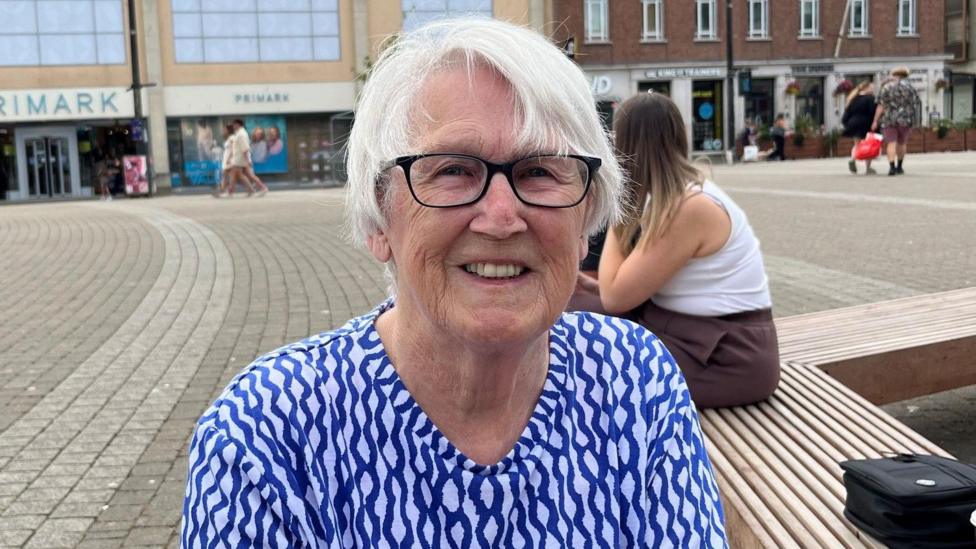
Nigel Brown, who had travelled from Horsham to Truro that day, said the sudden shift in light left a lasting impression on him.
"Once the eclipse started it was a wonderful but really eerie experience. I couldn't believe how day turned into dusk and the birds stopped making a noise. I was on my own and I didn't feel frightened, but you were aware something really big was happening."

What was witnessed in the Channel Islands?
In Guernsey, hundreds of onlookers gathered along the seafront in St Peter Port to view the spectacle, according to Anne Le Cheminant, who said the memory still moves her.
"I'm still quite emotional about it, it was just such a gigantic, awesome event. It was eerie, it was very strange, you can imagine the ancients had a supernatural feel about it. The light wasn't quite the same as evening lights, it was very grey. All the birds flew around and went back to their nests. As the Moon cleared the sun, you could feel the collective awe of everyone watching it."
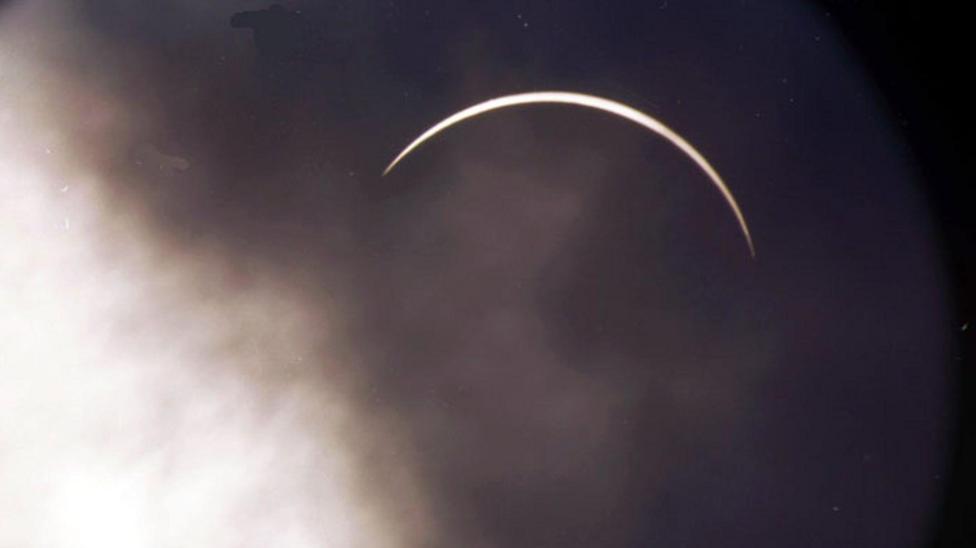
On Alderney, the third-largest of the Channel Islands, more than 250 astronomers joined local residents to observe and photograph the event, drawn by some of the clearest predicted views in the British Isles despite patches of cloud.

How did conditions unfold on Alderney?
Former correspondent Simon Hall, who reported from the island during the 1999 eclipse, said the weather kept observers guessing until the final moments.
"Eclipse day in Alderney was a tease. From the start there was cloud and uncertainty about what we would see."
Hall explained that cloud cover during the earlier part of the event had softened the Sun's glare, before conditions shifted dramatically as totality approached.
"At 11:00 the temperature dropped sharply when totality was approaching. The odds had been 50/50 but at 11:16, the moment of totality, the cloud cleared."
How does this compare with the wider 1999 eclipse path?
The 1999 event was not confined to Britain and the Channel Islands. According to NASA's eclipse archive, the path of totality began over the Atlantic Ocean before sweeping across Europe, the Middle East and India, finally ending at sunset over the Bay of Bengal. The European Space Agency estimated that roughly 330 million people lived within regions able to see at least a partial phase of the eclipse.
The point of greatest eclipse itself did not occur over Britain at all. Per NASA's detailed path description, that moment fell between 11:03:04 and 11:03:09 UTC over south-central Romania, near Râmnicu-Vâlcea and Ocnele Mari. NASA also notes that the Moon's shadow swept roughly 14,000km across the planet over about three hours and seven minutes, covering only around 0.2% of Earth's surface in total, while the European Space Agency described the corridor of totality as approximately 110km wide, taking in sites such as Cornwall, Le Havre, Strasbourg, Munich, Graz and Bucharest along its centre line. Separately, NASA's annual eclipse overview records that Bucharest fell under the shadow about four minutes after the point of greatest eclipse, experiencing close to the maximum possible duration of totality at two minutes and 22 seconds.
Earlier reporting has revisited that Alderney footage in detail; archive coverage of the island's 1999 eclipse notes it was the first total solar eclipse seen from mainland Britain since 1927, framing this month's anniversary lookback ahead of the new partial eclipse.
What happens next?
The forthcoming event on 12 August will not reach totality, but forecasts suggest it will be the most dramatic eclipse visible from the West Country since 1999, with up to 95% of the Sun obscured and Cornwall and the Isles of Scilly expected to have the best vantage points, according to earlier coverage of the upcoming West Country eclipse. Coverage is expected to range between about 88% and 96.5% depending on location, according to a report on the partial eclipse across England and the Channel Islands, which similarly describes it as the deepest eclipse seen since 1999.
In Guernsey, astronomer Dr Jean Dean has encouraged residents to view the eclipse safely, noting that the island will not see another total solar eclipse until 2081, according to coverage of her comments on the rarity of the event. For the UK as a whole, the next total solar eclipse is not expected until 2090, according to Royal Museums Greenwich.
Key Facts
- The 1999 total solar eclipse occurred on 11 August 1999, the last of the 20th century.
- Only Cornwall and the Channel Islands experienced totality within the British Isles.
- More than 250 astronomers gathered on Alderney to observe the event.
- The point of greatest eclipse occurred over south-central Romania, not Britain.
- The next total solar eclipse visible from the UK is not expected until 2090.


