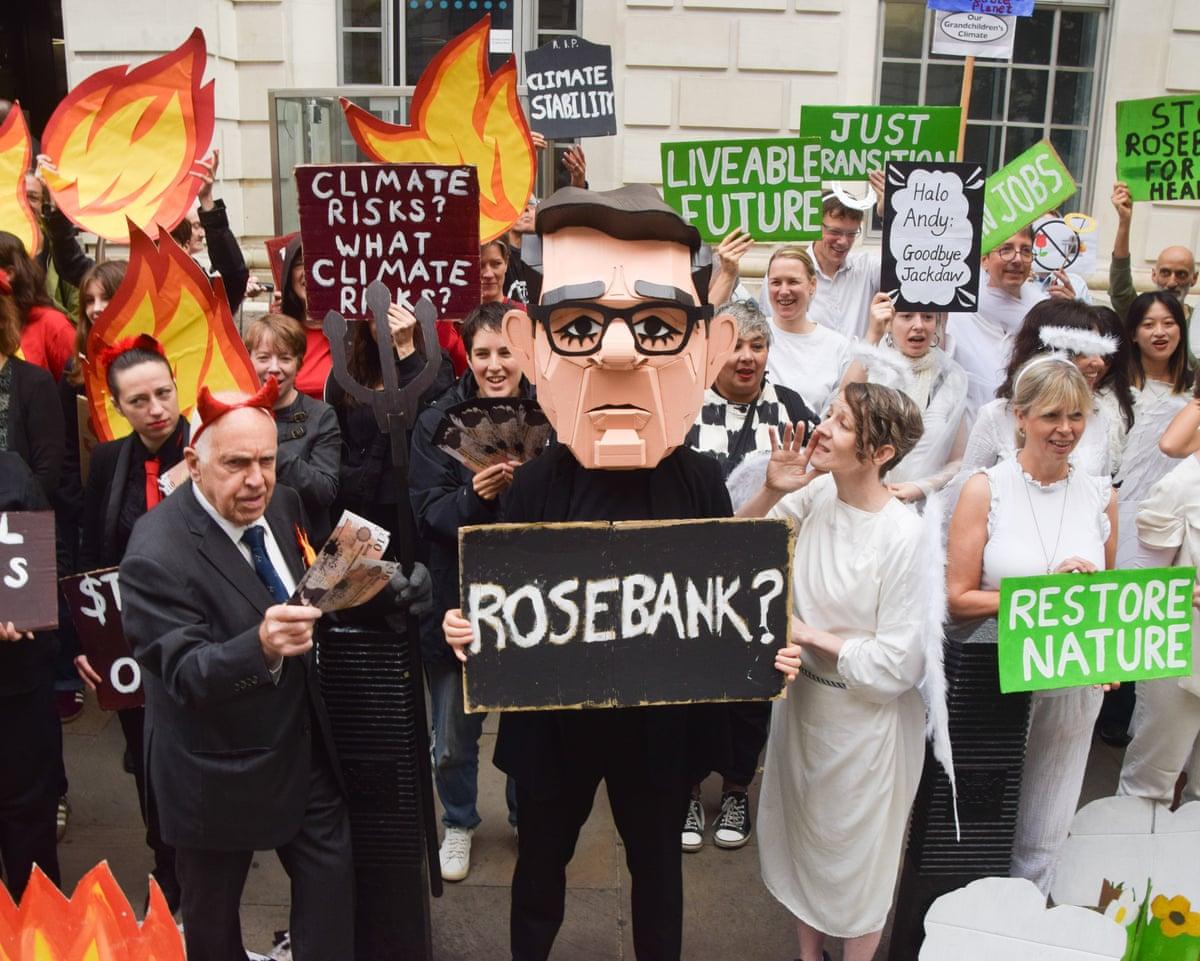
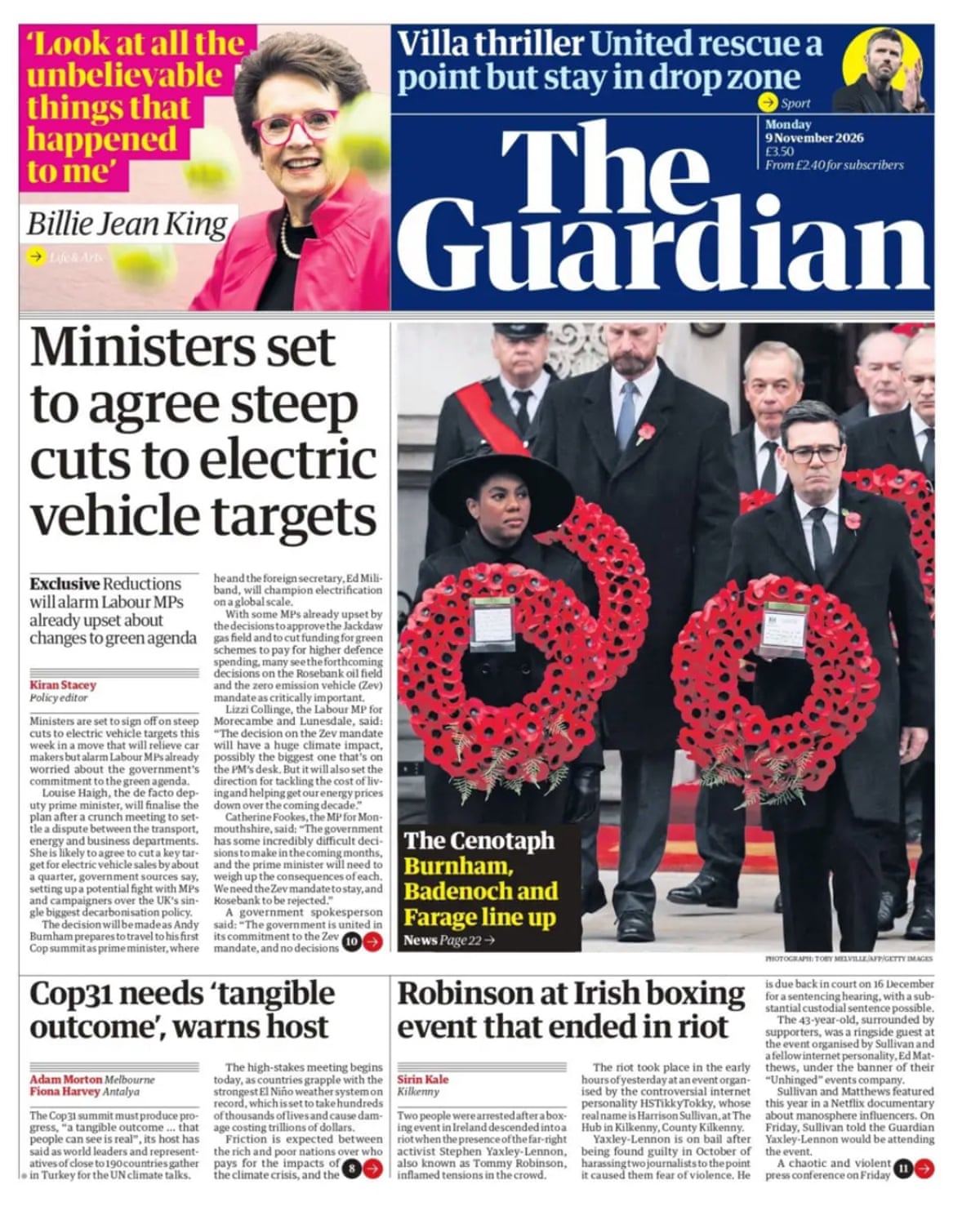
The government is moving toward weakening electric vehicle sales targets for the UK car industry, drawing fierce criticism from environmental campaigners as ministers prepare to make a final decision this week. According to The Guardian, the decision comes as Andy Burnham prepares to attend the UN climate summit later this week, putting the government's environmental credentials under scrutiny at a critical moment for global climate action.
Zack Polanski, leader of the Green Party, has condemned the anticipated move as part of a broader pattern of climate backsliding.
This Government is building up a shocking record of backsliding and bad decisions on climate issues. At a time when we desperately need leadership, they bend to the will of polluters by slashing key rules and pushing ahead with fossil fuel extraction.The criticism reflects growing tension between the government and environmental groups over its climate commitments, particularly given that Labour has already approved the Jackdaw gasfield, which Polanski previously described as "climate vandalism."
Caroline Lucas, the former Green Party leader, echoed the concerns, describing the anticipated decision as poorly timed.
A truly terrible decision at a truly terrible time. The shift to electric vehicles is government's single biggest decarbonisation policy. Cutting EV targets would send a message on eve of #COP31 that UK is no longer serious about #climate action.
What are the government's current EV targets?
The Zero Emission Vehicle (ZEV) mandate currently requires manufacturers to achieve an 80% zero-emission share of new car sales by 2030, with all remaining new car and van sales required to be zero-emission by 2035. However, reporting indicates that Transport Secretary Louise Haigh is expected to settle the dispute over revised targets at a meeting with transport, energy and business officials on Wednesday, 11 November. The government has stressed that no final decision has yet been made.
The consultation on the ZEV mandate ran from 14 August to 23 October 2026, with the government considering whether to weaken the 2030 targets to as low as 50% or 70% of new cars, rather than the current 80% requirement. This would represent a significant retreat from the original policy, which was already modified in January 2026 to allow greater flexibility through hybrid vehicle sales.
Why is the car industry pushing for weaker targets?
Manufacturers have argued that meeting the current targets is increasingly challenging given market conditions. The Society of Motor Manufacturers and Traders forecast that electric vehicles would make up 27.2% of UK car sales in 2026, falling below the 33% mandate target, and predicted 32% against a 38% target in 2027. The industry has contended that intensified competition from Chinese manufacturers and slower-than-expected consumer adoption of electric vehicles make the current trajectory unrealistic.
However, environmental analysts argue that weakening the targets would not actually solve manufacturers' underlying problems. Jess Ralston, an analyst at the Energy and Climate Intelligence Unit, noted that manufacturers are already facing intensified competition from China as increasing numbers of consumers opt for electric vehicles. Relaxing the targets would not address this competitive pressure and would also deprive the public of the financial benefits of electric vehicles, which can be £1,750 a year cheaper to run than petrol equivalents, with potential savings rising further if oil prices increase.
What would be the environmental impact of cutting targets?
The consequences of weakening the EV mandate would be substantial. If the 2030 target were reduced to 70% of new cars, the resulting increase in emissions would exceed the total carbon output from burning all the gas in the Jackdaw field, according to the Energy and Climate Intelligence Unit. A more drastic cut to 50% would mean an additional 147 megatonnes of carbon dioxide equivalent, equivalent to approximately 58% of the likely emissions from burning the oil produced by the Rosebank field.
These figures underscore the significance of the EV mandate as the government's single largest decarbonisation policy. Environmental groups argue that weakening it sends the wrong signal internationally, particularly as the UK prepares to participate in global climate negotiations.
What is the government's position?
Health Minister Karin Smyth, speaking for the government this morning, stressed that "on this particular issue, no decisions have been made." The government has indicated it will complete its review of the ZEV mandate following the consultation period, which ended on 23 October 2026. Officials have suggested that any changes would be designed to balance environmental objectives with the practical challenges facing the automotive industry.
The timing of the decision is politically sensitive, coming just days before the UN climate summit in Antalya, Türkiye, which is scheduled to run from 9 to 20 November 2026. Burnham's attendance at COP31 will place him in the position of defending the government's climate record to international leaders and environmental campaigners at a moment when domestic climate policy is under scrutiny.
What has the Green Party said?
Beyond the statements from Polanski and Lucas, the Green Party has issued a formal response through Siân Berry, the party's MP.
The switch to EVs has the potential to create greater emissions savings than any other energy transition policy, while providing drivers with vehicles that can be significantly cheaper to run. Yet again, this Labour government is heading in the wrong direction. Instead of pandering to corporate lobbying and stalling on the phase out of petrol and diesel vehicles, they should be boosting EV uptake through vehicle scrappage schemes and cheaper, more abundant and more reliable public charging infrastructure.
The Green Party's position reflects a broader concern that the government is prioritising short-term industrial interests over long-term climate commitments. This criticism builds on earlier warnings from environmental groups and union leaders, who urged Burnham to maintain strong climate commitments and oppose North Sea drilling earlier this year.
What happens next?
The government is expected to announce its decision on revised EV targets following the meeting on 11 November. The outcome will determine whether the UK maintains its position as a leader in electric vehicle adoption or retreats from its climate commitments. The decision will also carry symbolic weight as Burnham and other UK officials prepare to attend COP31 in Antalya from 9 to 20 November 2026, where they will face questions about the government's climate record from international partners and environmental organisations.
Other government business
In other developments, Andy Burnham is visiting a hospital in Hertfordshire this morning to discuss a £40 million programme designed to keep vulnerable patients out of hospital. The Department of Health and Social Care has outlined details of the initiative, which forms part of the government's broader health policy agenda.
The government has also announced plans to strengthen modern slavery protections for goods sold in the UK. Business Secretary Jonathan Reynolds has outlined legislation to introduce mandatory human rights due diligence for companies, requiring them to remove products made with forced labour and modern slavery from sale. The new duty will apply to British businesses with a global turnover exceeding £350 million, and non-UK businesses with UK-generated turnover above £350 million. This move follows nearly two years of calls from the Commons business committee for stronger safeguards, particularly after the committee heard evidence from Chinese-owned clothing company Shein in January 2025.
EU relations and the Norwegian model
Burnham has indicated that he wants the UK to move toward a closer relationship with the European Union after the next election, with one option being to join the single market. This would significantly boost trade with the EU but would require Britain to accept free movement rules. However, Norwegian Prime Minister Jonas Gahr Støre has cautioned against adopting the Norwegian model, which involves being in the single market but not in the EU.
After Brexit, British friends called me and said, tell us about the Norwegian way of doing it. And I said, if you left the EU because there was too much Brussels, don't take the Norwegian version. Because here, you know, basically we are taking most of their decisions, we implement them.Støre's comments suggest that the Norwegian arrangement, while offering some benefits, requires accepting regulatory decisions made by others without direct input into their formulation.
Remembrance Sunday controversy
The Scottish government has faced criticism from the Conservative Party over the timing of a social media post about a Sikh festival. The post was published at 11 am on the day the nation was observing the two-minute silence for Remembrance Sunday. Harriet Cross, the shadow Scottish secretary, said the timing appeared deliberate and disrespectful.
It is hard to see their decision to post about a Sikh festival at precisely 11am, at the very moment that people across the country were observing a two-minute silence to honour our war dead, as a coincidence. There is no reason why they couldn't have recognised both - not least out of respect to the 83,000 Sikhs killed fighting in both World Wars. This failure to mark Remembrance Sunday shows a total disregard for the sacrifice our soldiers made and continue to make in defence of our country.Scottish First Minister John Swinney was with other leaders in Edinburgh at the time of the silence.
Key Facts
- The government is expected to announce revised EV targets following a meeting on 11 November, with potential reductions from the current 80% mandate to 70% or 50% by 2030
- Weakening the 2030 target to 50% would result in an additional 147 megatonnes of carbon dioxide equivalent emissions
- The Society of Motor Manufacturers and Traders forecasts EV sales will reach only 27.2% of the market in 2026, below the 33% mandate target
- Electric vehicles can be £1,750 per year cheaper to run than petrol equivalents, with savings potentially increasing as oil prices rise
- The decision comes days before COP31 in Antalya, Türkiye, scheduled for 9 to 20 November 2026, where the UK's climate commitments will face international scrutiny