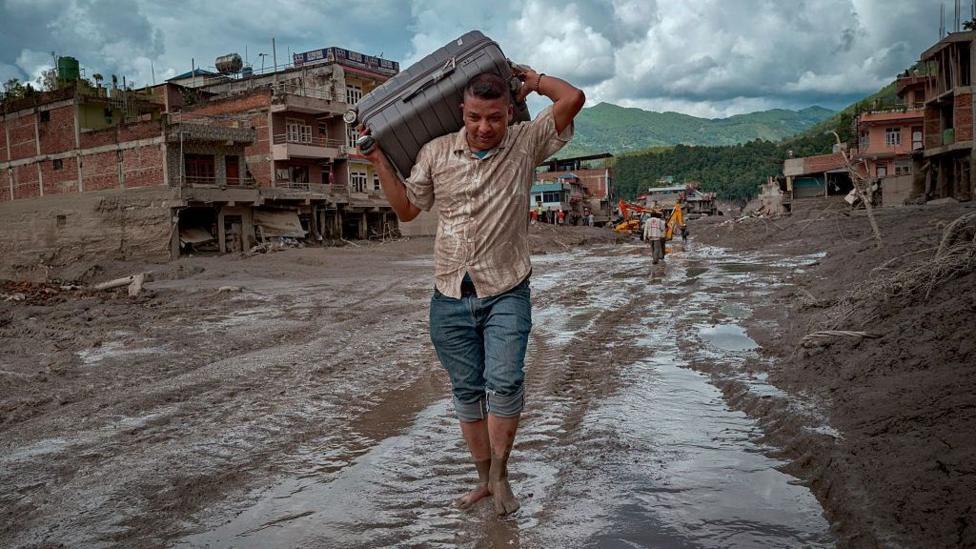
Nepal has become the first nation to receive funding from a dedicated loss and damage fund established to help countries recover from climate disasters, following devastating flash floods in August 2026 that killed more than 1,400 people. According to BBC News, this milestone reflects growing international recognition that vulnerable nations need direct financial support to address climate-related catastrophes. The provisional allocation of US$21.6 million to Nepal, set aside on 22 October by the fund's board, represents the first disbursement from a mechanism designed specifically for this purpose.
The floods that triggered Nepal's application affected more than 60,000 people across approximately 15,000 households, with around 1,500 people killed and more than 5,000 remaining missing. Yet the allocation highlights a stark gap: Nepal's estimated recovery needs total US$4.77 billion, meaning the fund's contribution covers less than half a percent of the country's requirements. This disparity underscores why the Paris Agreement and its 1.5°C target have become central to global climate negotiations.
What is the Paris climate agreement?
In 2015, nearly 200 nations gathered in Paris and forged a landmark accord intended to constrain planetary warming and mitigate its most severe consequences. The Paris Agreement entered into force on 4 November 2016, committing almost every nation on Earth to reduce greenhouse gas emissions responsible for global warming. However, this near-universal commitment has faced significant challenges. The United States, the world's second-largest greenhouse gas emitter, withdrew from the agreement in January 2026 under President Donald Trump, reversing its earlier exit during Trump's first presidency and subsequent re-entry in 2021 under President Joe Biden. Beyond the United States, only three other UN member states—Iran, Libya, and Yemen—remain outside the accord.
What commitments does the Paris Agreement establish?
The agreement sets out several interconnected objectives. Nations committed to pursuing efforts to restrict global temperature increases to 1.5°C above pre-industrial levels and to maintain warming "well below" 2.0°C, with pre-industrial times generally understood to mean the late 19th century. A second core commitment involves achieving net zero—a balance between greenhouse gases released into the atmosphere and those actively removed—during the second half of this century.
The framework also requires each country to establish its own emission-reduction targets, with these pledges subject to review every five years to strengthen ambitions over time. Critically, wealthier nations committed to supporting poorer countries through climate finance, enabling developing nations to adapt to climate impacts and transition to renewable energy sources.
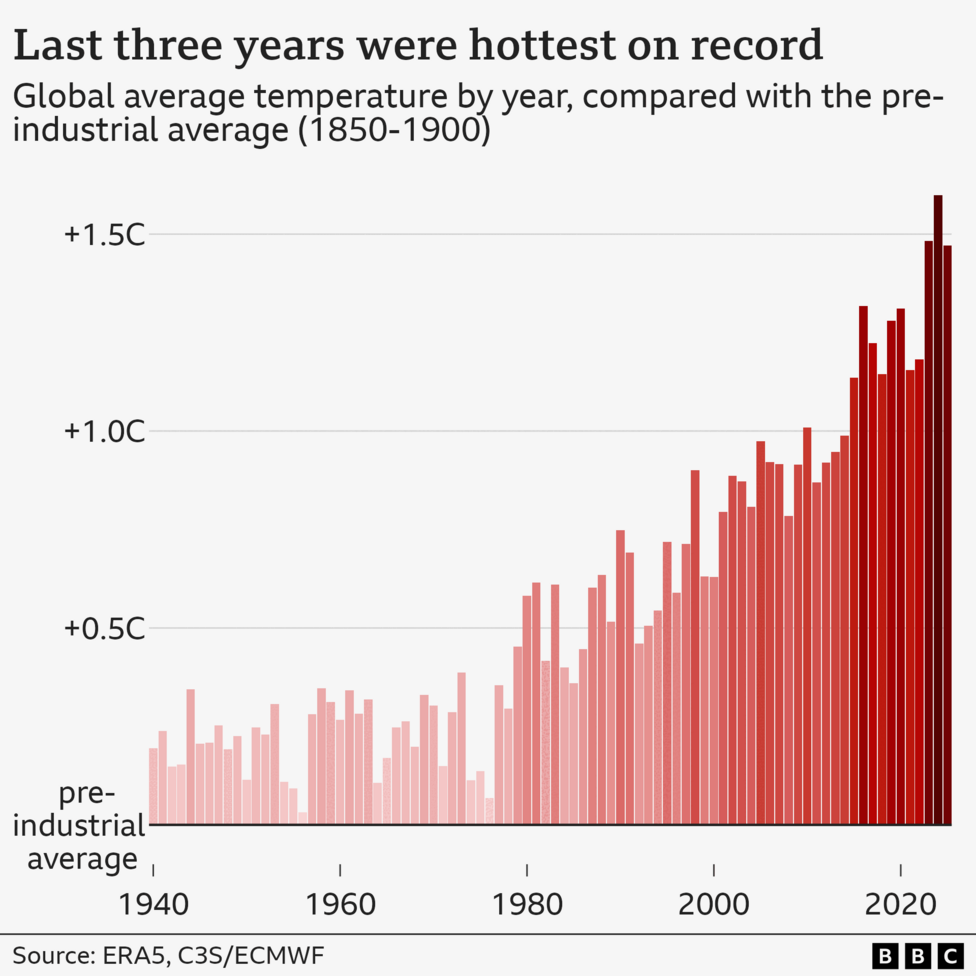
The 1.5°C target is understood as a 20-year average rather than a single year's measurement. This distinction matters: although 2024 registered more than 1.5°C warmer than pre-industrial temperatures, this did not constitute a breach of the Paris Agreement threshold.
Why is limiting warming to 1.5°C so critical?
Climate scientists emphasize that every 0.1°C of additional warming increases planetary risks substantially. Consequences include prolonged heatwaves, intensified storms, and more severe wildfires. However, scientific evidence demonstrates that warming of 2°C or higher would trigger far more severe impacts beyond those already experienced at 1.5°C, according to UN researchers.
At 2°C or above, the world faces expanded exposure to extreme heat, higher sea levels as glaciers and ice sheets melt, heightened threats to food security in certain regions due to more extreme weather patterns, and greater likelihood of climate-sensitive diseases such as dengue spreading geographically. Biodiversity faces mounting pressure, with more species threatened with extinction and the near-total loss of coral reef ecosystems.
Perhaps most concerning are potential "tipping points"—thresholds beyond which climate changes become self-reinforcing and irreversible. While their precise locations remain uncertain, crossing these boundaries could trigger cascading effects including collapse of the Greenland Ice Sheet, disruption of warm Atlantic Ocean currents, or accelerated loss of the Amazon rainforest.
How is the Paris Agreement supporting developing nations?
The agreement reaffirmed a 2009 commitment requiring wealthy nations to provide $100 billion (£73 billion) annually by 2020 to assist developing countries in managing climate impacts and building sustainable economies. Although only $83.3 billion was mobilized in 2020, OECD data confirms the $100 billion target was achieved in each of the three years following 2022. Approximately two-thirds of recent funding has targeted climate mitigation efforts, while roughly one-quarter supports adaptation measures.
In 2023, countries took a historic step by establishing a dedicated loss and damage fund—the first mechanism explicitly designed to provide financial assistance for recovery from climate disasters. Nepal's recent approval marks the fund's first allocation after four years without any disbursements. However, the scale of need far exceeds available resources, as demonstrated by Nepal's situation.
At COP29 in 2024, wealthy nations committed to providing $300 billion (£219 billion) annually to developing countries by 2035. Developing nations criticized this pledge as insufficient, having sought substantially larger commitments.
What progress has occurred since Paris?
World leaders convene annually at international climate summits known as COPs (Conference of the Parties) to assess progress on climate commitments. Every COP since 2015 has evaluated how nations are advancing the Paris Agreement's objectives.
At COP28 in 2023, countries achieved a historic first by agreeing to "contribute" to "transitioning away from fossil fuels," though this language stopped short of mandating specific actions. The same summit saw nations pledge to triple global renewable energy capacity—including wind and solar—by 2030.
Progress stalled at COP30 in 2025, when the final agreement failed to explicitly address fossil fuels. Instead, Brazil, the host nation, released a voluntary roadmap for phasing out fossil fuels to be discussed at COP31. Meanwhile, a coalition of 57 willing countries has organized separate conferences outside the formal COP process to advance fossil fuel phase-out discussions, with the inaugural meeting held in Santa Marta, Colombia in April 2026 and another scheduled for July 2027 in Tuvalu.
Is the world achieving the 1.5°C target?
The long-term 1.5°C objective has not yet been formally breached. However, the latest UN Emissions Gap Report warns that the limit will likely be exceeded within the next few years following "decades of insufficient climate action." Under the most optimistic scenario, warming would still reach 1.7 to 1.8°C by mid-century, the report cautioned.
A return to 1.5°C by 2100 remains theoretically possible, but only through "urgent and stringent cuts to greenhouse emissions," the UN stated. UNEP's 2026 report specifies that limiting peak warming to roughly 1.7–1.8°C would require emissions cuts of 18% by 2030, 45% by 2035, and 69% by 2040, compared with 2025 levels. The report found that current government pledges would deliver only half of the necessary reductions. Without additional action, global warming could approach 3°C by century's end.
What happens next?
COP31 is scheduled to convene from 9 to 20 November 2026 in Antalya, Turkey, co-hosted by Australia. This summit will provide an opportunity for nations to reassess climate commitments and potentially strengthen pledges. The Loss and Damage Fund's board is due to meet in Manila on 15 December 2026 to consider additional allocations, with a first package of four grants worth US$77.4 million deferred until that date.