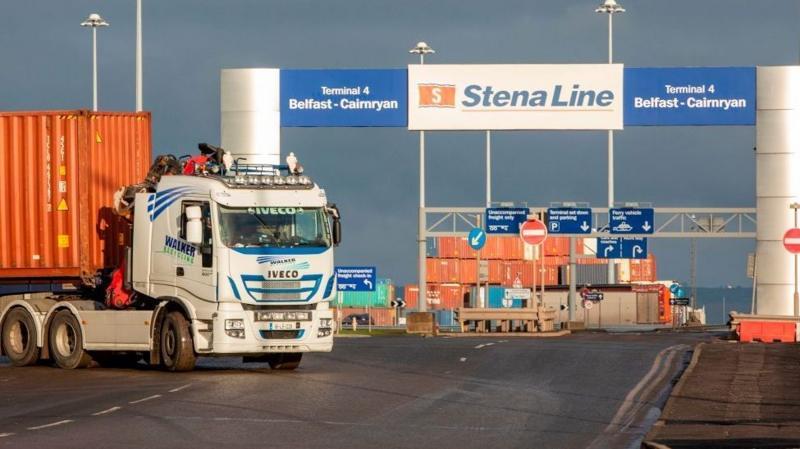
A new agreement between the UK and the EU on food, plants and animals is expected to substantially reduce the practical impact of the "Irish Sea border" on Northern Ireland's economy. According to BBC News, the deal will allow the whole of the UK to realign with EU regulatory standards on agri-food products, eliminating the need for port checks on goods moving from Great Britain to Northern Ireland. The agreement was finalised at a UK-EU summit in Brussels on 20 November 2026, when Prime Minister Andy Burnham met European Commission President Ursula von der Leyen.
The accord represents a significant shift in post-Brexit trading arrangements. Since the UK's departure from the EU, Northern Ireland has continued to follow EU rules for agri-food products while the rest of the UK has not, creating a regulatory divide that has complicated trade flows and frustrated businesses. Under the new deal, goods being sent from Great Britain to Northern Ireland will no longer require port-based regulatory checks, and the volume of paperwork needed to move agri-food goods between the two regions will be substantially reduced, though not eliminated entirely.
The UK government estimates the food agreement could add £5.1 billion a year to the UK economy, according to Euronext. The agreement creates a Common SPS Area and is intended to reduce costs and red tape for exporters while maintaining food and feed safety standards.
What is the Irish Sea border?
The Irish Sea border refers to the system of checks and controls on goods entering Northern Ireland from the rest of the UK. This arrangement emerged from the 2019 Brexit withdrawal agreement between the EU and the UK, which was subsequently revised in 2023 and became known as the Windsor Framework.
The framework was established on the principle that the most practical way to maintain an open border between Northern Ireland and the Republic of Ireland after Brexit was for Northern Ireland to continue following EU laws on the regulation of goods. However, this arrangement meant that products coming from Great Britain into Northern Ireland faced paperwork and other restrictions to ensure compliance with EU standards. Food products and plants have faced the most significant bureaucratic burden, a situation that has continued to create difficulties for retailers and suppliers.
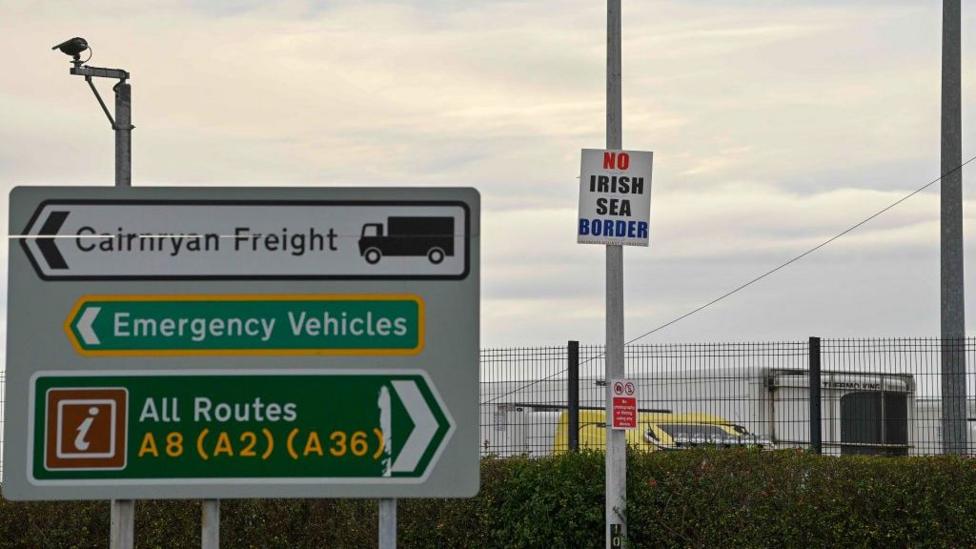
The Irish Sea border has proven deeply divisive. For many nationalists in Northern Ireland, it represented a necessary compromise to minimise the broader economic impact of Brexit on the island of Ireland. For many unionists, it has been viewed as a constitutional affront that undermines Northern Ireland's place within the United Kingdom. The largest unionist party, the Democratic Unionist Party (DUP), suspended Northern Ireland's power-sharing government from 2022 to 2024 in protest at the sea border arrangements.
How have businesses responded to the proposed changes?
Andrew Lynas, Director of Lynas Foodservice, expressed cautious optimism about the agreement.
I would say it's gone halfway to what we would love to happen,he told BBC NI, describing the deal on the movement of goods as a
big step forwardfor businesses in Northern Ireland.
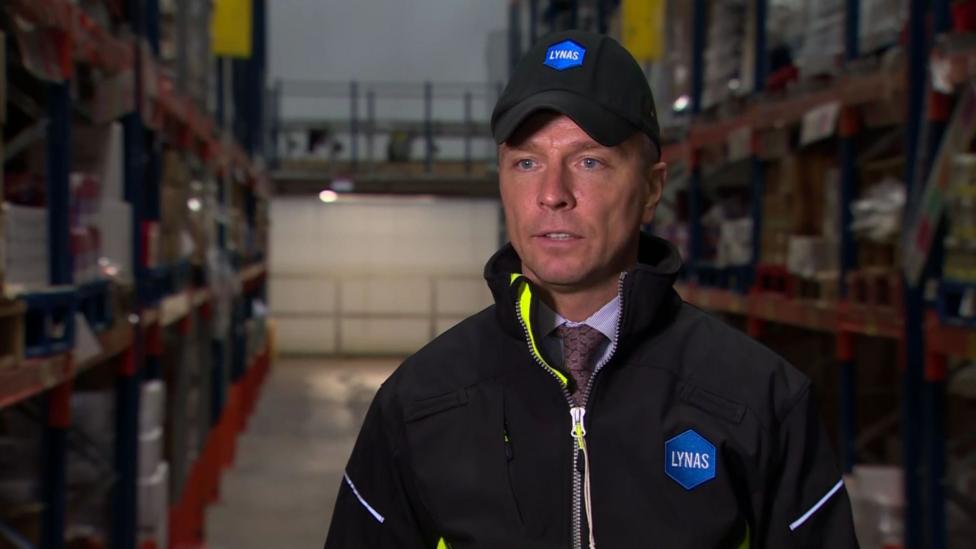
Lynas highlighted several potential benefits of the agreement, including significantly faster deliveries, reduced costs, and improved opportunities to work with Great Britain suppliers again. However, he cautioned that the deal would not resolve all challenges facing companies operating on an all-island basis and expressed concern about the timeline for implementation.
He warned that customs arrangements remained a major concern, with red and green lanes and the requirement to pay duty upfront on many goods still presenting significant difficulties. Lynas also noted that supply chains would require time to adapt, as many businesses have already restructured their sourcing arrangements in response to previous trading requirements.
We have rerouted a lot of our goods, so we have to re-engage with our GB suppliers and see can we do business again,he said.
What do government officials say about the deal?
Economy Minister Caoimhe Archibald characterised the proposed agreement as positive progress. She told Good Morning Ulster that what had been suggested
seems to be positivein terms of further collaboration and the removal of
some of the barriers that had been erected by Brexit.
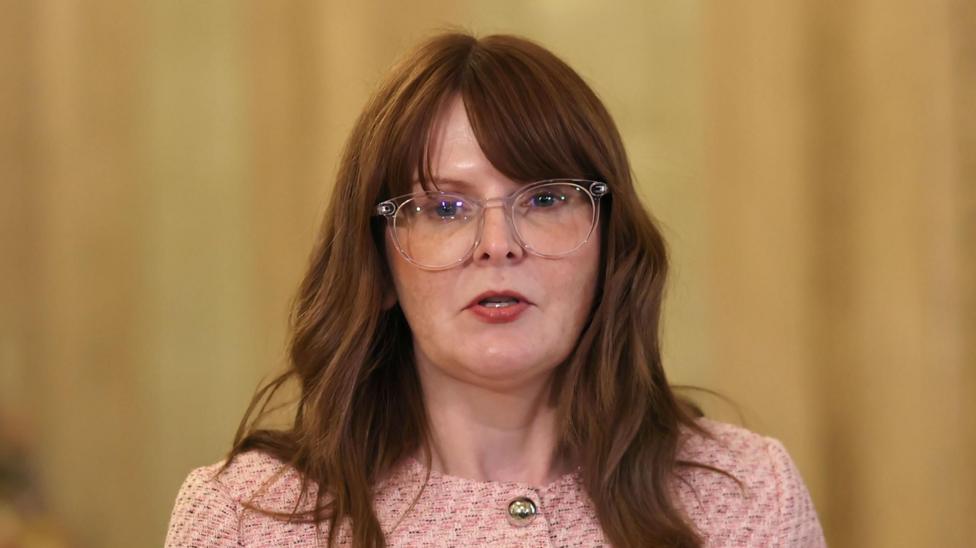
Archibald used the opportunity to reflect on the broader consequences of Brexit.
I think what it actually points to is what an unmitigated disaster Brexit has actually been,she said, adding that it had been
an act of economic self-harm for Britain and particularly from an economic perspective.
Regarding the specific deal, Archibald stated that
it's positive, it's moving in the right direction.She noted that
anything that reduces friction for our businesses in terms of trade is a positive thing in that regard,and highlighted additional elements of the broader package, such as youth mobility provisions, as also beneficial.
How would an agri-food deal change trading arrangements?
The proposed agreement follows a model similar to Switzerland's relationship with the EU. Like the UK, Switzerland is not an EU member state, yet there are no regulatory border controls for trade in agri-food products between Switzerland and the EU. This arrangement exists because Switzerland agreed to follow EU rules almost entirely, without significant input into their formulation.
Switzerland is obliged to modify its laws in response to changes in EU legislation through a process known as dynamic alignment, and it accepts oversight from the European Court of Justice. The UK and EU are now finalising a comparable arrangement for agri-food trade.
Such a deal would effectively end the sea-border controls on Great Britain food products entering Northern Ireland. The border control posts built at Northern Ireland ports would become largely redundant, although pre-Brexit checks on livestock would continue. The "Not for EU" labels currently seen on Great Britain food products sold in Northern Ireland would no longer be required.
What border processes would remain in place?
The Irish Sea border effectively comprises two distinct systems. One addresses product standards, ensuring that goods can be legally sold in the market. The other addresses customs matters, verifying that the correct tariffs have been paid.
An agri-food deal would substantially reduce the standards border but would leave the customs border untouched. Businesses in Great Britain would still be required to make customs declarations for goods destined for Northern Ireland, with the risk that goods could be delayed if the paperwork is incorrect.
Unionist parties have issued a joint statement criticising the UK government for declining to use the blocking mechanism known as the Stormont Brake to prevent an update to the EU customs rules that apply in Northern Ireland. On 19 November 2026, Northern Ireland Secretary Sir Chris Bryant declined to activate this power. The statement, issued by the DUP, the Ulster Unionist Party (UUP) and Traditional Unionist Voice (TUV), argued that the
new iteration of the customs borderwould deny Northern Ireland
unfettered access to critical inputs and finished goods from the greater part of its home market.
What other agreements are part of the package?
The summit package extends beyond agri-food arrangements. According to ITV News, the summit agreements also include provisions on emissions trading and a youth mobility scheme.
However, the BBC understands that a separate deal on electricity, which had been expected to reduce costs for Northern Ireland consumers, will not form part of this agreement. There had been speculation that a "recoupling" of the EU and UK electricity grids would be included in the package. Northern Ireland's energy regulator has indicated that such a move could reduce wholesale electricity prices in Northern Ireland by up to 20 percent.
An electricity deal remains under negotiation and could still be agreed at a later date. A UK government spokesperson stated:
We will not provide a running commentary on ongoing discussions. We are negotiating a deal to link our electricity market with the EU that will cut bills for both households and businesses, and strengthen our energy security.
When will the agreement take effect?
The food agreement is scheduled to apply from 1 March 2028, with targeted transition arrangements in limited areas. The UK government has indicated that legislation to implement the agreements will begin with a bill being laid in the Commons the following week after the summit.
The summit itself had been postponed from July 2026 following the resignation of former Prime Minister Keir Starmer, making the November finalisation of these agreements a significant milestone in UK-EU relations.
Key Facts
- The UK-EU food agreement was finalised on 20 November 2026 and is scheduled to take effect on 1 March 2028.
- The deal is estimated to add £5.1 billion annually to the UK economy by reducing costs and red tape for exporters.
- Port regulatory checks on agri-food goods moving from Great Britain to Northern Ireland will be eliminated, though customs border controls will remain.
- The agreement creates a Common SPS Area to maintain food and feed safety standards while reducing bureaucratic barriers.
- The summit package also includes agreements on emissions trading and youth mobility, though a separate electricity deal was not included.