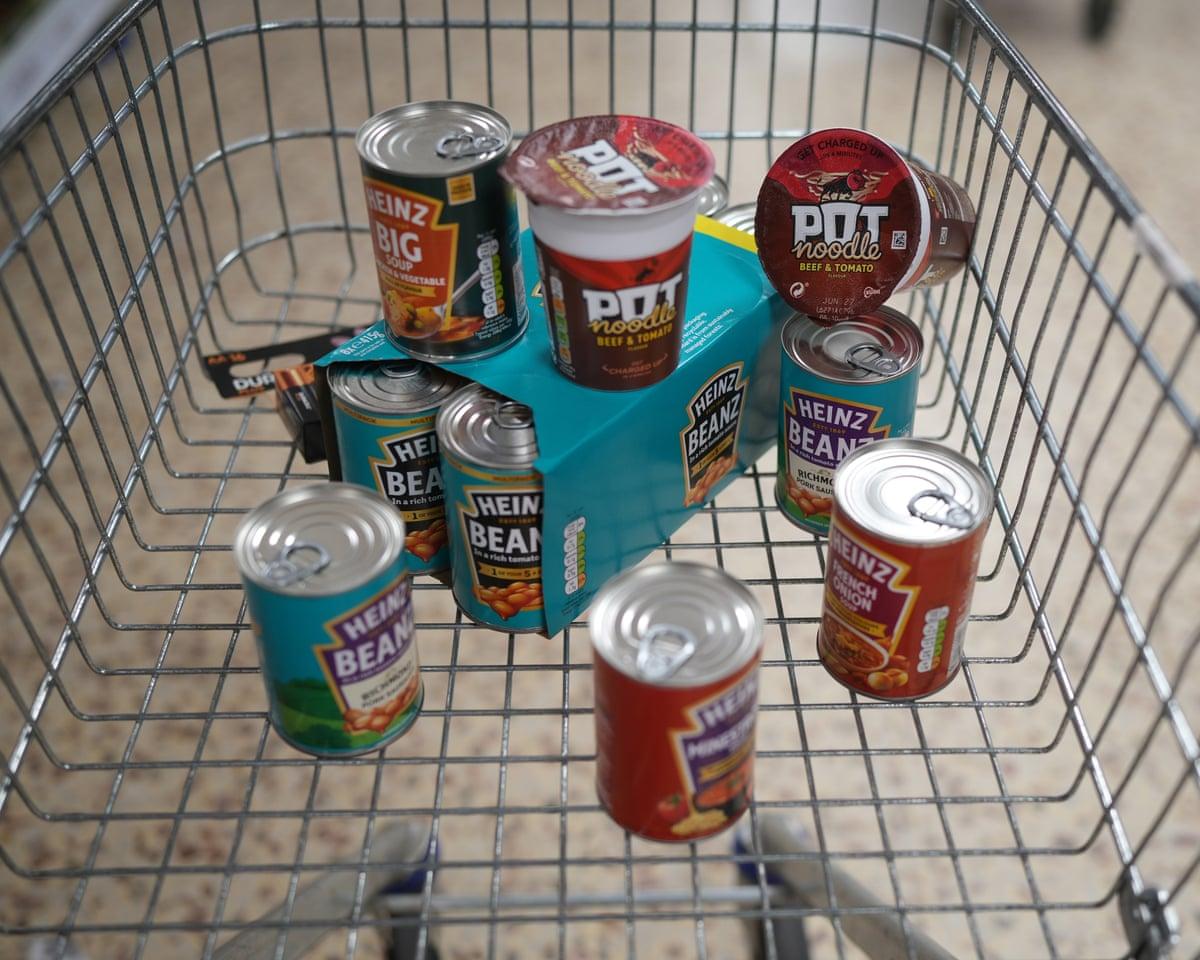
Retail sales across Great Britain climbed unexpectedly in October as consumers rushed to purchase tinned food, long-life milk and other emergency supplies following the government's 'Be Ready' campaign. According to The Guardian, the Office for National Statistics (ONS) reported that the volume of goods sold increased by 0.7% month-on-month, confounding economists who had predicted flat sales or a slight decline. BBC News confirmed the figures, noting that the surge marks a significant recovery for the retail sector after weakness in the previous month.
The government's emergency preparedness initiative, which launched on 22 October, encouraged households to maintain supplies sufficient to last 72 hours in case of extreme weather, cyber incidents or other serious emergencies. The campaign recommended tinned food, bottled water, wet wipes, a torch and cash. Supermarkets reported substantial gains in long-life food categories and shelf-stable dairy products as consumers heeded this guidance. Research from retail firm Worldpanel by Numerator indicated that people were stocking up on items including tinned meat, bottled water and hand sanitiser. Some bottled-water and tinned-food categories recorded double-digit growth following the campaign's launch, according to Retail Gazette.
Food store sales, dominated by supermarkets, expanded by 0.8% month-on-month, representing the fastest pace since April when they rose 1.4%. Grant Fitzner, chief economist at the ONS, attributed the strength directly to the campaign's impact:
Supermarkets have told us that sales of long-life food items such as tinned food and UHT milk were boosted by the government's 'Be Ready' campaign.Separate research released alongside the official figures suggested that while households were stockpiling essentials, they were not panic buying.
Beyond groceries, other retail categories demonstrated robust performance. Textile, clothing and footwear stores achieved a 1.5% month-on-month increase, while the broader non-food stores category—encompassing department stores, household goods and other retailers—grew by 1.1%. Sales across galleries, sports equipment, games and toys climbed particularly sharply, with other non-food stores posting a 3.1% month-on-month rise, the largest expansion since January.
Non-store retail, which includes online merchants alongside street stalls and markets, rebounded with a 0.9% monthly gain as shifting weather patterns drove demand for autumn and winter merchandise. However, motor fuel sales declined by 2.2% month-on-month, the steepest fall since April, as petrol and diesel prices at the pump increased. Fitzner noted that
fuel sales have been recovering from earlier low levels, despite pump prices rising again.
How does October's performance compare to earlier months?
The October figures represent a meaningful turnaround for retail after September's weakness. The ONS revised September's decline to 0.6% from the initially reported 0.4%, while August's rise was adjusted upward to 0.8% from 0.7%. Looking at a broader timeframe, ONS data shows that retail volumes rose 0.4% over the three months to October compared with the previous three-month period, and climbed 1.7% year-on-year over that same span. On an annual basis, October retail sales volumes were 2.3% higher than a year earlier, with non-fuel sales rising 0.9% month-on-month.
What do retailers expect ahead?
Industry analysts view October's performance as encouraging given persistent headwinds facing consumers. Erin Brookes, European retail and consumer lead at Alvarez & Marsal, observed that
October's retail sales have exceeded expectations, despite low consumer confidence and growing pressure on household finances from higher interest rates and inflation.She added that
Retailers will be feeling optimistic as the sector approaches the critical Black Friday and Christmas trading period, with October's sales growth suggesting consumers are still willing to spend this festive season.
Jacqui Baker, partner and head of retail at auditing firm RSM UK, cautioned that
retailers will want to see out the year with some Christmas cheer before consumers batten down the hatches in the New Year as energy costs skyrocket and inflation ramps up further.Typical energy bills are forecast to rise by £443 per year from January, pushing up the pace of price rises. Brookes also noted that
retailers are caught between increasingly price-sensitive consumers and mounting operating costs.The sector faces a delicate balance as it enters the crucial year-end trading season, with consumer spending patterns remaining volatile amid economic uncertainty.
What happens next?
The next ONS retail sales release is scheduled for 18 December 2026, which will provide updated figures for November and offer further insight into consumer behaviour during the critical Christmas shopping period.