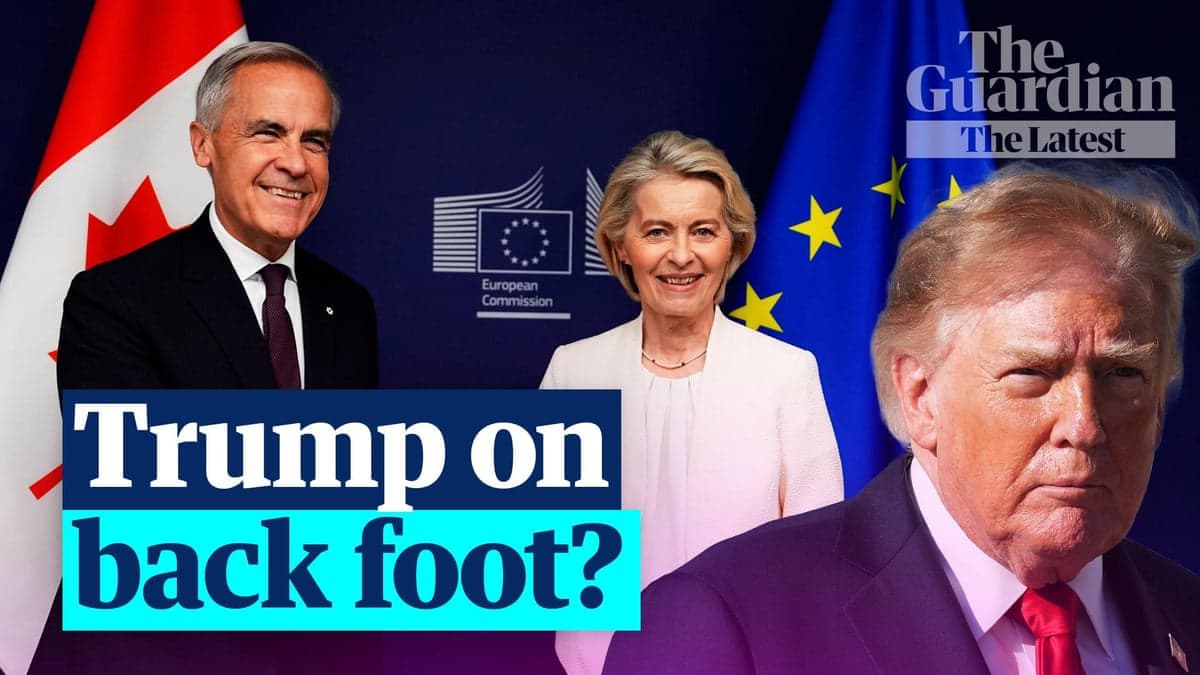
Canadian Prime Minister Mark Carney has embraced the European Union's proposal to grant Canada status as the bloc's inaugural 'associate member', moving forward despite warnings from US President Donald Trump that Washington could impose severe tariffs or restrict trade if the arrangement proceeds.
In a speech delivered to the European Parliament, Carney advocated for 'deep cooperation' between Canada and Europe, emphasizing that public polling demonstrated overwhelming Canadian support for strengthening ties with the continent. His remarks represented a significant step in advancing the associate member proposal, which would create a new category of relationship within the EU framework.
Trump's threat of 'very serious tariffs' signals potential economic consequences for both the EU and Canada should they pursue this partnership. The warning reflects broader tensions between the US administration and its traditional allies over trade and geopolitical alignment.

This development builds on months of escalating Canada-US trade friction. Carney had previously suspended trade negotiations with Trump in late August 2026, choosing to prepare for potential retaliation rather than accept what his government viewed as unfavorable terms. That decision came after intensive final negotiations in Washington failed to resolve disagreements over automobiles, dairy products and alcohol ahead of a tariff deadline on 19 August 2026.
The EU's backing for Canada's associate member status represents a counterweight to US pressure. EU Commission President Ursula von der Leyen has publicly supported the proposal, signaling European willingness to deepen institutional ties with Canada despite American objections.
Carney's parliamentary address underscored shared democratic values and complementary economic strengths between Canada and Europe as justification for closer institutional cooperation. The move positions Canada as seeking alternative partnerships amid deteriorating relations with Washington.