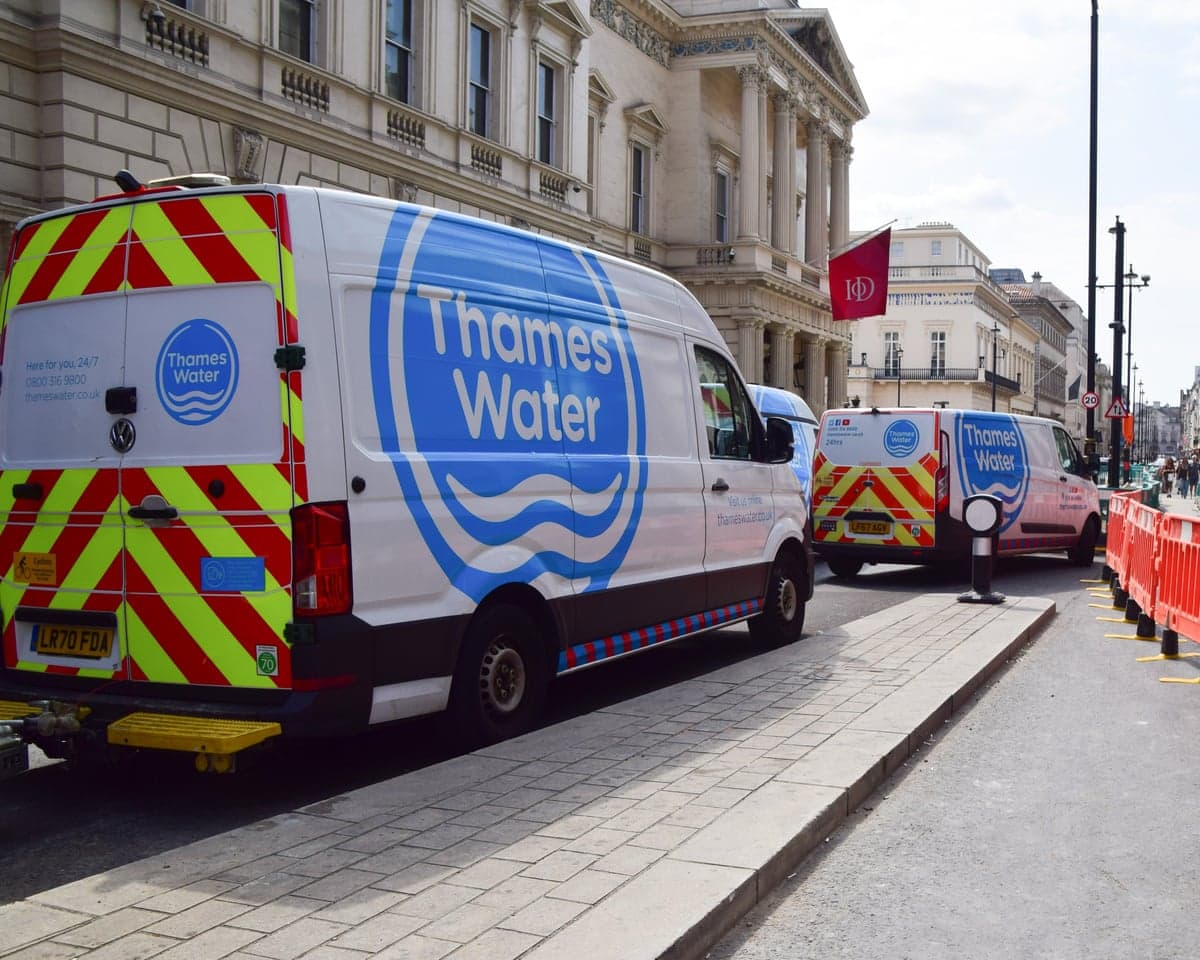
Prime Minister Andy Burnham is examining whether to overhaul the country's insolvency framework to facilitate the transfer of struggling utilities into public ownership, according to sources familiar with his administration's strategy. The move would represent a significant intervention in how Britain's essential services are governed and could reshape the future of companies such as Thames Water, which is burdened by approximately £20bn in debt.
The government is weighing multiple approaches to fulfil Burnham's campaign commitment to restore public control over water and energy infrastructure. Among the options under consideration is a restructuring of the special administration regime (SAR), a legal mechanism that would allow the state to place companies into insolvency proceedings and subsequently assume operational control.
According to those briefed on the administration's deliberations, the special administration regime currently presents a significant obstacle to this strategy. One insider explained the challenge:
Andy is completely committed to putting utilities such as energy and water companies into public control, and is looking at every option for how to achieve that. The special administration regime is one potential roadblock and his team is examining how they might have to change it to deliver on their promises.
A government spokesperson stated:
Our water industry has not been working for people for far too long. That's why this government is looking at how we can give the public more control and help keep bills as low as possible.
Burnham pledged during his election campaign to establish a new economic model placing life's essentials back under stronger public control to make them affordable. In June, he indicated his preference for public ownership of Thames Water, and Emma Reynolds, the former environment secretary, opposed a planned £10bn bailout by existing creditors, arguing it failed to represent value for taxpayers.
However, Burnham was subsequently briefed by Downing Street officials on the substantial financial and legal complexities involved in acquiring public control of companies like Thames Water. According to recent reporting, Thames Water management has indicated that placing the company into special administration would require taxpayers to provide approximately £2 billion to sustain operations over the next 18 months.
While ministers have denied that Burnham has abandoned plans to place Thames into administration, officials have indicated they are now methodically examining every possible pathway—including legislative reform. Matthew Pennycook, the housing minister, stated on Tuesday:
We are taking no options off the table when it comes to Thames Water … The water industry has been failing people for too long. We've seen rising bills while the number of serious pollution incidents are off the scale. We've got to do more.
What obstacles prevent immediate action?
Two substantial legal and procedural barriers currently obstruct the government's ability to move Thames Water into administration under existing rules. The first constraint is that companies can only enter administration if they are demonstrably insolvent or incapable of delivering a minimum standard of service. Because Thames Water continues to receive backing from a creditor consortium seeking to acquire ownership, neither condition is presently satisfied.
The second barrier stems from the legal obligations placed on administrators once a company enters the process. An administrator is bound by law to maximise financial returns to creditors, which would require the government to pay a substantial sum to acquire ownership—a cost that officials regard as prohibitive.
The creditor group comprises predominantly US-based hedge funds with a documented track record of pursuing aggressive legal strategies to defend their financial interests. Creditors have warned of a legal challenge if the government pursues nationalisation, introducing additional litigation risk to any takeover initiative.
What legislative solutions are being proposed?
A coalition of Labour backbenchers, including former members of the environment committee Helena Dollimore and Andrew Pakes, working alongside the Good Growth Foundation thinktank, has developed a proposal to amend the upcoming water bill. Their framework would fundamentally restructure the special administration regime by introducing new triggers for administration, including lower financial thresholds and novel environmental performance metrics.
The proposal also incorporates a bail-in mechanism comparable to the framework imposed on banks following the 2008 financial crisis. This mechanism would compel shareholders and creditors to absorb losses initially, thereby shielding taxpayers from exposure. It would grant ministers authority to impose losses on shareholders and implement haircuts on creditor claims. Crucially, the process would be administered by regulators rather than courts, potentially accelerating resolution.
Praful Nargund, director of the Good Growth Foundation, articulated the rationale:
By putting emergency legislation in place now we can avoid litigation and ensure the special administration regime protects taxpayers, employees and customers from paying the price for shareholder failure.
Andrew Pakes emphasised the practical challenges:
The challenge is stopping Thames driving the cost of a SAR up through legal challenges and making sure the costs are fairly represented. The difficulty of the SAR process highlights the failure of regulation to create the incentive for water companies to act faithfully.
What legal risks accompany legislative reform?
Despite the potential benefits of legislative restructuring, this approach carries substantial litigation exposure. Thames Water's creditors have explicitly pledged to initiate judicial review proceedings against any attempt to modify the special administration process. A source representing the creditor group warned:
Rejecting a fully funded £10bn turnaround plan and using legislation to force Thames Water into special administration and a new unfinanceable ownership model would be unprecedented and have an extremely negative read across to other struggling water companies. It will only result in litigation and the transfer of huge costs and risk to customers and taxpayers, while irretrievably damaging investor confidence in UK-regulated sectors.
The creditors have also pushed a new board plan to try to avoid nationalisation, signalling a fresh escalation in the ownership struggle. On 24 August, Thames Water creditors named four senior figures to lead the company under their £10bn rescue proposal, though campaigners characterised the board overhaul as a superficial manoeuvre designed to circumvent state takeover.
What is the current status of government deliberations?
The government's assessment of whether a viable special-administration pathway exists is expected to extend over several months. Officials are systematically evaluating the legal, financial, and operational implications of each potential route before committing to a final strategy. This extended review period reflects the genuine complexity of the challenge and the administration's determination to avoid costly legal entanglement.
The delay in announcing a definitive water policy represents a departure from Burnham's initial intention to deliver a major speech on the water industry during his first weeks in office. The shift underscores the gap between campaign rhetoric and the practical constraints of implementation when confronting entrenched financial interests and established legal frameworks.
Key Facts
- Thames Water carries approximately £20bn in debt, making it the focal point of the government's utilities reform agenda
- The special administration regime currently requires companies to be insolvent or unable to provide basic services before administration can be triggered—conditions not yet met at Thames Water due to ongoing creditor support
- Administrators are legally obliged to maximise creditor returns, potentially requiring the government to pay billions to acquire ownership
- A proposed legislative solution would introduce lower financial triggers, environmental metrics, and a bail-in mechanism modelled on post-financial-crisis banking reforms
- Thames Water creditors have committed to pursuing judicial review if the government attempts to change insolvency law to facilitate nationalisation