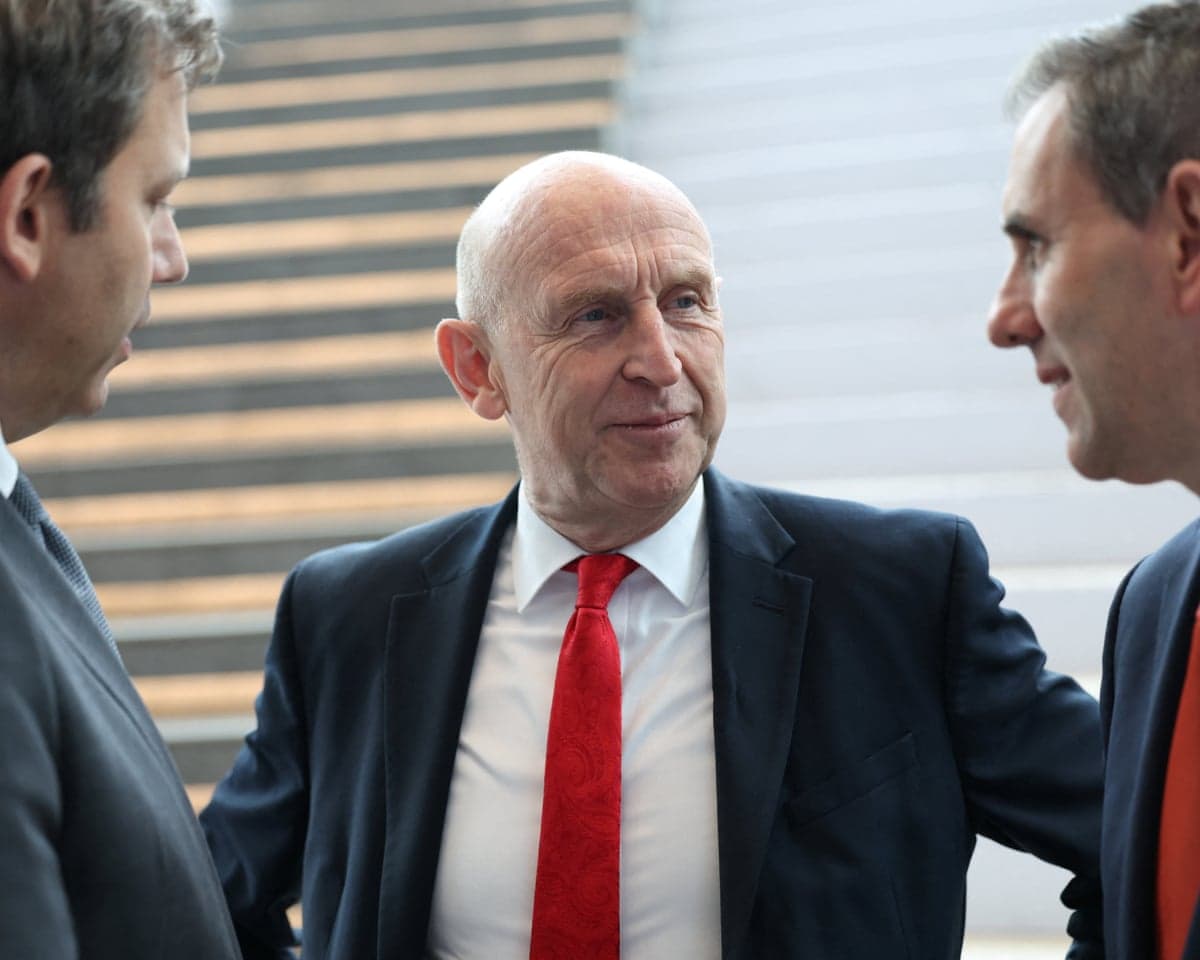
Chancellor John Healey is preparing to introduce higher taxes on Britain's banking sector in his 28 October budget as a means of addressing fiscal pressures, with senior banking executives now expecting the sector to be "on the menu" when the announcement is made. According to The Guardian, Healey has decided to tap the financial sector for additional revenue following damage to public finances caused by the Middle East conflict. Bank shares have already begun to react to the prospect, with The Guardian reporting that Lloyds Group and NatWest were among the top fallers on the FTSE 100 following the news.
Healey, who has described banks as part of "the crown jewels" of the UK economy, has refused to rule out a tax increase despite the sector's intensive lobbying campaign against higher levies. The move reflects rising government borrowing costs and pressure on the Treasury's deficit reduction plans. The banking sector has performed strongly in recent years. The UK's four largest lenders – HSBC, NatWest, Barclays and Lloyds Group – generated £200 billion in pre-tax profits over the past five years, with the biggest four banks collectively making around £15 billion profit in the first six months of 2026 alone. The sector contributed nearly £40 billion to the Treasury last year when income tax on employees is factored in.
What tax options are being considered?
The most likely option under consideration involves raising the bank surcharge, which currently stands at 3%. The surcharge was reduced from 8% under Rishi Sunak when he was chancellor, at the same time as corporation tax was raised from 19% to 25%. Returning the surcharge to its previous level of 8% would generate approximately £2.25 billion per year, according to analysis by the Trades Union Congress. The current 3% surcharge raises just over £1 billion annually. Industry figures believe that raising the surcharge back to 8% from 3% at present would help bolster the government's fiscal headroom, which has been eroded by the jump in borrowing costs this year.
However, Healey has indicated he still has budget decisions to make and has not confirmed whether higher bank taxes could be offset by lower capital requirements. Analysts have discussed either restoring the surcharge to 8% or increasing it by 2–3 percentage points.
A separate option involves the bank levy, which currently charges 0.1% on outstanding short-term loans and 0.05% on longer-dated loans, although mortgages are excluded from the calculation. The bank levy generated £1.4 billion last year.
Another approach under discussion with Treasury officials would impose a moratorium on banks using losses from the past to offset against current profits – a practice that has particularly benefited Lloyds, which has used large losses from the financial crisis to lower tax bills ever since. This option could yield an estimated extra £1 billion per year for the Treasury and would be "a lot more bearable", according to one bank executive, while also sparing foreign banks from an additional hit.
What is the banking sector's position?
Bank executives have mounted an intensive lobbying campaign against tax increases. Senior leaders from HSBC, Lloyds, NatWest, Barclays and Santander met with Healey in early October but received no indication that higher bank taxes had been ruled out. Industry groups including UK Finance and TheCityUK subsequently wrote to the Chancellor, warning that tax rises would weaken investor confidence, damage the UK's attractiveness as a financial centre, and force lenders to relocate staff and operations overseas.
UK Finance warned that "further increases in bank taxes would weaken competitiveness, discourage investment and job creation, and work against the government's ambition to deliver growth in every postcode". City groups have warned that higher taxes could drive business out of the UK, citing both the bank surcharge and the separate bank levy on certain balance-sheet equities and liabilities.
These concerns echo warnings from Jamie Dimon, chief executive of JP Morgan, who indicated in May that the bank could relocate operations if the UK government became hostile towards the sector, and has warned that the UK already has one of the highest tax burdens on banks in the world. The announcement of a new tower to house more than half of JP Morgan's 23,000 UK staff came just days after Rachel Reeves, Healey's predecessor, decided against imposing further bank taxes in her 2025 autumn budget.
However, bank executives have grown more confident that the surcharge will not rise significantly, with two lender chief executives recently telling Reuters they did not expect an increase, arguing it could curb lending. Industry sources now suggest they have accepted that a rise is likely, with expectations centring on a return to 8% rather than more aggressive increases. Banks sound resigned to being taxed at the budget, though they remain unhappy about the prospect.
In truth, banks were pleasantly surprised they were not hit at the last budget, given the large profits they have been making in recent years. Rising interest rates have expanded the margin between the rate at which they lend to customers and the rate they pay savers.
What do unions and critics say?
Trade unions and policy organisations have repeatedly called for higher bank taxation. Paul Nowak, general secretary of the TUC, stated:
Britain's big four banks are making a billion pounds a week, while bonuses have hit a post-crash record. These are bumper profits – driven by high interest rates and households' mortgage misery. It's time to make sure banks pay their fair share.
The TUC has proposed multiple surcharge options. Raising the surcharge to 8% could raise £9 billion over four years, which it suggests using to support households with the cost of living. The union has also proposed increases to 16%, which could raise £24 billion over four years, or to 35%, which could raise £60 billion over four years.
What is the government's position?
Despite calls for higher bank taxation, Healey has publicly praised the banking industry's role in the economy. Speaking in Bangkok at International Monetary Fund meetings, where the UK's fiscal progress has drawn praise, he said:
People too often see them as big distant financial institutions, when they are hardwired into the economic fabric of this country and our future prospects.
Healey has stated his intention for the budget to provide
breathing spaceto both consumers and businesses facing rising energy prices. However, other government departments will receive little additional funding and must operate within the budgets established by Reeves at her June 2025 spending review. Healey emphasised:
It's important that they do manage within what they've got, and it's part of the job. You have to reprioritise if you want to do fresh things, or more.
The Conservative opposition has cautioned against further banking sector taxation. Kemi Badenoch, Conservative leader, visited a financial services firm in Edinburgh to warn that the sector already faces a higher effective tax rate than many other major global financial centres. Andrew Griffith, shadow chancellor, said:
Britain needs growth. But a raid on the financial services sector will stifle it. Labour should be backing businesses and wealth-creators, not making their lives even harder. Rather than hiking taxes yet again, Labour should cut spending.
The Confederation of British Industry has also suggested Healey should avoid "further sector-specific taxation", such as a bank tax. Louise Hellem, chief economist at the CBI, said:
The financial services sector is vital to driving investment, innovation and business growth across the economy. Government has set the right direction through its Financial Services Growth and Competitiveness Strategy and the Leeds Reforms – the priority now is delivery. The autumn Budget should set the agenda for a competitive and predictable environment that turns those reforms into tangible progress, unlocking domestic investment, deepening UK capital markets and helping more firms to scale and grow. It should also avoid measures that would undermine competitiveness or weaken incentives to invest. With the business tax contribution already at a record share of receipts, that means avoiding further sector-specific taxation, including on a banking sector already facing a higher tax rate than competing international financial centres.
What are the broader fiscal pressures?
Healey has concluded that additional revenue from the financial sector is necessary to maintain the government's deficit reduction trajectory. Rising government borrowing costs have intensified pressure on the Treasury's plans, making new revenue sources increasingly urgent. The UK's borrowing costs have risen sharply in recent weeks as bond markets have responded to the prospect of higher inflation resulting from the Middle East conflict. Analysts have suggested this could reduce the £24 billion fiscal cushion that Reeves had built up against Labour's fiscal rules at the time of the spring forecast in March by as much as half.
The Institute for Fiscal Studies has warned that Reeves's spending plans could result in real-terms cuts for some departments in later years of the spending review period.
Specialist banks including Revolut and Shawbrook have lobbied for the profit threshold at which the surcharge applies to be raised from £100 million to £500 million. A government source indicated that Labour is conscious of the need to maintain a supportive environment for startup banks and the lending they provide to small businesses.
How are markets reacting?
Bank shares have begun to fall in response to the prospect of higher taxation. Shares in Lloyds Group and NatWest were among the top fallers on the FTSE 100 following reports of the looming tax raid, with Lloyds down around 1.9% and NatWest dropping by 1.6%. Shares in Barclays dipped by 0.45%. According to Angeline Ong, senior technical analyst at investing and trading platform IG, a UK bank tax is now a base case expectation. "If it is confirmed on 28 October, it'll be the size and timing that will be key. If Healey does go ahead, shares of Lloyds and NatWest, which are almost entirely exposed to the UK, would likely be impacted most, and you are seeing this already in the share price reaction today. Barclays is partly exposed. HSBC is least exposed in the mix."
UK banks are missing out on a wider rally in the banking sector, with eurozone bank stocks up 0.5% in early trading. Lloyds has also been hit with a broker downgrade, with RBC cutting its target price this morning, citing increased competition in the UK deposit market.
What happens next
The Budget and accompanying Office for Budget Responsibility forecast are scheduled for 28 October 2026. Healey is expected to outline an energy support package for households and businesses, provide further details on plans to devolve income tax to mayoralties, and explain how the government will fully fund the four-year defence investment plan announced by Keir Starmer. The Chancellor is expected to avoid addressing the longer-term question of when the UK will spend 3% of gross domestic product on defence – the issue over which he resigned as defence secretary in June, contributing to Starmer's departure from office.
Key Facts
- The bank surcharge currently stands at 3% and raising it to 8% would generate approximately £2.25 billion annually
- The UK's four largest lenders generated £200 billion in pre-tax profits over the past five years, with the biggest four making around £15 billion in the first half of 2026
- The sector contributed nearly £40 billion to the Treasury last year when income tax on employees is included
- Bank executives remain divided on whether a tax increase will occur, with some expressing confidence it will not happen while others expect the sector to be "on the menu"
- The TUC proposes raising the surcharge to at least 8% could raise £9 billion over four years to support households with cost of living
- The Budget is scheduled for 28 October 2026
- Lloyds Group and NatWest shares fell sharply following reports of the planned tax raid