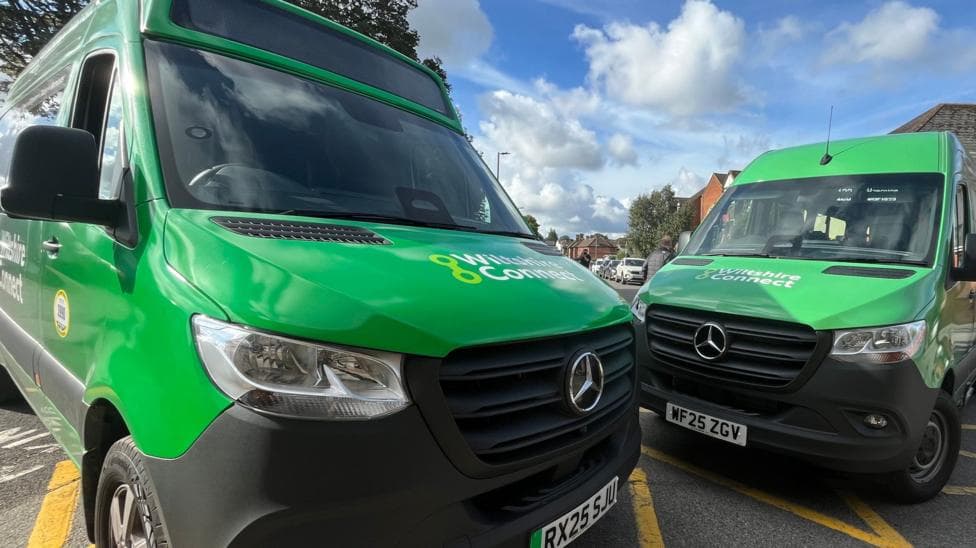
Council-backed rural bus services are experiencing a revival after years of contraction, with new legislation expanding local authorities' control over their networks. Government statistics reveal that financial support for buses outside London has climbed to 17% of all bus miles travelled across England, marking a recovery from the pandemic-era low of 13% in 2019-20, though this remains below the 2010 figure of nearly a quarter.
The resurgence reflects a shift in how rural transport is being delivered. Rather than maintaining traditional fixed-route services that serve sparse populations, many councils are adopting demand responsive transport (DRT)—a flexible model where passengers book journeys in advance and routes adapt to their needs. According to Department for Transport guidance, DRT uses smaller vehicles than conventional buses and responds to user requests for specific pick-up and drop-off times and locations.
Despite the increase in supported mileage, overall bus usage has declined. Journeys per person in England fell from 88 in 2010 to 63 by 2024-25, with a sharp drop during the pandemic that has not fully recovered. Commercial bus miles have contracted by approximately 22% since 2010, though they have begun rising again.
Wiltshire Council exemplifies this new approach. The authority launched Wiltshire Connect in August 2023 as a demand responsive service operating across three zones with 13 minibuses. According to a September 2026 report, the service has completed 250,000 passenger journeys since its inception, and the council published timetable revisions to some services from 1 September 2026, indicating the network continues to evolve. Passengers book via an app or telephone and pay fares equivalent to standard bus services, with flexible pick-up points within designated zones.
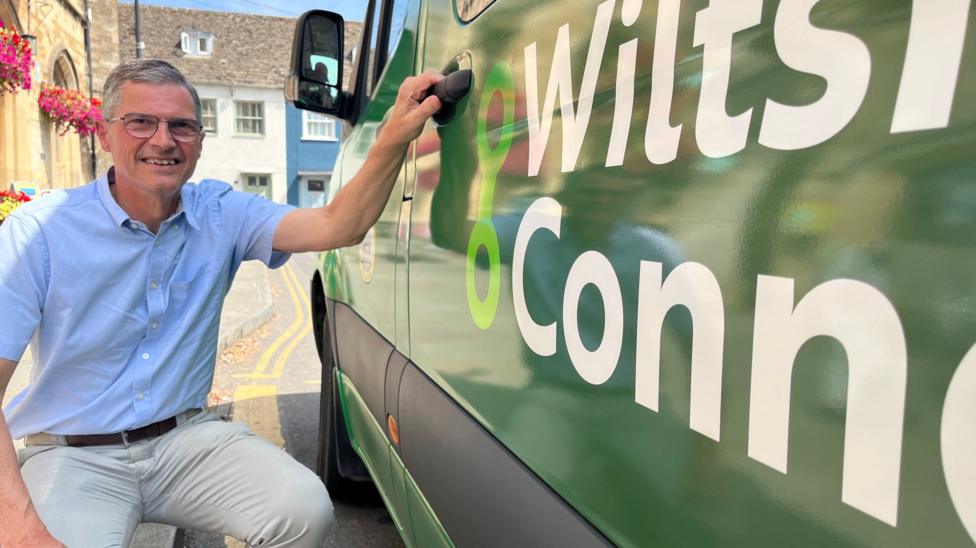
Councillor Martin Smith, Wiltshire's cabinet member for transport, explained the financial logic behind the shift.
If we weren't doing this we'd be trying to subsidise a lot of rural bus routes taking very, very few people from place to place and here we have a solution where it's a couple of buses which move around the area all the time.He noted that the council had anticipated primarily older passengers but found younger people adopting the service enthusiastically.
If we can get the younger generation used to using public transport then they will continue to do that potentially through their adult lives.
The Department for Transport invested £20 million through its Rural Mobility Fund in 2021 to support DRT trials across 15 local authorities. According to the DfT's 2024-25 annual report, all but two of the 17 digital demand responsive transport schemes originally backed by the fund had launched by that point.
Cat Jones, who relocated to Wiltshire from London with her family, described the service's impact.
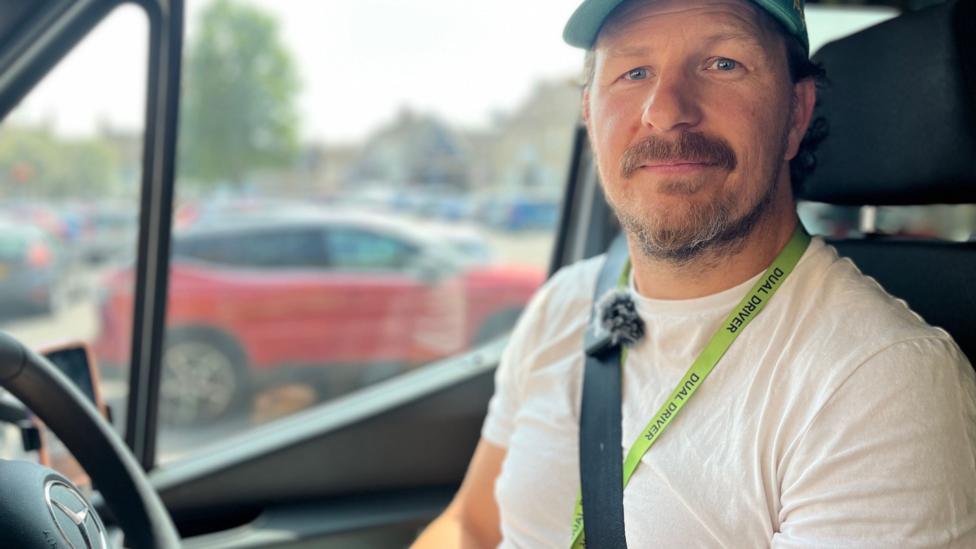
In Wiltshire, you sometimes need more flexible transport than the scheduled buses allow and that's what Wiltshire Connect is. Everybody is smiling. You feel plugged into the community.James, a Wiltshire Connect driver, observed that
they [the passengers] love it. It's a service that has helped so many people be able to get out. I think some of them feel quite trapped, especially in the smaller villages.

Why have rural buses declined?
The contraction in rural bus provision stems largely from local council budget constraints. Before the pandemic, councils were forced to abandon routes due to funding pressures, according to Bus Users UK. The charity emphasised that
without them, people can become isolated and less able to participate fully in their communities.The organisation described supported bus services as
fundamental to social inclusionand
a lifeline, not a choicefor many residents.
Commercial operators have also reduced services. The Confederation of Passenger Transport cited worsening road congestion as a significant factor, noting that buses outside London currently travel at an average speed of 11.7mph. Slower journeys make services less attractive to passengers and more expensive to operate. Rural geography compounds these challenges, with longer distances and higher fuel costs making it difficult for operators to cover expenses through fares alone.
What do transport advocates say?
Bus Users UK welcomed the rise in supported mileage but cautioned that statistics alone mask underlying problems. A spokesperson stated:
It shows targeted investment can work but mileage alone does not tell the full story. A bus service is only useful if it enables people to make the journeys that matter - whether that is getting to work, attending a hospital appointment, accessing education or staying connected with friends and family.The charity stressed that long-term, reliable funding is essential to rebuild passenger confidence.
The Campaign for Better Transport credited the 2021 national bus strategy with raising awareness of buses' value and enabling authorities to fill service gaps through dedicated government funding. However, Silviya Barrett of the organisation noted:
It is great news that these services are now increasing but overall bus provision is still at a lower level than in 2010 and our mapping shows that many areas still do not have the bus service they need.
The Local Government Association similarly described recent investment as positive but called for sustained funding to encourage ridership. County Councils Network research highlighted the ongoing pressure on rural networks, finding that one in five rural bus routes have disappeared despite bus-reform pledges.
What happens next?
The Department for Transport is expected to publish a value-for-money and impact evaluation of the Rural Mobility Fund in the latter half of 2026, which will assess the effectiveness of demand responsive transport trials across participating authorities. Meanwhile, new services continue to launch. The Three Castles Shuttle began operating in south-west Shropshire from 2 September, providing a community minibus link for Bishop's Castle, Clun, Craven Arms and Ludlow, with plans to extend to Saturday services later in 2026.
The government's Bus Services Act, announced alongside additional funding last year, grants local authorities expanded powers over bus provision in their areas, potentially enabling further experimentation with flexible transport models. Whether this combination of legislative reform, targeted investment and innovative service design can reverse the long-term decline in bus usage remains to be seen, but early results from schemes like Wiltshire Connect suggest demand responsive transport may offer a viable path forward for rural communities.