Train services to and from Heathrow Airport ground to a halt on Saturday evening after a trackside grass fire triggered a power failure, leaving thousands of passengers stranded and causing widespread disruption across London's transport network.
National Rail declared "major disruption" would persist until the end of Saturday following the incident, which erupted shortly after 16:00 BST. The operator confirmed that all lines were blocked between London Paddington station and Heathrow's terminals, as well as services to Reading, due to "a failure of the electricity supply caused by a fire next to the track".
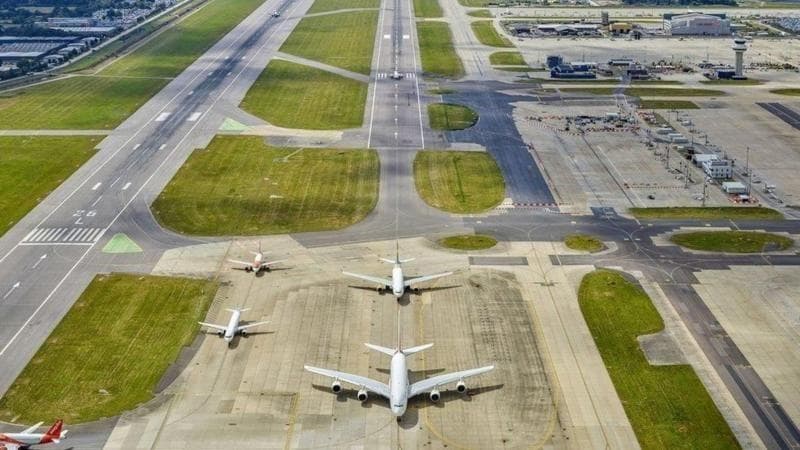
The disruption compounded an already chaotic day at the airport, which had experienced a separate grass fire on its airfield earlier in the afternoon that forced the closure of one runway and led to at least two flight diversions.
Scale of the disruption
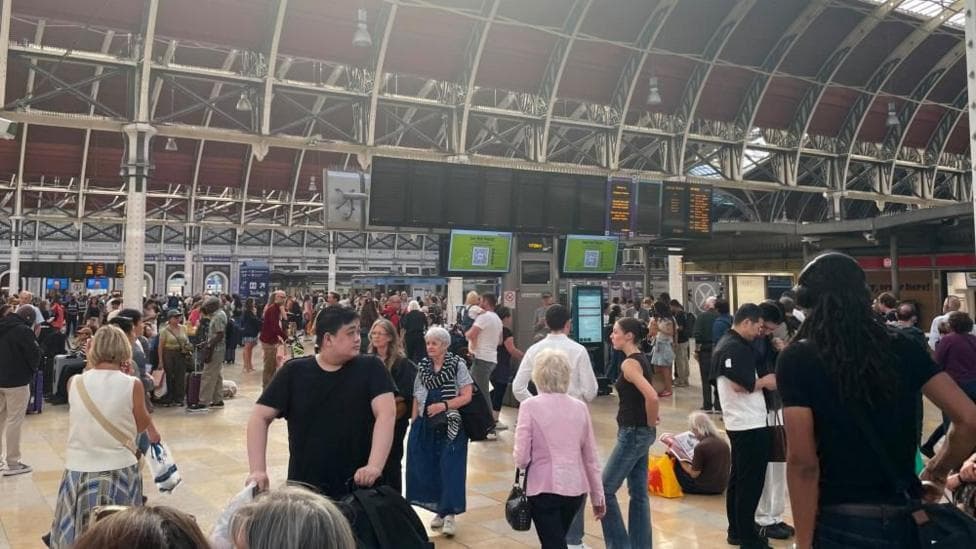
Departure boards at Paddington fell blank as the evening progressed, with social media images capturing large crowds of stranded passengers at one of London's principal rail hubs. Great Western Railway cancelled all services to Reading, while both the Elizabeth line and Heathrow Express suspended operations between Paddington and Heathrow for the duration of Saturday night.
The airport issued guidance urging passengers to allow additional time for journeys and warned that the Piccadilly line, which also serves the airport, was experiencing delays. London Fire Brigade deployed six fire engines and approximately 40 crew members to tackle the blaze near Scrubs Lane in North Kensington.

What caused the fires?
The afternoon grass fire on Heathrow's southern runway was extinguished quickly, though it still resulted in flight diversions and prompted an apology from the airport for the disruption caused. According to Heathrow's statement, teams had resolved the grass fire adjacent to the southern runway and both runways were fully operational again.
The incident marks the third significant grass fire affecting Heathrow in recent weeks. A previous fire near the southern runway in August 2026 forced 18 flights to divert and destroyed a substantial area of grassland, temporarily closing runway 27L and requiring single-runway operations until the fire was dealt with.
Fire risk remains elevated
Although temperatures across much of the United Kingdom have moderated in recent days following record-breaking heat during the summer, fire crews continue to warn of elevated wildfire risks. The Met Office's Fire Severity Index indicates that if a wildfire were to occur, it would reach "high" fire severity across most of south-east England and parts of the Midlands.
Fire severity reaches "exceptional" status—the highest level on the index—in certain areas of London including Heathrow, as well as along the Essex and Suffolk coasts. This exceptional classification reflects the continued vulnerability of the region to rapid fire spread despite cooler recent weather.
Timeline of Saturday's disruption
According to National Rail's disruption notice, the signalling incident affecting Heathrow services was first reported on 3 September 2026 at 15:22 and was cleared on 4 September 2026 at 00:56, indicating that rail services resumed after an extended outage lasting several hours into the early morning.
Key facts
- All rail services between London Paddington and Heathrow Airport were halted due to a power failure caused by a trackside grass fire near Scrubs Lane
- A separate grass fire on Heathrow's airfield earlier on Saturday forced the closure of one runway and resulted in at least two flight diversions
- London Fire Brigade deployed six fire engines and around 40 crew members to tackle the blaze
- The Met Office has classified fire severity as "exceptional" in parts of London including Heathrow, despite cooler temperatures in recent days
- This represents the third significant grass fire affecting Heathrow in recent weeks, following an August 2026 incident that forced 18 flight diversions