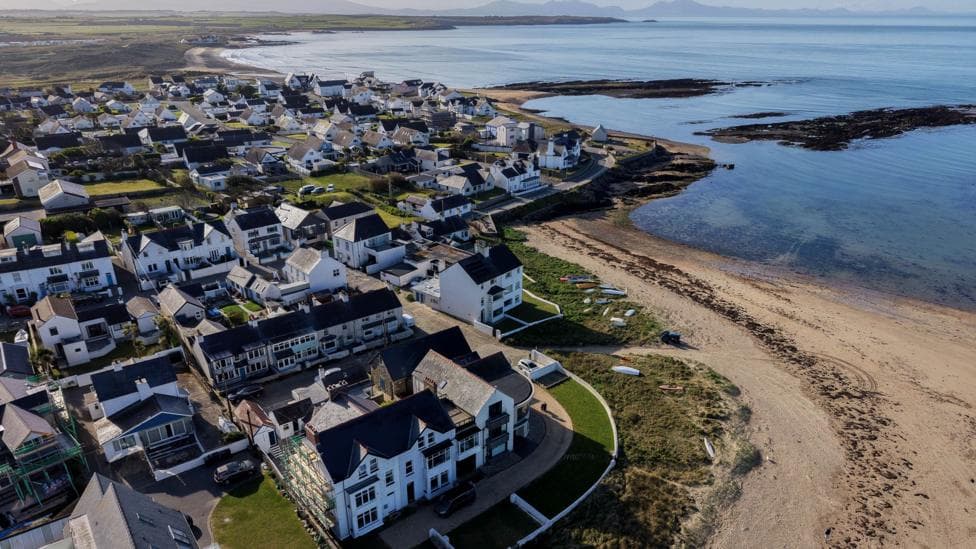
Councillors on Anglesey are poised to reject a proposed visitor levy for the island following substantial opposition from tourism workers, business owners and visitors. The council's executive backed a recommendation against adopting the tax during a meeting on Tuesday, with a final decision scheduled for Thursday, 24 September 2026.
The levy would have generated an estimated £1.2 to £1.5 million annually for Anglesey, excluding VAT and after Welsh government administration costs. A tiered rate structure had been proposed: 75p per night for shared accommodation such as hostel dormitories and tent camping, and £1.30 per night for hotel stays. However, the public consultation revealed overwhelming resistance to the scheme.
A public consultation involving 2,098 responses showed that 1,482 respondents (70.8%) opposed or tended to oppose the levy, while only 525 (25.1%) supported or tended to support it. The consultation was supplemented by feedback from face-to-face sessions. Residents were "more divided" in their views, though opposition still exceeded support at more than 58%.
This decision comes after Cyngor Gwynedd, the parent authority, delayed its own decision on the levy following the consultation process. According to reporting on the delay, Gwynedd stated it was not currently in a position to make a September 2026 decision after failing to analyse all consultation responses in time. The consultation had been extended by 11 days after a request from the Gwynedd and Eryri 2035 Partnership, according to industry sources.
What were the main concerns?
Opposition to the levy centred on multiple practical and economic concerns. Tourism workers and business owners highlighted a "perceived risk" to small and seasonal enterprises, which form a significant part of Anglesey's economy. Other objections included a lack of clear data on the levy's effectiveness, administrative complexity, the impact of taxing children, potential harm to lower-income families, higher costs for visitors, and concerns about competitive disadvantage compared to areas without a visitor levy.
Why did some support the proposal?
Those backing the levy argued that visitors "contributed to local pressures" and "should make a modest contribution" to maintain public spaces, visitor infrastructure, cultural and heritage assets, environmental protection and local services. Supporters believed the tax could result in local improvements benefiting both residents and visitors. Modelling suggested the levy could lead to a very small reduction in visitor demand, though this would be "partly offset" by local investment funded by the revenue.

What are the concerns about the legislation?
Councillor Alun Roberts stated there was "a clear objection" to the levy's introduction and highlighted "weaknesses in the legislation," calling on the Welsh government to revisit them. Council leader Gary Pritchard agreed, noting that legislation introduced by the former Labour-led Welsh government had not allowed them to "ensure" that the levy would not adversely affect the tourism industry.
Councillor Sonia Williams reported that the partnership and regeneration scrutiny committee had discussed the matter on 15 September. The committee had "drawn attention to its weaknesses" and "raised concerns over fairness and risks faced by businesses." The committee emphasised feeding back to the new Plaid Cymru-led Welsh government regarding how the legislation "could be improved to better reflect the needs of Anglesey, considering it's a rural area."
What is happening elsewhere in Wales?
Cardiff is set to become the first place in Wales to introduce the visitor levy, with an estimated annual revenue of £3.5 million. Under Welsh Government guidance, the levy applies to overnight stays booked after 1 October 2026 for stays from 1 April 2027. Cardiff accommodation providers must begin accounting for the levy from 28 September 2026 for new bookings and changes to existing bookings for stays from 1 April 2027.
The visitor levy regime in Wales was created under a framework allowing Welsh councils to adopt the levy locally rather than requiring a national rollout. The standard rate is £1.30 per person per night for most accommodation and 75p for shared rooms and tent pitches.
What happens next?
Anglesey's full council will make its final decision on the visitor levy on Thursday, 24 September 2026. The executive's recommendation against adoption will be put to the full council for a vote. Meanwhile, Gwynedd's delay means it is unlikely to introduce any levy before 2028, according to reporting on the council's timeline.
The report noted that while there was "clear support for the need for additional revenue to support destination management and the alleviation of the impacts of over-tourism on sites," the consultation results and legislative concerns have swayed the executive recommendation against proceeding at this time. The council has instead agreed to "monitor, review and consider evidence of the impact of the visitor levy in other local authorities in Wales" that have chosen to adopt the scheme.