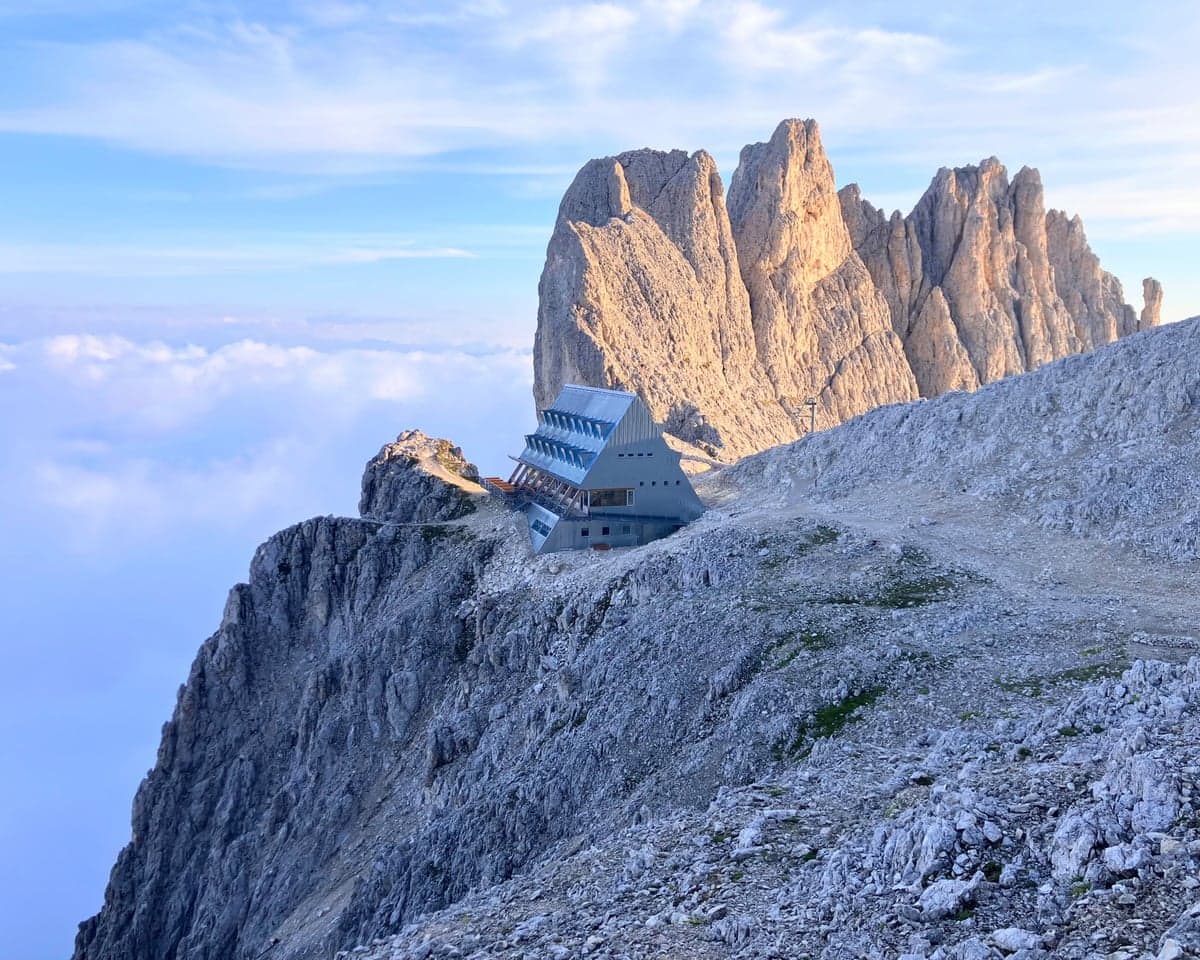
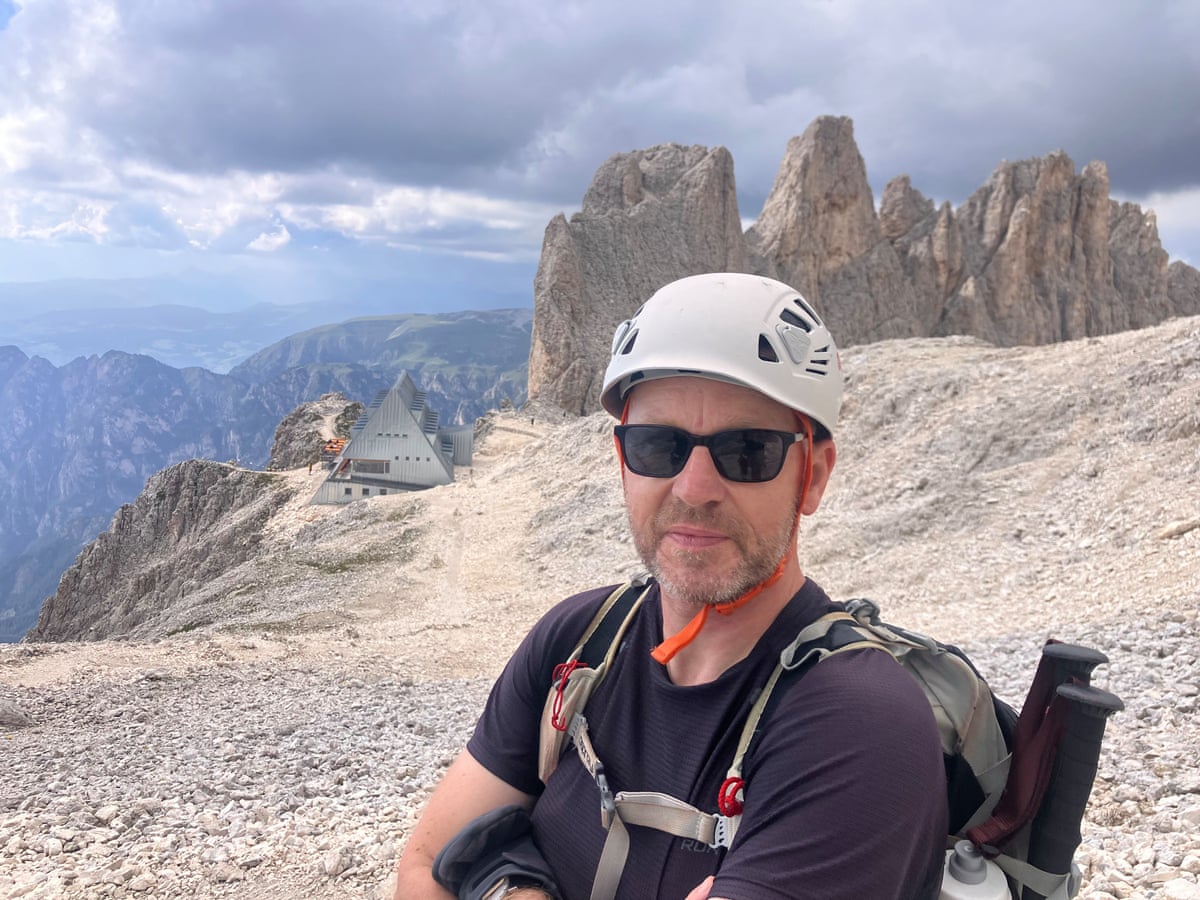
Perched above the clouds in the heart of Italy's Dolomites, Santnerpass Hut defies every expectation of what a high-altitude mountain refuge should look like. Gleaming silver against the alpine landscape at 2,734 metres, this elongated triangular structure encased in galvanised steel resembles a giant Toblerone still wrapped in foil—a striking beacon of modernity that stands apart from the traditional stone buildings and cuckoo-clock chalets that typically dot these peaks. Yet beneath its eye-catching exterior lies something equally remarkable: a marvel of sustainable architecture paired with an unexpectedly progressive approach to mountain hospitality.
The journey to reach this refuge demands serious commitment. On the first day of an annual expedition to the Dolomites, a vast range of breathtaking sawtooth peaks in northern Italy, the approach proves far more challenging than anticipated. The route involves scrambling through pinnacles that jut dramatically from the mountainside—thrillingly tall, spiky and knobbled formations requiring hikers to squeeze through narrow chimneys, navigate around mighty boulders and inch along slender ledges on a twisting path barely discernible beneath swathes of sharp white scree. Fingers ache in gloves, heads sweat in helmets, and boots begin to show signs of strain before the refuge even comes into view.
But the effort proves worthwhile. After one final push, the summit reveals the hut side-on and glowing silver in the late afternoon sun, positioned on top of a sheer cliff like a star that has touched down on Earth to enjoy the stunning views of the surrounding peaks. The bartender's greeting—"Welcome! You made it. Well done!"—carries genuine warmth, acknowledging the physical toll of the ascent.
How does a mountain hut achieve such striking design at extreme altitude?
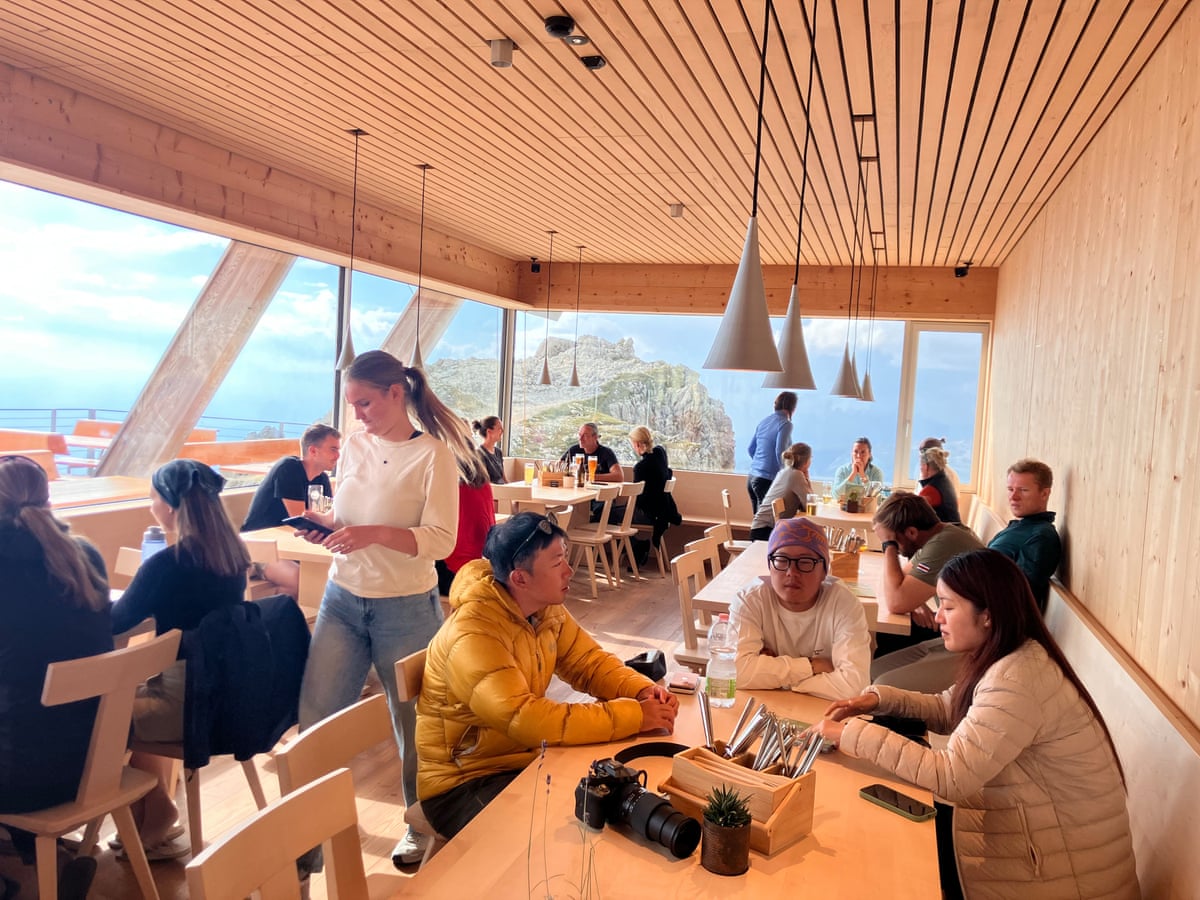
The refuge's architectural innovation becomes immediately apparent upon entry. Huge windows wrap around the structure's front and flanks, transforming every spot of the roomy ground floor into a light-filled observation point. This design choice serves a practical purpose beyond aesthetics: the hut achieves passive heating since it functions as one enormous solar collector, eliminating the need for log-devouring stoves—quite an achievement at ground level, and verging on miraculous at more than 2 kilometres elevation with no road access.
The interior reveals a second layer of thoughtful design. Blond wood appears everywhere, cocooning guests within a spellbinding timber tapestry that casts everything in a warm yellow glow—a striking novelty for anyone accustomed to the dingy corridors and bedrooms of most refuges. The flooring is larch, the restaurant furnishings maple, and the load-bearing A-frame spruce, its hefty angular joists exposed on the sundeck. The refuge sits on the western flank of the Rosengarten group, positioned within the Sciliar-Catinaccio Natural Park of the Dolomites UNESCO World Heritage site.
The refuge was originally built in 1956 but was taken over, closed and completely rebuilt, finally opening in 2023 under the design of alpine specialists Senoner Tammerle Architects. The distinctive triangular shape serves a dual purpose: it allows the structure to shed thick snow efficiently and deflect howling winds that would otherwise batter a more conventional design.
What makes the mountain experience here different?
The showers provide an unexpected comfort. The wood gives way to zesty yellow laminated panels that would not look out of place in a chic nightclub, and the showerheads actually remain pointing at your body for the full duration of hot water a token provides—a luxury rarely found in mountain refuges.
Dinner, however, delivers the most surprising revelation. The meal was entirely vegetarian—a shock for most visitors and a particular treat for vegetarian hikers. Rather than the hearty meat-based fare typical of alpine huts, the kitchen produced herb-sprinkled lentils with asparagus, radish and onion, followed by pea and mint soup, then beetroot dumplings on a rich bean, tomato and yellow pepper broth. The meal concluded with crème brûlée, accompanied by superb local wine served in actual wine glasses. One guest described it as "a delicious and nutritious meal" and "a win-win for hiker and planet," reflecting a commitment to sustainable practices that extends beyond the building's architecture to its culinary philosophy.
The refuge sleeps 40 guests across 16 rooms. Accommodation is spacious, featuring bunkbeds, dainty dormer windows, and two large cubbyholes per person—one for backpacks, the other for personal belongings—a far more practical arrangement than the usual wardrobes and drawers that rarely see use when guests depart at dawn.
Half-board lodging starts at €105 per person per night for larger rooms Sunday to Friday, rising to €115 on Saturdays, while smaller rooms cost €130 and €140 respectively, with rates including breakfast and a four-course vegetarian dinner.

How do you reach this remote location?
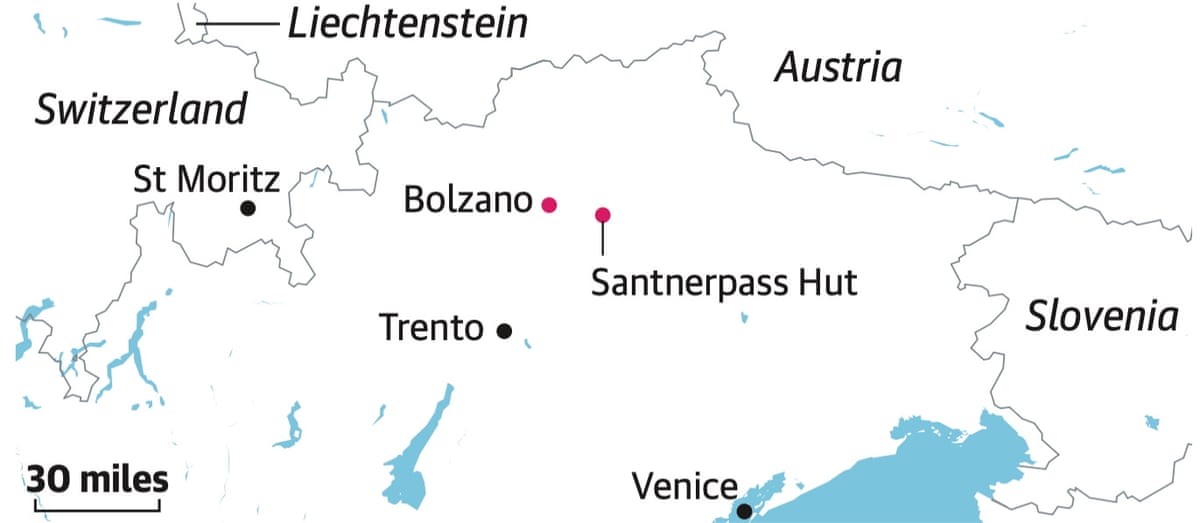
Access begins via the König Laurin cable car, located 22 miles (35 kilometres) from Bolzano, the gateway to the Dolomites. From the cable car's upper station, the route follows a rising, fairly straight line to the refuge—a two-to-three-hour hike through loose scree, then boulders and pinnacles. The final section is a via ferrata, meaning hikers must clip their harness to a metal cable and use it to navigate trickier, more treacherous passages. This route is not suitable for beginners.
A descent route offers a different experience. Rather than retracing the via ferrata, an alternative path first passes the Vajolet towers—dramatic spires that lure climbers from around the world—before swinging right onto a winding path of fine white scree that rises sharply through meadows full of edelweiss, saxifrage, dwarf pine and boulders. The route leads to bulging cliffs and eventually the Coronelle Pass, an astonishing vantage point at 2,360 metres. From there, a final knee-popping descent on timber-pinned switchbacks returns hikers to the cable car station 30 minutes later.
What natural phenomena enhance the mountain experience?
In the distance, piercing up through an immense blanket of cloud, the lofty peaks of the Latemar group catch the last rays of the sun, turning pink, orange and purple in a ravishing Dolomites phenomenon known as the enrosadira. This stunning light display is triggered by calcium and magnesium in the rock, creating a natural spectacle that transforms the landscape each evening.
What happens next for visitors?
The refuge operates seasonally, with service scheduled from 12 June to 10 November 2026. For those planning a visit, contact details are available through +39 337 1435665 or info@santnerpass.com. The hut's owners, Romina Huber and her husband Michel Perathoner (who serves as chef), manage the refuge with an evident commitment to both architectural innovation and sustainable hospitality practices.
Key Facts
- Santnerpass Hut sits at 2,734 metres on the western flank of the Rosengarten group within the Dolomites UNESCO World Heritage site
- The refuge was rebuilt and reopened in 2023 after being closed for renovation, featuring passive solar heating and sustainable design by Senoner Tammerle Architects
- All meals served are vegetarian, reflecting the refuge's commitment to environmental sustainability alongside its architectural innovations
- Access requires either a via ferrata route or a challenging alpine hike from the König Laurin cable car, making it suitable only for experienced hikers
- Half-board accommodation including breakfast and four-course dinner starts at €105 per person per night for larger rooms
Mountain Hut Etiquette: A Code for Respectful Alpine Travel
Mountain refuges may occasionally offer luxurious amenities these days, but their original function—survival—remains relevant. Several sensible codes emphasise words like "respect," "other users," and "environment." Experienced mountain travellers develop their own guidelines based on hard-won experience.
No Complaining
Refuges are not hotels. If a problem arises, address it directly rather than voicing complaints to other guests. Never complain about snoring, even when convinced it might trigger an avalanche. One traveller who did so was informed, rather forcefully, that the snoring was actually their own—an outrageous claim that triggered grunts of approval from other grumpy insomniacs. Gel ear plugs prove effective solutions.
Share
It can be difficult to abandon urban self-assertion habits in favour of the communal survival mindset that refuges require. In one Corsican hut with a shared sleeping platform, an obnoxious visitor in a down sleeping bag shoved all other sleepers into a pile at one end of the bench, later claiming to have been "dreaming of being pushed." Shared spaces demand consideration for all occupants.
Clean Up After Yourself and Take Your Rubbish Home
Leave absolutely no trace at all. Visiting a treasured wild swimming spot recently, one traveller discovered the scorch mark of a campfire. Whoever had built it left no rubbish and nothing to mark their visit except that dreaded black spot—as if delivering a death sentence to the pristine landscape.
The Hut Is for Everyone
One cyclist who reached a remote Icelandic hut found it blissfully empty of people. After lighting the fire and preparing a simple meal, solitary bliss seemed assured. Then a large group of locals arrived. Initial disappointment gave way to unexpected joy when they sat down, offered a beer, and two hours later, after helping to eat their huge delicious feast, the solo traveller felt like they had joined a tribe. When a hut generates that kind of gang conviviality, it proves genuinely uplifting.
Look After Others
In Scandinavia, this is a deeply embedded social habit. Visitors turn up in winter huts to find logs left by previous guests. A cut finger is met with plasters from those who remembered to bring extras. This reciprocal care creates a culture of mutual support that strengthens the mountain community.