

On Wednesday, 12 August 2026, swathes of Europe will briefly fall into daytime darkness as the Moon slides in front of the Sun, blotting out its light and throwing a shadow across the continent. For most spectators it will be a rare, once-in-a-lifetime sight, but for a dedicated few, chasing eclipses across the globe has become a genuine passion.
According to the European Space Agency, the path of totality will sweep across the northern half of Spain and a small corner of Portugal, having already travelled over eastern Greenland and western Iceland. NASA's own mapping confirms the shadow's route runs from Greenland and Iceland through northern Russia and the Atlantic Ocean before reaching Spain and Portugal.
Mark Griffiths, equipped with two high-specification cameras, a specialist telescope and a drone, spent two days driving from Cheshire to Galicia in northern Spain — widely regarded as one of the finest vantage points — purely to document the event.
His fascination with the sky began six years ago on a trip to Shetland to catch the northern lights, though poor weather meant he "didn't see anything" that night. Rather than putting him off, the disappointment only deepened his interest, and he found himself unable to stay away from spectacular celestial displays.
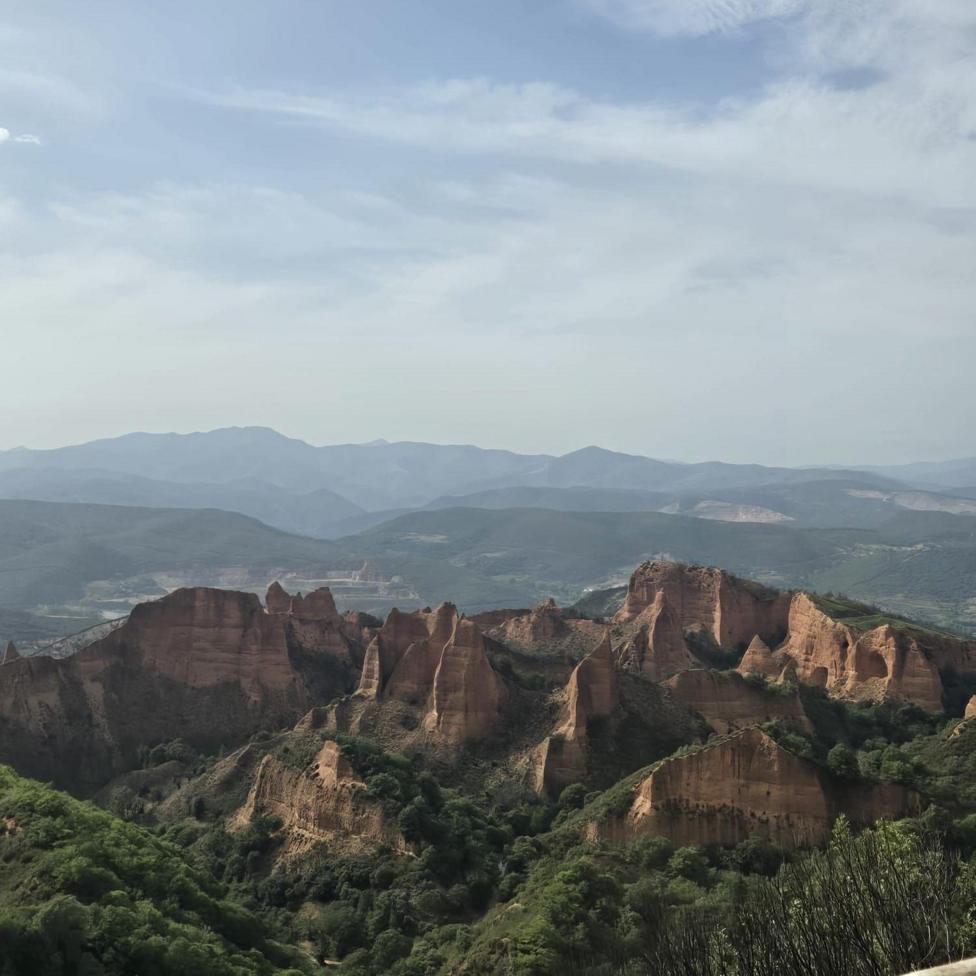
Griffiths now travels to Iceland monthly, leading tour groups there, and has built up a portfolio capturing auroras, eclipses and bioluminescent seas. Wednesday, however, will mark his first total solar eclipse.
"I kept wanting more"
he says, comparing Europe's first total solar eclipse in over 25 years to football's biggest tournament for enthusiasts of his kind.
"I'll be honest, it's like an addiction now"
he admits. Speaking the day after completing his cross-continent drive through France and into Spain, having paused only to photograph the night sky and snatch a few hours' rest in Bordeaux, he confesses:
"I'm quite sleep deprived."
Where exactly will the eclipse be visible?
The shadow of totality begins over the tip of Siberia, arcs around the Arctic Ocean, and crosses Greenland and Iceland before travelling over a stretch of the northern Atlantic and reaching northern Spain, where it finally fades out over the Mediterranean. Other regions of Europe will only witness a partial eclipse. Research body IGN notes this will be the first total solar eclipse seen from the Iberian Peninsula in more than a century, travelling from west to east across Spain.
Not everyone within the path will experience the same length of darkness. Data compiled on Timeanddate shows totality beginning in Valencia at 8:33pm CEST and lasting roughly a minute, after the partial phase starts at 7:38pm. Figures listed on Wikipedia's eclipse records put the duration at 1 minute 4 seconds in Santander, but only 31 seconds in Bilbao — illustrating just how much the experience can vary within a relatively short distance. Space.com reports the path of totality across Spain will be roughly 190 miles (305km) wide, cutting between Madrid and Barcelona, meaning neither major city falls within the zone of totality.
Readers closer to home have their own opportunities to witness the phenomenon, even without total darkness. On the same day, the UK is due for its deepest partial solar eclipse since 1999, with our guide to the best places and times to watch the 2026 sky event noting up to 96% coverage is expected in the West Country. Yorkshire is bracing for similarly dramatic scenes, with our earlier report noting up to 92% of the Sun expected to disappear behind the Moon, while separate coverage of the West Country's eclipse prospects puts the figure there at up to 95%. Meanwhile, in the Channel Islands, an astronomer has stressed the rarity of the event, with our earlier piece noting that the next total eclipse visible from Guernsey is not due until 2081.
Though totality itself typically lasts only a couple of minutes for onlookers, that brevity does nothing to discourage enthusiasts from travelling vast distances to catch it. Samantha Phillips-Brown and her husband Gregory flew from their home in upstate New York to Iceland, where they hired a camper van to reach a remote viewing spot.
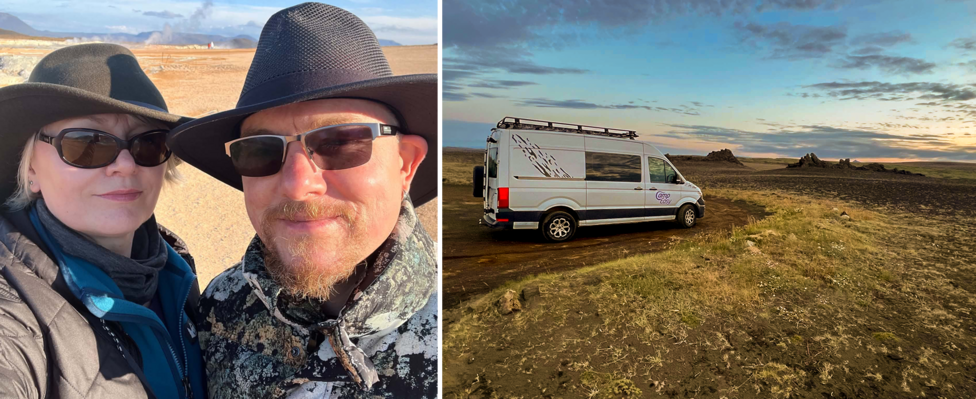

This will be the couple's second total solar eclipse. It was the sheer power of the first, witnessed near their home in 2023, that persuaded them to commit to this trip — flights and van hire were booked more than a year in advance.
"It was such a phenomenal experience to see the Sun start going dark and hear, suddenly, the birds stop chirping. It's just a very strange experience."
says Samantha. Gregory finds himself imagining how Iceland's earliest settlers must have reacted to witnessing such a sight over a thousand years ago, in an age when myth rather than science explained the skies.
"They really didn't know what was happening, didn't know how long it was going to last... it must have been quite terrifying for them, in a way."
In the days leading up to the eclipse, the pair have been hiking and camping their way around eastern Iceland.

Because the path of totality only crosses the western part of the country, they are hoping to find a suitable spot on the Westfjords peninsula. They've heard talk of roads potentially being closed to manage crowds, so plan to arrive a couple of days ahead of the event to secure their position.
Samantha, described by her husband as an "obsessive travel planner", has been following Facebook groups and social media pages where eclipse chasers swap tips and updates. She expects a large turnout, judging by how many people she has already spotted carrying eclipse glasses around Iceland.
"They're really trying to prepare everybody."
"What I expect, as we start inching westward, is we're going to see more and more of them."
Why does this eclipse hold special meaning for some travellers?
For Andrew Wills, the pull of this eclipse is deeply personal. He is travelling to Majorca — a considerably warmer island than Iceland — with his wife and his 90-year-old father, who joined him for Europe's previous total solar eclipse back in 1999, viewed together from atop St Agnes Beacon in Cornwall.

St Agnes Beacon, thought by some to be a Bronze Age burial mound, offers sweeping views over the Cornish countryside toward the Atlantic. Andrew recalls that day being overcast.
"We didn't see the shadow rushing across the sea towards us, though we did see the dawn appearing and it getting closer very quickly. It was awe-inspiring."
He's hoping for better conditions this time around in Majorca, where the family have booked a villa near the western town of Andraitx. Andrew has already scouted a nearby location he believes will offer a clear sightline out to sea. Because their spot sits within the path of totality, the eclipse there is expected to occur low on the horizon.
"We're going to take a couple of camping chairs with us, so Dad can sit if we can get there an hour or so before."
Majorca and neighbouring Menorca will be among the very last places on land anywhere to witness the eclipse before the Sun sets and the shadow vanishes for good.
Andrew has been captivated by eclipses ever since that first sighting at St Agnes decades ago.
"We live on a planet where we have this amazing coincidence. Where the Sun is 400 times bigger than the moon but the moon is 400 times closer. And so when the moon passes in front of the Sun and between Earth, it casts this perfect shadow."
The experience, he says, left him with the same sense of humility astronomer Carl Sagan once described when reflecting on the famous Pale Blue Dot photograph.
"We are tiny little specks in a huge vast area of nothingness. We're amazingly lucky to be alive."
What happens next?
The European Space Agency has set up a dedicated public information page ahead of the event, signalling that it intends to provide live guidance and coverage for viewers on 12 August 2026. Spanish eclipse guides point out that this will be the first total solar eclipse visible from mainland Spain since 1905, underscoring why the event has drawn so much attention from chasers around the world. For those who miss it, the wait for the next such spectacle in many locations, including Guernsey, could stretch for decades.
Key Facts
- The total solar eclipse takes place on 12 August 2026, crossing Siberia, the Arctic Ocean, Greenland, Iceland, the northern Atlantic and northern Spain before ending over the Mediterranean.
- It is the first total solar eclipse visible from mainland Spain since 1905 and from the Iberian Peninsula in over a century, according to Spanish astronomy sources.
- Totality lasts around a minute in Valencia, 1 minute 4 seconds in Santander, and just 31 seconds in Bilbao.
- The path of totality in Spain is roughly 190 miles (305km) wide but passes between Madrid and Barcelona, leaving both cities outside the zone of totality.
- The UK will see a partial eclipse the same day, with up to 96% coverage forecast in the West Country and up to 92% in Yorkshire.


