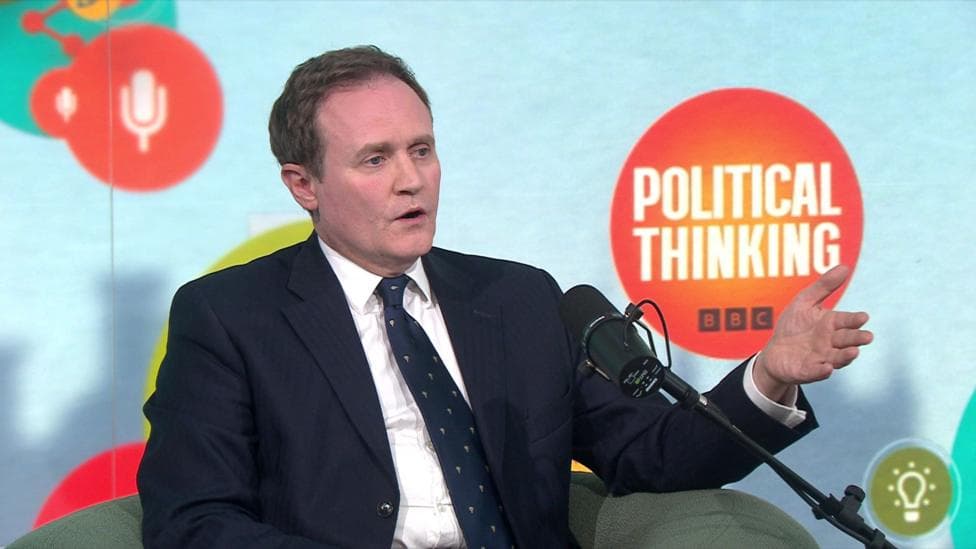
Tom Tugendhat, the Conservative MP recently appointed shadow foreign secretary, has dismissed Donald Trump's remarks about British sovereignty over the Falkland Islands and Irish reunification as electoral posturing rather than serious policy.
Speaking on the Political Thinking podcast with Nick Robinson, Tugendhat characterised the US president's comments as an attempt to appeal to American voters ahead of November's mid-term elections. He suggested Trump was not genuinely committed to challenging UK sovereignty or intervening in Irish affairs, but rather using the issues to energise his political base.
"What he's doing is he's bumping his gums on some issues that he thinks are supportive to various electoral issues for himself at home. He's got elections coming up in November, he knows he's got votes to win. Is it helpful to us? No. But this is his politics, not ours. So sometimes we have to say something and sometimes we have to go, 'come on mate, don't be silly'."
Trump has stated that America's position on the Falklands is "one of many" under review and hinted the US might not support the UK in a potential future conflict with Argentina. According to , Trump also reiterated his backing for Irish reunification during his recent visit to Ireland, saying it would be "fantastic" and that he would "love to see it unified."
The remarks have intensified an already fraught diplomatic situation. Argentina's President Javier Milei escalated tensions earlier this month by restating his country's claim to the Falklands and threatening economic sanctions against firms exploiting oil resources in the region. Britain and Argentina have disputed sovereignty of the South Atlantic territory for more than four decades, following their 1982 armed conflict which lasted 74 days and resulted in a UK victory.
How has the UK government responded?
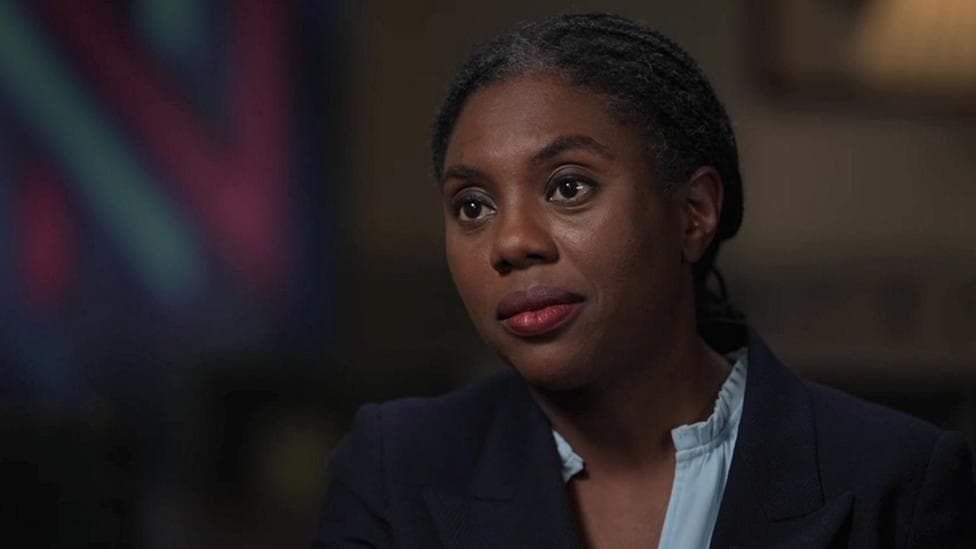
Foreign Secretary Ed Miliband stated the UK's position on the islands was "unwavering" and they would remain British because "that is the overwhelming position of the Islanders." Conservative leader Kemi Badenoch reinforced this stance, declaring "the Falkland Islands are British" and emphasising that Britain's continued connection with them "is of vital importance."
On 8 September 2026, according to , UK Foreign Office minister Kirsty McNeill told lawmakers there was "no doubt" over Britain's sovereignty of the Falklands. The government has consistently framed the islands' future as a matter of the islanders' self-determination, maintaining they can remain a British Overseas Territory for as long as they wish.

What is Britain's military position?
Tugendhat emphasised that Britain's military capability in the Falklands has transformed dramatically since 1982. He noted that the UK Foreign Office has not negotiated to surrender the islands in recent years, and the nation's defensive posture is substantially stronger than it was during the original conflict.
Trump's comments on the Falklands included more than rhetorical support for Argentina's position. According to reporting from the Ireland visit, Trump suggested he could potentially help settle the dispute, describing a UK-Argentina clash there as a "potential disaster." He raised questions about whether Britain would defend the islands and suggested the disagreement could be resolved if he were involved in negotiations.
What did Trump say about Irish reunification?
Tugendhat branded Trump's comments on Irish unity as "plain old electioneering," dismissing the likelihood of concrete American action.
"Is he going to do anything about it? No,"he stated. Trump made the remarks while sitting beside Irish Taoiseach Micheál Martin in Dublin, and according to , later clarified he would not discuss Scottish independence "yet," suggesting he may view the question of UK territorial composition as open to his commentary.
What other issues did Tugendhat address?
In the same interview, Tugendhat revealed he had received no confirmation from China that sanctions against him had been lifted, despite then-Prime Minister Sir Keir Starmer announcing in January that they had been dropped. He indicated he would only visit China, whose communist regime he has long criticised, if there was something substantive and worthwhile to discuss, but felt talks could currently be held elsewhere.
Tugendhat also criticised Foreign Secretary Miliband for sanctioning Israel over settler violence in the West Bank, suggesting this demonstrated "weakness" and that Miliband should have exercised greater patience. He ruled out bringing Britain back into the European Union if the Conservatives return to government, despite his close personal ties to the continent, including his marriage to a French wife who was influential in the recent Bayeux Tapestry exchange.
Having previously run against Kemi Badenoch for the Conservative Party leadership in 2022, Tugendhat praised her performance as party leader, describing her ambition to become Britain's next prime minister as "like a burden lifted from my shoulders."

The broader context of these exchanges reflects heightened tensions over UK overseas territories and the Trump administration's apparent willingness to revisit long-settled diplomatic positions. The Falklands dispute remains strongly sensitive because Britain and Argentina still contest sovereignty more than 40 years after the 1982 war, and Trump's comments have added an unpredictable element to what had been a relatively stable, if contested, arrangement.