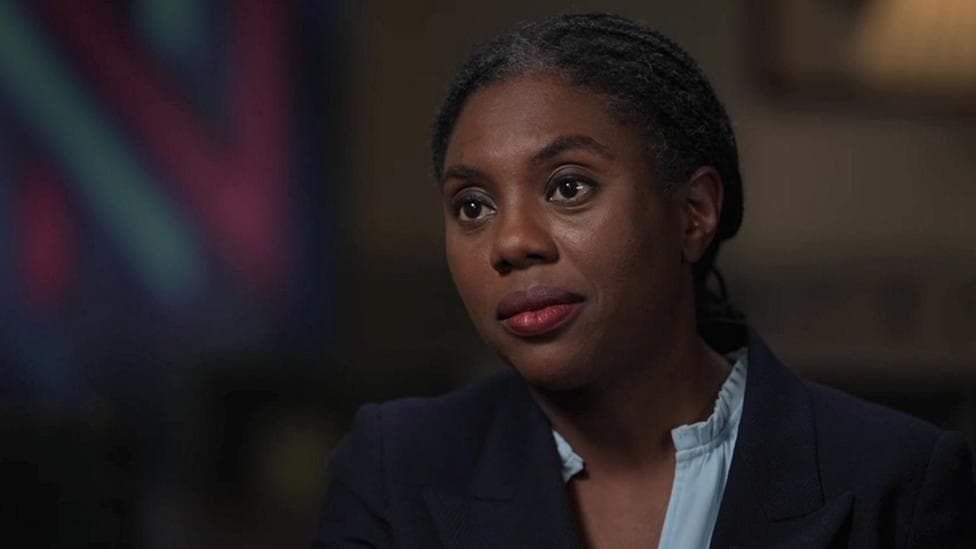
Conservative leader Kemi Badenoch has instructed legal counsel to challenge the government over local authority funding reductions, following an unprecedented council tax increase in one of her party's most prominent local administrations. The proposed 94% rise in Wandsworth, a south-west London borough controlled by the Conservatives, has prompted Badenoch to describe the situation as "outrageous" and to question whether the underlying funding cuts can be legally blocked.
The dispute centres on an £84 million annual reduction in government funding to Wandsworth Council. According to the council's financial crisis statement, this cut would force a Band D property's annual bill to rise by £958, from approximately £1,020 to £1,978 in a single step scheduled for April 2027. Badenoch told a national broadcaster's current affairs programme that the Conservative Party had
"instructed lawyers"to explore whether the funding reduction can be challenged.
Wandsworth has historically maintained one of England's lowest council tax rates. Even with the planned increase, the borough's average Band D charge would remain below the £2,000 threshold that many other London councils have already reached. However, Badenoch argued that the scale of the increase itself poses a genuine hardship for residents regardless of comparative rates elsewhere.
"I think if you suddenly have a nearly 100% increase in your council tax, you would be extremely worried. Families have budgets,"she said.
"Just because on average it's lower than somewhere else doesn't mean that people are going to be able to afford it."
The council's proposal was presented at an extraordinary meeting on Tuesday, with a final decision expected in February 2027 as part of the formal budget-setting process. The increase results from the lifting of the usual 5% annual cap on council tax rises for councils facing severe central government cuts, a measure applied to Wandsworth, Westminster, Richmond, Kensington and Chelsea, and Windsor and Maidenhead.
Badenoch accused the government of political bias in its funding allocation.
"I think it is outrageous that Wandsworth Council is having to put up council tax - but they're not doing it because they want to,"she said, adding that ministers appeared to be
"taking money from areas that don't vote Labour and giving it to places that do vote Labour."She questioned why Wandsworth faced a 40% cut when
"Andy Burnham has not found 40% of anything to cut"himself, referring to the Labour mayor of Greater Manchester.

The government has defended its approach as necessary reform of an outdated system. A spokesperson for the Ministry of Housing, Communities and Local Government stated that
"Local authorities decide the level of council tax they wish to set, but we are clear that in doing so they should put taxpayers first. We're fixing an outdated funding system so funding goes where need is greatest, while protecting councils through the transition and ensuring no area faces a cliff edge."
Wandsworth Council's Conservative deputy leader acknowledged the difficulty of the position.
"Higher council tax will not be easy or welcome. We do not regard it as fair and will continue to challenge the government by every possible means,"the deputy leader said on Tuesday. The council has completed a comprehensive spending review examining how services are funded and delivered, revealing a projected £184 million budget gap by 2030/31 if nothing changes, with planned borrowing rising toward £1.14 billion by 2035.
Labour opposition on the council has been vocal. Simon Hogg, leader of the opposition Labour group, described the increase as
"outrageous"and
"stunning,"accusing the Conservative administration of panicking and passing costs to residents.
"This increase is unfair, it's unnecessary and we oppose it,"he said.
However, the political picture is complicated by divisions within Labour's own ranks. Three Labour MPs representing Wandsworth constituencies—Rosena Allin-Khan, Fleur Anderson and Marsha de Cordova—have declined to support the council's appeal to the government to reverse the funding cuts. The three MPs stated that the council
"was in a strong financial position"before the Conservatives took control following the May elections earlier in 2026.
Badenoch defended her own record as local government minister during the previous Conservative government, despite acknowledging that Conservative administrations had previously reduced council grants. She refused to specify what alternative rate of increase she would propose, focusing instead on criticising the government's approach.
Other London councils are considering similar legal challenges. Westminster, Richmond and Kensington and Chelsea are examining whether they can invoke the Sustainable Communities Act to challenge the government funding cuts, following Wandsworth's lead in exploring all available options.
What happens next
The council's formal budget-setting process in February 2027 will confirm the final council tax proposal. Unless the government reverses its funding cuts before that date, the increase would take effect in April 2027. The Conservative Party's legal challenge will run in parallel with this timeline.