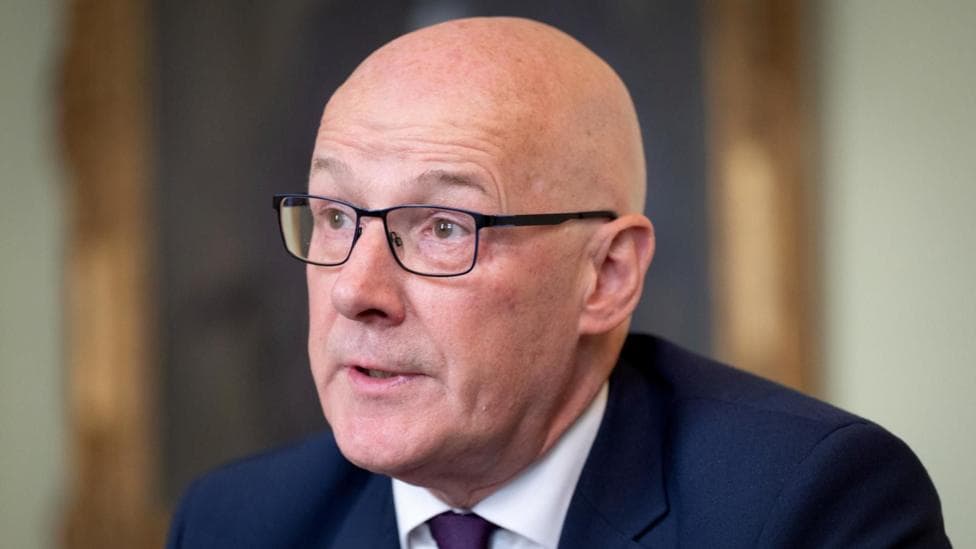
John Swinney has declared that Scotland's government must "embrace change", positioning comprehensive public service reform as the defining theme of his administration's policy programme. The first minister is setting out his plans for the year ahead, which centre on significant restructuring of how public services are delivered across the country.
Swinney has already appointed a new cabinet minister to lead on public sector reform and is expected to announce a broad range of policies aimed at strengthening economic growth, eliminating child poverty, achieving net zero emissions and addressing violence against women and girls. According to reports on the announcement, the programme involves "radical change" and "significant" reform with themes of early intervention, prevention and placing people "right at the centre" of services.
Opposition parties have indicated they want to see further action on the NHS and cost of living pressures facing households.
The appointment of a dedicated reform minister reflects the scale of the challenge ahead. Ivan McKee was appointed Cabinet Secretary for Public Sector Reform in May 2026 as part of a push for "fiscal sustainability", with reform efforts linked to a projected financial gap of nearly £5 billion by the end of the decade.
Why is economic growth so important to the government's plans?
Swinney has stated he is committed to ensuring Scotland achieves stronger economic growth, which he believes will help address challenges around child poverty and investment in public services. The first minister said the government "always lives within its means", noting that over the lifetime of the SNP administration, the budget has been balanced on every occasion and will continue to be so.
However, he acknowledged that delivering on these commitments requires fundamental change in how services are structured and delivered.
"But it also means that we've got to embrace change and change the way in which we deliver our public services,"he said.
What is the government doing to tackle child poverty?
Swinney has made eradicating child poverty a priority and has introduced measures to support families in escaping poverty. These include the Scottish child payment and the expansion of whole family support programmes. The government works alongside families to address issues around housing, employability, addiction and childcare.
"We work with families to help them out of poverty in addressing issues around housing or employability or, in some cases, addiction issues or childcare issues,"he explained.
"We're working alongside families to help those families get out of poverty and to make sure that children have the best chances of a start in life."
He said the programme for government would reinforce this commitment, ensuring that the eradication of child poverty is embedded across all policy decisions to meet public expectations in Scotland.
How will the government address violence against women and girls?
The first minister said he would be setting out measures to parliament that would address "the epidemic of violence against women and girls". Swinney stated he had been "appalled" by the number of cases involving such violence over the summer months.

"This has been a long-running issue within Scottish society,"he said.
"The government has taken many measures to tackle this, but I think events over the summer have said to me that I've got to exercise the strongest possible personal leadership as first minister to make sure that we tackle these issues."
He emphasised that violence against women and girls cannot be tolerated "in any way, shape or form in our society" and stressed that
"making sure that we change the behaviour of men and boys in our society will be central to that programme"."
What is the government's approach to the cost of living crisis?
One of the government's proposals to tackle cost of living pressures is to introduce a price cap on some food and drink items in large supermarkets. However, this plan has faced significant opposition from business groups. Twenty-three organisations have written a joint letter to Swinney urging him to scrap the proposal. Signatories include groups representing retail, food and drink production, manufacturing and distribution businesses in Scotland.
In response, Swinney acknowledged the concerns but defended the initiative.
"Many members of the public are struggling with the price of their shopping and I want to try to do something practical to address that and that's about bringing forward a proposal for an affordable price cap on a limited number of items within our supermarkets."
He indicated that the government would conduct consultation on the proposal to ensure the legislation can achieve its intended effect.
"We've got to consult about this and make sure the legislation can have the effect that we want it to have and that's exactly what the government is going to do."
What is the broader context for these reforms?
Swinney's focus on reform comes as his government completes its first 100-day pledges, including GP walk-in centres and food price cap consultation, before unveiling a broader reform agenda focused on reducing public bodies and tackling NHS waiting times. The first minister said he was committed to delivering on the 100-day programme pledged to voters.
"The government came into office with a commitment to deliver a 100-day programme, and the government is going to do exactly that,"he said.
"And that's the first stage of me repaying the trust that the people of Scotland have put in my government, which is to deliver what I said to the public I would deliver."
He said the government had to review the way it delivered public services, noting this was made clear before the election.
"I want to make sure that the programme for government reflects the ambitions I set out in my election manifesto, which was all about making sure that we tackle the cost of living challenges that people face in Scotland, that we deliver improvements in our public services."
Swinney also highlighted "significant improvements" in the NHS as evidence of the government's commitment to public service enhancement.
What happens next?
The first minister is due to present his Programme for Government to MSPs at the Scottish Parliament at 15:00. The Scottish Parliament is due to be presented with the Programme for Government, following Swinney's pledge to set out the plan after MSPs return to Holyrood. The government's published framework indicates its priorities are growing the economy, eradicating child poverty, tackling the climate emergency and ensuring high quality and sustainable public services.
Key Facts
- John Swinney is positioning public service reform as the centrepiece of his government's agenda, emphasising the need to "embrace change"
- Ivan McKee has been appointed Cabinet Secretary for Public Sector Reform, with reform efforts linked to addressing a projected financial gap of nearly £5 billion by the end of the decade
- The government's priorities include growing the economy, eradicating child poverty, achieving net zero emissions and tackling violence against women and girls
- A proposed price cap on food and drink items in large supermarkets has faced opposition from 23 business organisations representing retail, food production, manufacturing and distribution sectors
- The Programme for Government will be presented to the Scottish Parliament, marking the next phase of the government's policy agenda beyond its initial 100-day pledges