The government is committing £110 million to construct additional cells within existing prisons across England and Wales, drawing on funds already allocated in previous budgets to accelerate the response to severe overcrowding in the prison system.
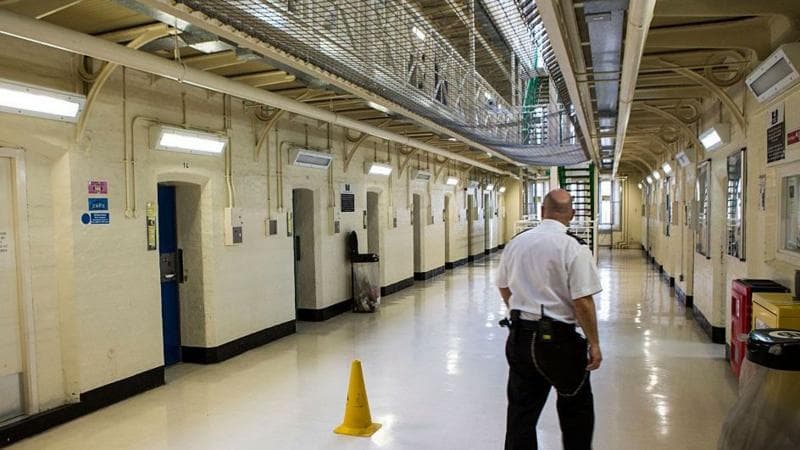
The Ministry of Justice confirmed that the money, described as "fast-tracked from existing budgets", will enable rapid conversion of underutilised prison infrastructure—including vacant office space, laundry facilities and storage areas—into operational cells to house hundreds of additional inmates.
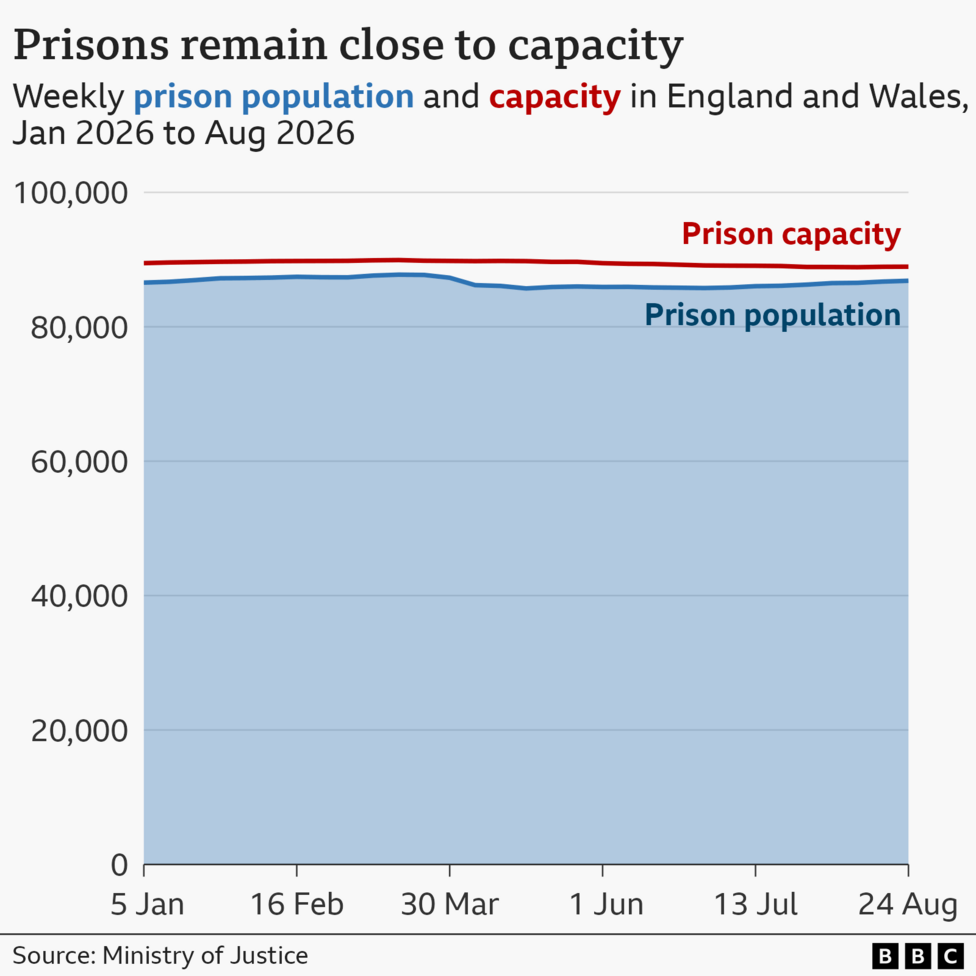
This initiative arrives amid an acute capacity crisis, with prisons operating at near-maximum levels and the government facing substantial criticism over the management of an early prisoner release programme designed to alleviate pressure on the system.
What is the government's broader prison capacity strategy?
The £110 million announcement represents part of a wider, multi-year approach to prison expansion. During the 2025 spending review, which set out plans for the period from 2024–25 to 2029–30, the government allocated £7 billion in capital investment to create 14,000 prison places by 2031. The Ministry of Justice also signed a contract to begin construction of a new 1,700-inmate facility in Lancashire.
Beyond physical infrastructure, the government has introduced legislative changes designed to moderate future prison demand. According to the government's annual prison capacity statement, the Sentencing Act 2026, which received Royal Assent on 22 January 2026, introduced an "earned progression model" for standard determinate sentences and a presumption to suspend custodial sentences of 12 months or less. Under this new model, the minimum release point for people serving standard determinate sentences is set at one third. These measures are intended to slow the projected rise in the prison population by 7,500 by 2028.
Lord Chancellor and Justice Secretary Alex Norris stated that the government remained committed to resolving what he characterised as a "broken prison system", noting that the administration had already delivered more than 3,200 prison places within two years.
This government is serious about fixing the broken prison system we inherited, which is why we've already delivered more than 3,200 prison places in just two years. We're now investing to boost these efforts further.
Norris added that the government would be
getting spades in the ground quicker to deliver thousands more places to lock up dangerous criminals and keep the public safe.

How does the early release scheme fit into this plan?
The early release programme, which aims to reduce immediate overcrowding pressure, has become a focal point of political controversy. The scheme is set to begin releasing prisoners in tranches from October 2026, with approximately 4,500 inmates expected to be released under the initial framework.
However, the government has progressively narrowed the categories of offenders eligible for early release. Prime Minister Andy Burnham announced at the weekend that anyone convicted of manslaughter would be excluded from the scheme, following sustained campaigning by the family of PC Andrew Harper, who was killed in 2019. The prime minister's 29 August 2026 intervention expanded the list of excluded offenders to include killers of emergency workers and those convicted of historic grooming offences.
The exclusion categories now encompass rapists, those convicted of serious child sex offences, grooming offences, manslaughter, and killers of emergency workers. Burnham also indicated that prison space would be created through the release of some inmates serving Imprisonment for Public Protection (IPP) sentences and through the deportation of foreign national prisoners.
Shadow Justice Secretary Nick Timothy criticised the government's approach, arguing that
It is absurd for Labour to talk about a 'prison building boom' when there are 700 fewer prison places than a year ago.Timothy further contended that
In a matter of weeks thousands of dangerous criminals will be released onto our streets thanks to Andy Burnham, including perpetrators of some of the most vile crimes.He suggested that by excluding one category of dangerous offenders from early release, the government was
looking at releasing a different group of dangerous prisoners.
What additional support is being provided to victims?
The government announced an extra £18.9 million investment in victim support services, to be reprioritised from existing budgets and added to the £550 million already committed for this purpose. According to the Ministry of Justice, these services will deliver specialist emotional and practical assistance to help victims rebuild their lives following crime.
Victims Minister Alex Davies-Jones stated that the government would
do nothing that would risk the public or put the public at danger.
Beyond immediate victim support, probation and community services are set to receive up to £700 million in additional funding by 2028–29 compared with 2025–26, reflecting the government's emphasis on community-based alternatives to custody.
What happens next?
The Lord Chancellor is scheduled to update Parliament on 2 September 2026, outlining further changes to sentencing reforms and release rules. The early release scheme is due to commence in October 2026, with the initial cohort of eligible prisoners beginning their release in tranches thereafter. The government's sentencing reforms, introduced through the Sentencing Act 2026, apply only to offences committed from the date the legislation took effect, meaning their impact on reducing future prison demand will develop over time rather than immediately alleviating current overcrowding.
Key Facts
- The £110 million investment will convert existing prison infrastructure—office space, laundry rooms and storage areas—into additional cells
- The government has committed £7 billion to create 14,000 prison places by 2031 as part of its 2025 spending review
- The Sentencing Act 2026 introduced an earned progression model and a presumption to suspend sentences of 12 months or less, designed to slow prison population growth by 7,500 by 2028
- Approximately 4,500 prisoners are expected to be released in tranches from October 2026, with exclusions now including rapists, child sex offenders, those convicted of manslaughter, and killers of emergency workers
- An additional £18.9 million is being invested in victim support services, supplementing the £550 million already announced